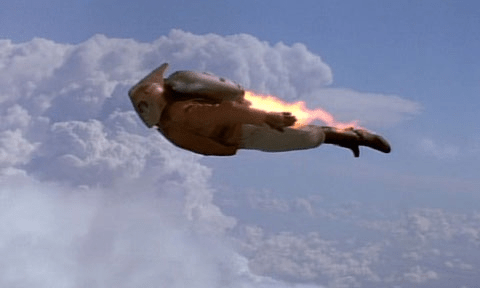

Next on our list, offering a welcome return to normalcy from the risque absurdity of Howard the Duck, is a movie that I was not aware was based on a comic, Disney’s The Rocketeer. Even though this is only the second movie I’ve watched so far, I’m pretty sure this will end up being one of my favorites of this entire series.
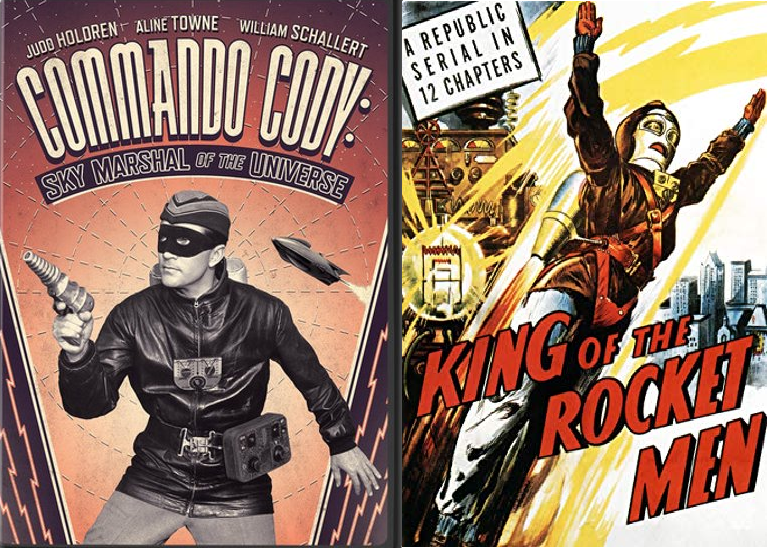
The source comic was created in the 1980s by writer/artist Dave Stevens to pay homage to the Sunday matinee serials of the 1930s-1950s, notably “Commando Cody: Sky Marshall of the Universe” and “King of the Rocket Men.” While the film clearly heavily draws from imagery of these specific serials, it’s worth noting that several directors of two of the most enduring action franchises of the last couple of decades, George Lucas’ Star Wars and Stephen Spielberg’s Indiana Jones, cite these types of stories as inspiration for their massively popular works. It’s also a more direct inspiration for another movie, Sky Captain and the World of Tomorrow (2004), which is not a great movie but one that I rather enjoy due to its pulp-y aesthetic. Suffice to say this will definitely be a genre I’ll be looking into in the future.
Set in the 1930s, the film follows plane stuntman Cliff Secord (Bill Campbell), who finds a mysterious jetpack that allows him to fly without wings. He then gets caught up in an international conspiracy involving experimental US government projects, the mob, Hollywood, and Nazis, using his new equipment to become the Rocketeer and save the day.
The movie also features Cliff’s aspiring actress girlfriend Jenny Blake, played by Jennifer Connelly. The Rocketeer would be a welcome role for Connelly, whose acting career had ebbed in the years following her starring role in the cult classic Labyrinth. Teenage boys everywhere were happy to see her return to the screen. We also get a post-Bond Timothy Dalton as nefarious movie star Neville Sinclair. In addition, the film features an impressive supporting cast, including Paul Sorvino as mob boss Eddie Valentine, Alan Arkin as Cliff’s mechanic and mentor A. “Peevy” Peabody, and Terry O’Quinn as Howard Hughes (of real-life Hughes Aircraft Company), to name a few. The entire cast shines and brings the story to life, but some performances stood out to me more than others.
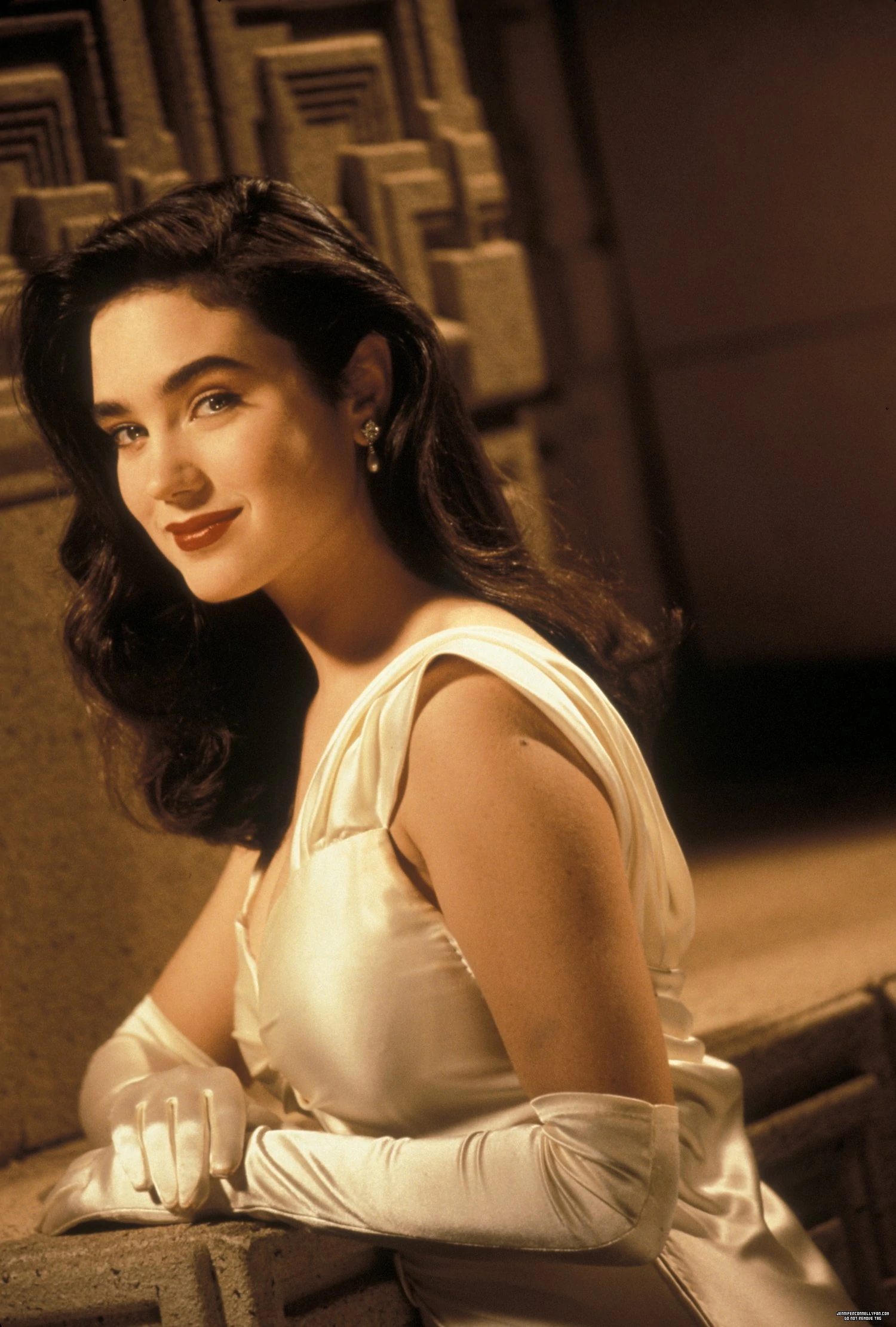
…Sorry, what were we talking about again?
In all seriousness, this movie is a perfect representation of my feelings concerning these superhero films. It’s sincere in its presentation, faithful to the source material without being a carbon copy (as far as I was able to tell from my research), well-made and choreographed with good pacing, and just overall fun. It doesn’t trying to reinvent the superhero film by being something it isn’t, and therefore doesn’t fall short of any lofty expectations critics or audiences might have for it. It’s overall bright, lighthearted, and idealistic, much like the serials it pulls from.
Now, a valid counterpoint to this might be that the movie doesn’t necessarily add anything to a movie experience, either. There’s a reason the term “pulp” frequently carries a negative connotation in reference to books and movies. It’s doesn’t advance anything, so why bother wasting time on it when there are so many other better movies to experience? To this, I would argue that not every movie can be Citizen Cane, and not every superhero movie needs to be The Dark Knight. Sometimes it’s fun to watch a film for the sake of simply being entertained instead of trying to look for things to criticize. In the Twitter-fueled world in which movies are now made and consumed, where every movie is either “The Worst Movie Ever Made, Sign This Petition to Force the Studio to Remake It!!” or “The Absolute Best Movie of All Time, And If You Don’t Like It Kill Yourself!!” it’s nice to be able to watch something and enjoy it unironically, without feeling the need to pick it apart under a microscope.
I really can’t talk enough about how much I enjoyed this movie. As good as Timothy Dalton was during his short tenure as 007, Dalton is a great villain here. He’s both an embodiment of the charm and panache of the Golden Age of Hollywood (specifically Errol Flynn), and the oily, mustache-twisting villainy of a serial villain (or villains of a certain British secret agent, perhaps?).
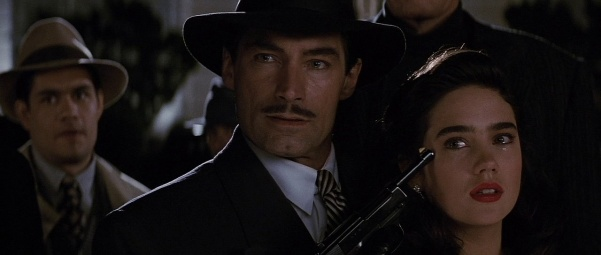
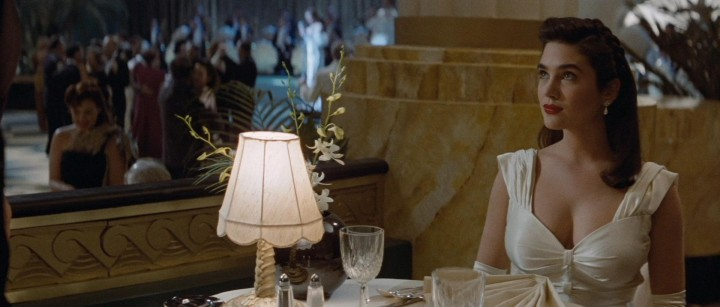
The sets and costuming also employ a gorgeous 1930s style, which, along with the old-timey automobiles and an entire scene set in a nightclub, go a long way toward selling pre-WWII atmosphere.
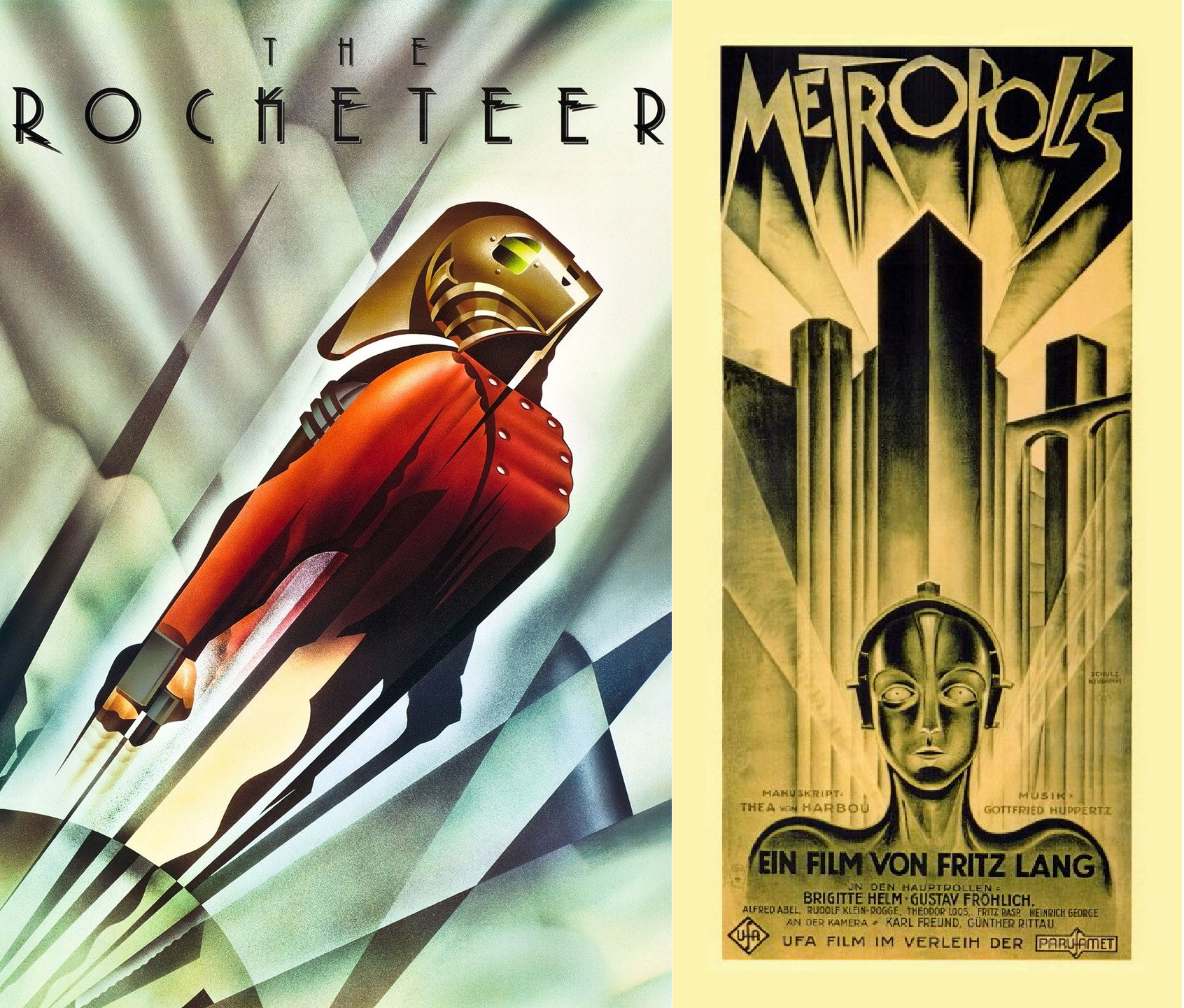
This style even made its way into the marketing for the film.
The filmmakers do a great job of blending the real 1930s Los Angeles with the pulpy plot, creating a world that fills lived-in despite it the fantastical elements of the action. Well, maybe aside from the final fight between the rocket-man and evil Errol Flynn on a Nazi airship over the HOLLYWOODLAND sign.

The film’s level of commitment to its source material is epitomized in the character Lothar, a henchman of Dalton’s character Sinclair. An imposing brute, Lothar is played by actor Ronald”Tiny Ron” Taylor (himself a former basketball player) who was heavily made up to resemble actor Rondo Hatton, an actor active during the 1920s-40s. Hatton had a pituitary condition known as acromegaly, which gave him a distinctive visage in Hollywood but which eventually contributed to his death in 1946. Given that most of Hatton’s roles were uncredited at the time, it’s a nice gesture on Disney’s part to help acknowledge his contribution to the history of film, even in a small way.

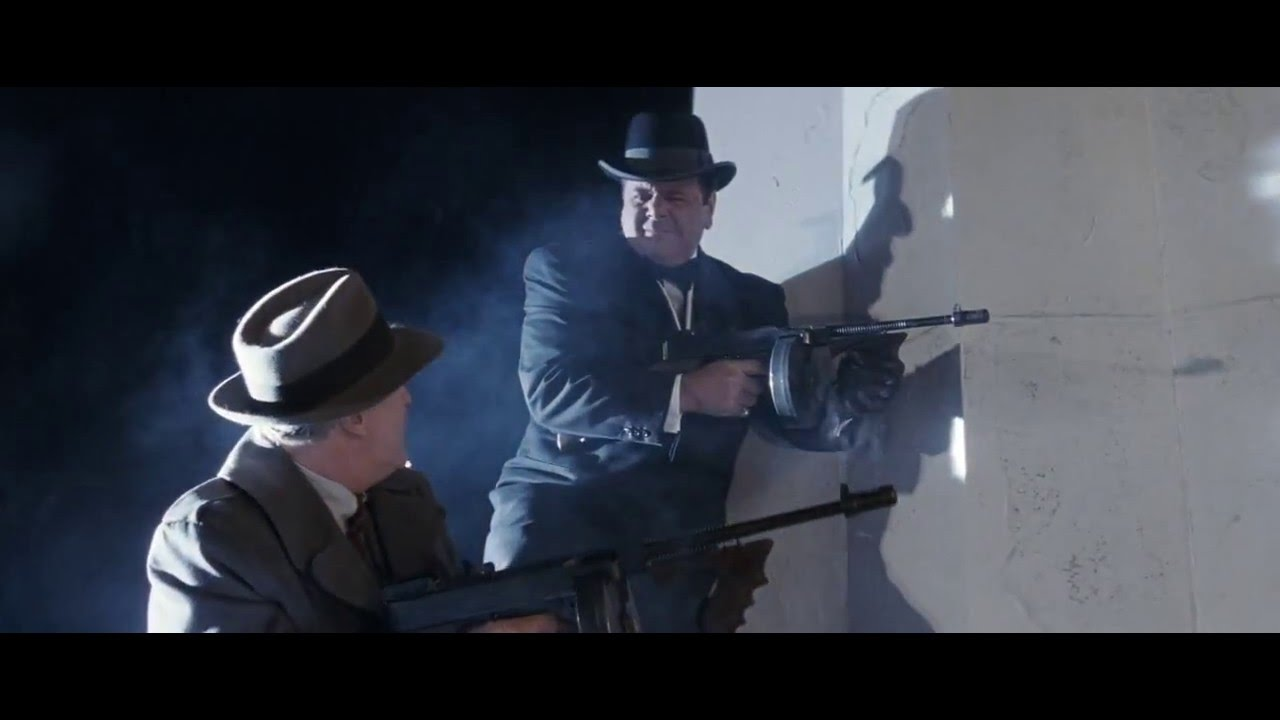
I’d also like to briefly mention my favorite line from this movie, which comes near the climax. Sinclair has been hiring mob goons be his muscle, but when mob boss Valentine learns that his employer is secretly a Nazi, he decides to switch sides. When Sinclair asks him why, Valentine replies “I may not make an honest buck, but I’m 100% American. I don’t work for no two-bit Nazi.”
In researching this article, I came across the term “pastiche,” a word which here means “a work of visual art, literature, theatre, or music that imitates the style or character of the work of one or more other artists.” It came with the important distinction that, “unlike parody, pastiche celebrates, rather than mocks, the work it imitates.” The Rocketeer is exactly this. It imitates the optimistic, lighthearted adventures of yesteryear. It’s dark and dangerous while simultaneously light and comedic. It stars Jennifer Connolly, which means it’s already halfway to perfect in my book. It’s just fun. I think it’s a shame it didn’t too better at the box office than it did, but monetary gains aren’t always an indicator of whether a movie is “successful” or even “good” (frequently, but not always). I think this article sums it up nicely:
“It’s weird to think how many of the superhero movies of the ’90s took their cue from those old movie serials rather than from the actual comic books that were doing huge business at the time. That was the case with Dick Tracy, The Shadow, The Phantom, and as recently as 2004’s Sky Captain and The World Of Tomorrow. It’s hard to say whether this was a case of aging Hollywood power brokers like Warren Beatty indulging their own childhood nostalgia or whether everyone was just chasing that Indiana Jones money. Whatever the case, it was a vast miscalculation; the kids of the ’90s, by and large, did not care about this stuff. Some of those movies did okay, and some were total financial disasters. None of them launched movie franchises. But none of them ever did that style better than The Rocketeer.”
In short: If you can, go watch this fun movie.
Next time, we’ll be talking about another movie based on serials, The Phantom (1996). If it’s anything like this movie, I’m sure I’ll enjoy it.
 Culturally Opinionated