In the early 1990s, the superhero genre of film was dominated by DC. Batman and Superman had been cultural icons for many decades, and their transition from comic page and campy television show to film showed that there was still enough interest in the Man of Steel and the Dark Knight to be lucrative. Other heroes, on the other hand, were not faring so well. Marvel especially struggled adapting its heroes to the screen. With the possible exception of the Incredible Hulk’s 1978 TV show, Marvel properties had been DOA with audiences. Some movies made during this time weren’t even released because of their low quality. The 1994 Fantastic Four movie was made solely by its studio to hold onto the property rights before they expired, with no intention of ever being released theatrically (they even denied making it until bootleg VHSs forced them to acknowledge the film decades later), and it definitely shows. Even cultural titans of today like Captain America, Thor, and the Avengers were only represented on film by horrible adaptations that did nothing to bolster Marvel’s credibility.
And then came Blade.
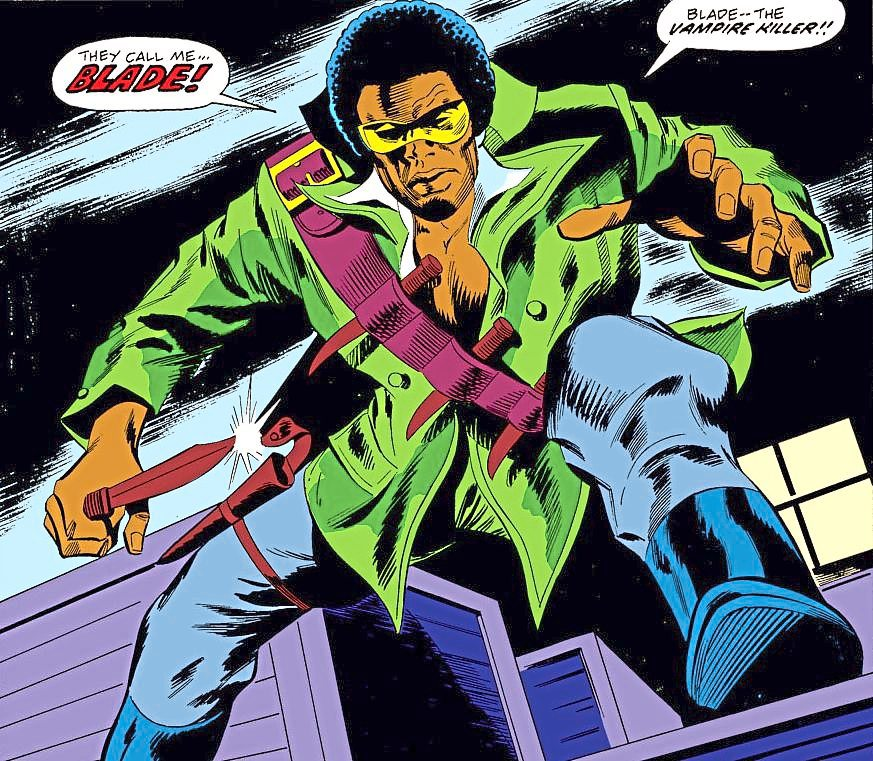
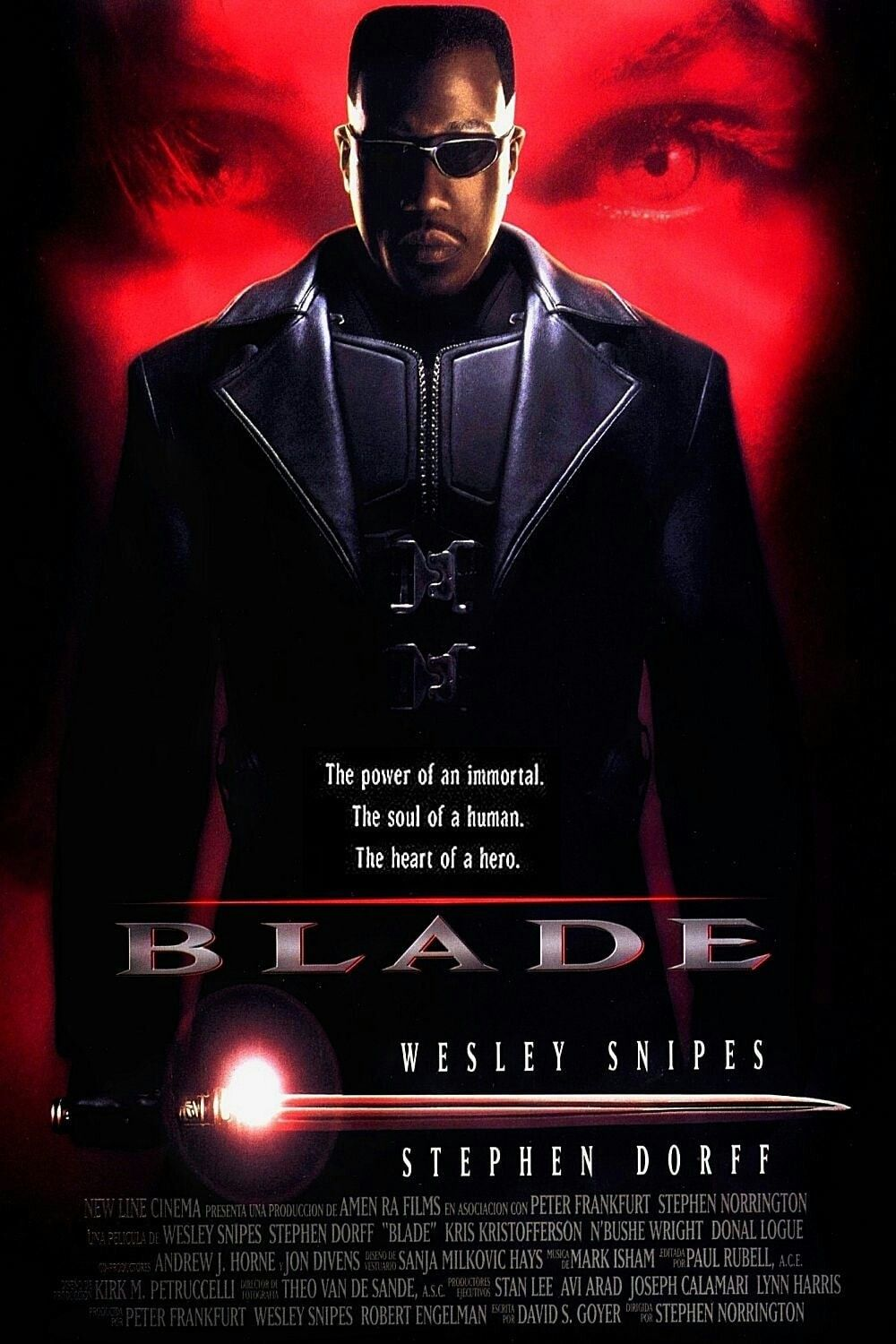
Blade was a relatively obscure and minor comic character. First appearing in The Tomb of Dracula #10 by writer Marv Wolfman and penciller Gene Colan in 1973, Blade was intended to be a supporting character helping to rid the world of vampires. He would receive a co-starring role in several stories with other supernatural characters like Ghost Rider, and even had several solo adventures. But it would not be until 1998 that Wesley Snipes’ portrayal of the vampire hunter would introduce Blade, alongside with Marvel in general, to a wider audience.
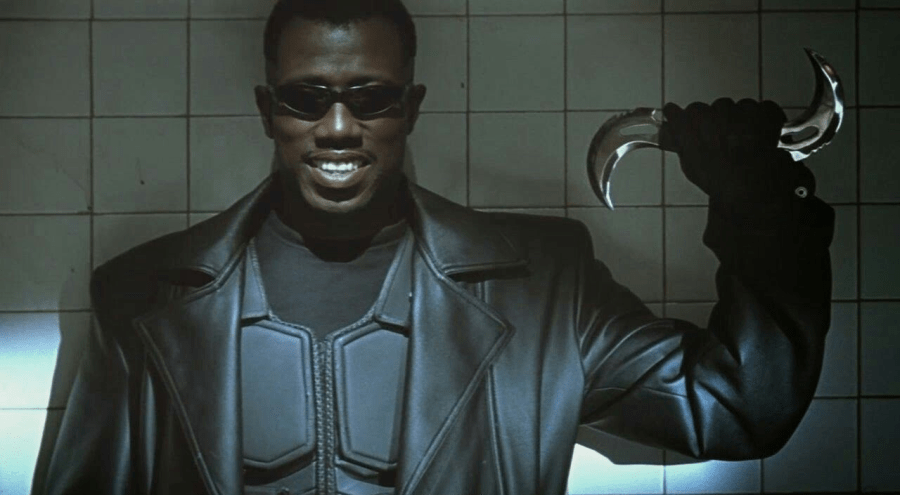
Snipes’ portrayal in the films is very similar to that of the comics. Blade (born Eric Brooks) is given his powers at birth when a vampire feeds on and kills his mother while she is in labor. In the films this turns Eric into the Daywalker, a being who possesses all the strengths of a vampire (long life, enhanced strength, heightened senses) without any of their weaknesses (aversion to sunlight, weakness to garlic and silver, etc.). Unfortunately, he also inherits the vampiric lust for blood. While Blade is able to sustain himself with a special serum to avoid feeding on humans, there is always the danger that one day his serum will be unable to keep him in check and he’ll give in to his animal urges. In fact, when we’re introduced to Blade his body is beginning to reject the serum, adding to the temptation presented by other vampires to give himself over to his true nature and rule over humans and vampires alike.
This is a recurring theme of the Blade trilogy that may sound cliche to us now but was fresh for audiences at the time of the film’s release: how to resist selfish and destructive urges when power is tantalizingly just out reach in order to make decisions for the betterment of others. It’s certainly a theme that has been explored in literature before and since in perhaps more nuanced form. However, I think superhero movies are the perfect medium for this theme, given the way their internal struggles are able to be manifested in their external battles of “good versus evil” against their respective super villains. It’s storytelling that can be very complex, and that movie-going audiences were ready for in 1998. Well, that alongside some great fight sequences between hordes of vampires and one man with silver bullets and a samurai sword.

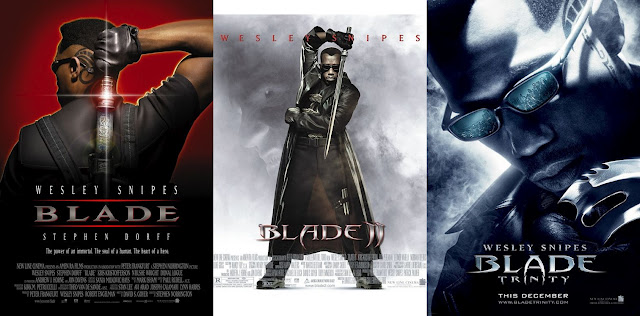
Seeing as we’re dealing with three movies, I’ll briefly address each and then look at the trilogy as a whole.
Blade (1998)
This is probably my favorite of the three movies (although Blade II is a close second). The world the movie presents is dark, gritty, and bloody. The opening action scene features Blade clearing out a crowded underground nightclub of vampires who lure unsuspecting humans to their deaths, including a rave-style mob with sprinklers that shower the undead crowd in blood instead of water or glitter or Red Bull or whatever usually gets sprayed on ravers.
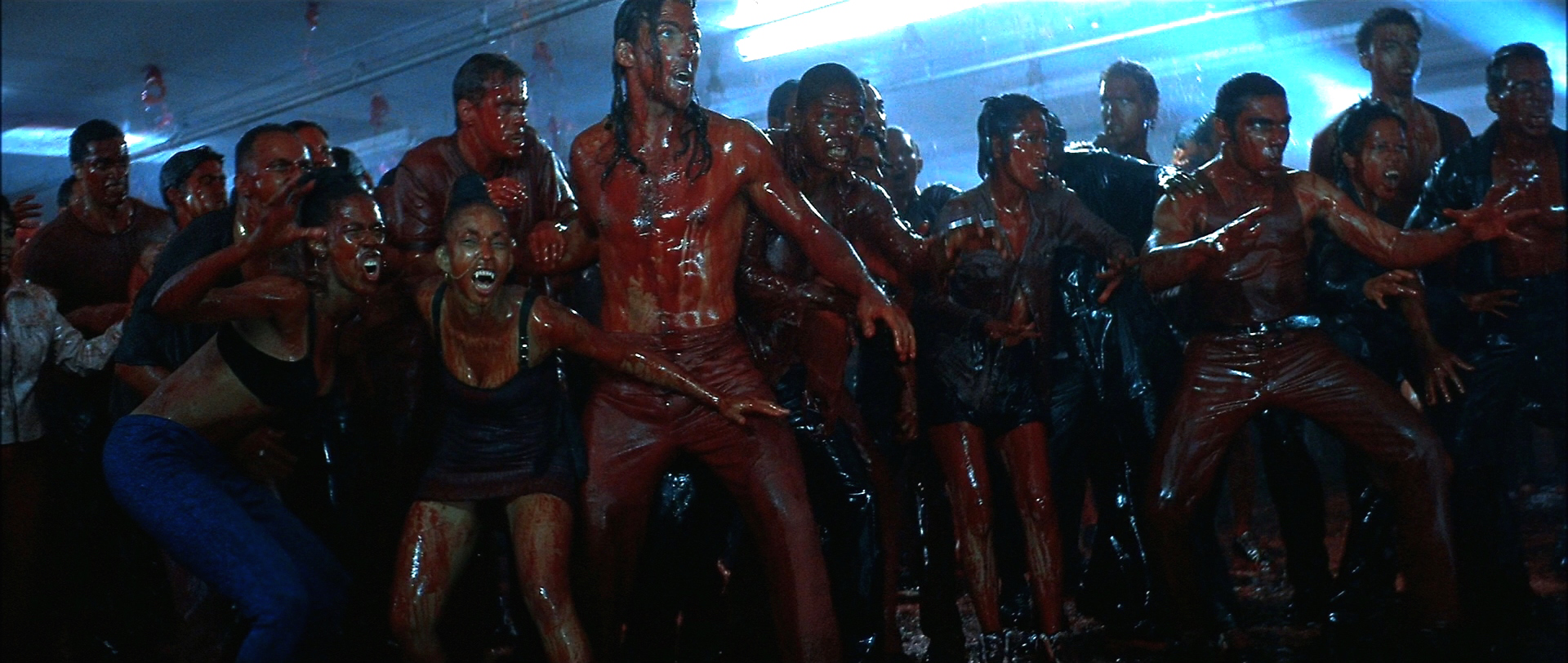
Blade then enters and uses his vast arsenal of vampire-slaying weapons (silver stakes, a shotgun and machine gun loaded with silver-coated bullets, and of course his titular sword) to expertly clear out the club. The vampires in these movies exploded in a fiery death when killed, so these scenes throughout the trilogy are less gory than they could be considering vampires are constantly filled with someone or another’s blood. But the violence is still present. In one scene, the film’s antagonist, a vampire named Decon Frost, kidnaps the head of a vampire ruling family and executes him by first removing his canine teeth and then leaving him tied up on a beach at sunrise to evaporate, mob-style. At another point, Blade and his sidekick Dr. Karen Jensen torture a particularly voluptuous vampire for information by shining a UV lamp on it. Remember, this IS a movie about fighting vampires, so violence is to be expected.
But unlike other films that are similarly dark, there is an element of “comic book fantastic-ness” that keeps the world from being off-putting. Blade is allowed to take its source material and premise seriously (vampire are real and control everything, and a half-vampire named Blade hunts them) but also acknowledge its inherent silliness (vampire are real and control everything, and a half-vampire named Blade hunts them). Frost at one point confronts Blade with a young hostage in broad daylight to intimidate him, which is a tense moment. He is only able to be out in the daylight, however, because he has layered on sunscreen and heavy black clothing. Blade goes into the film’s final battle with special syringes to kill vampires with an anticoagulant. It’s the supernatural grounded in reality (sort of), and even though I’m making fun of it, it really works for this movie.
In short, both Julia and I enjoyed Blade more than we thought we would. In fact, the biggest complaint Julia had with the whole trilogy was that Karen ends the first movie by promising she will work on a better serum and then never reappears to make good on her promise. It’d a weird omission and a missed opportunity for a really interesting storyline.
There’s obviously a lot more going in the movie, but I’d rather you experience it for yourself. If you’re only going to watch one of this trilogy, watch Blade. And then watch Blade II, because you’re going to want to.
Blade II (2002)
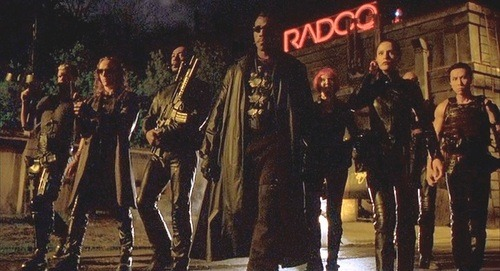
My favorite aspect of the second movie is how it adds so much to the lore of this universe. Where the first film introduces us briefly to the idea that vampires rule the world behind the scenes of everyday life, Blade II builds on this by putting faces and names to that idea. A new threat is terrorizing the vampire world: a mutant vampire named Jared Nomak. Nomak is the carrier of a new virus that turns existing vampires into reapers, giving them an addict-level lust for the blood of both humans and vampires. With the old adage “the enemy of my enemy is my friend” in mind, the head of a powerful vampire ruling family named Lord Eli Damaskinos recruits Blade to lead a team of elite vampire commandos (originally trained to hunt Blade himself) in eliminating the reaper threat. The mercenaries all have distinct costumes and weapons, and together they join Blade in hunting Novak and his children. Again, the movie blends mythology with modern science in a very natural way; everyone hunts the reapers with modern guns and swords, but also with portable UV lamps for an extra reaper-killing edge. It’s a dumb action movie trope, yes, but I’m a young male moviegoer and that’s what I go to see these movies for, so I’m willing to consider overlooking it.
I’d love to talk more about the plot, but again, there’s a lot more to this movie that honestly I’d recommend watching for yourself rather than have me explain it to you.
When Julia and I were watching this movie, there was something different about the tone and direction compared to Blade that I couldn’t quite put my finger on. I could feel that the atmosphere was definitely different from the original and that it seemed familiar, but the reason why wasn’t immediately apparent to me. It wasn’t until the end credits rolled and I saw the film was directed by Guillermo del Toro that I understood what I was trying to articulate. In my opinion, del Toro’s signature style made famous in Hellboy (2004) and Pan’s Labyrinth (2006) is very present here. His films treat the fantastical as mundane, and supernatural beings are a given part of the fabric of the world, not a shocking reveal for either the audience or the characters. This is of course part of the appeal of the first film as well, but where the atmosphere of Blade seemed grittier and sharper in it’s presentation of “monsters-are-real-and-we’re-going-to-treat-it-like-nothing,” there is no Karen Jensen figure from the first film to be a stand-in for the audience and be surprised at the vampires or their world. It’s hard to describe, but I think anyone who has seen a del Toro movie will also see the influence of this auteur in this film.
Blade: Trinity (2004)
Following the unintentional trend of film trilogies whose final films end up being disappointments (Spiderman, The Matrix, X-Men, Austin Powers — the list goes on), Blade: Trinity is just doesn’t share the special quality that made the first two enjoyable. Whether this can be attributed to series fatigue or attempting to emulate successful superhero movies that came before it is arguable; both X-Men and X2 had released at this point as well as the first two Spiderman movies, all of which received critical acclaim. Trinity may have just not been able to keep up. It’s probably due in no small part to the chaos on set during filming. Whatever the case, that certain something is no longer there. As Julia put it after the credits rolled, “It was just an action movie with Blade in it.”
Which is a shame, because there are things this movie adds to the Blade lore that I really like. The first sequence shows a group of renegade vampires excavating an ancient Mesopotamian ziggurat to awaken the first vampire, Dracula, from his self-imposed millennia-long slumber. Dracula can walk in the daylight and isn’t as affected by silver or other vampire weaknesses, shortcomings modern vampires developed through interaction with humans. The modern-day vampires hope to reawaken these strengths by manipulating Dracula’s DNA and creating their own super-vampires. This adds longevity and mythology to this universe’s vampire lore, and I really like the idea of vampires being around in the cradle of western civilization, even if they do name him Dracula just to get that name in the series at least one time. But then the stupid kicks in, and the mighty Dracula decides to call himself “Drake” for the rest of the movie and spoil the intimidating ambiance of the character. No offense to the many Drakes out there, but no self-respecting evil master of darkness and hell and mean feelings would name himself “Drake” to inspire terror.
Honestly, the best part of the third movie is the very end, and only insomuch as it ties into the overall theme of the trilogy. [Spoilers ahead, if you care.] Blade has been fighting Drake (ugh) to stop him descending on humanity with his vampire hordes, and is able to defeat him at the last second with a virus created to stop the primal vampire. It also releases the virus in aerosol form to kill all vampires in the area, and Blade’s vampire blood leaves him near death. Drake leaves Blade with a ominous final warning:
“Funny, isn’t it? My people were trying to create a new kind of vampire, when one already exists. I don’t need to survive. The future of our race rests with you. You fought with honor. I respect that. So, allow me a parting gift. But know this: sooner, or later, the thirst always wins.”
I really like how this line brings the theme of the trilogy full circle. Even though Blade has dedicated his life to fighting not only vampires but also the evil in himself, his struggles with resisting the urge to feed on those around him and give in to evil will never end, and it may be futile to even try.
Thoughts
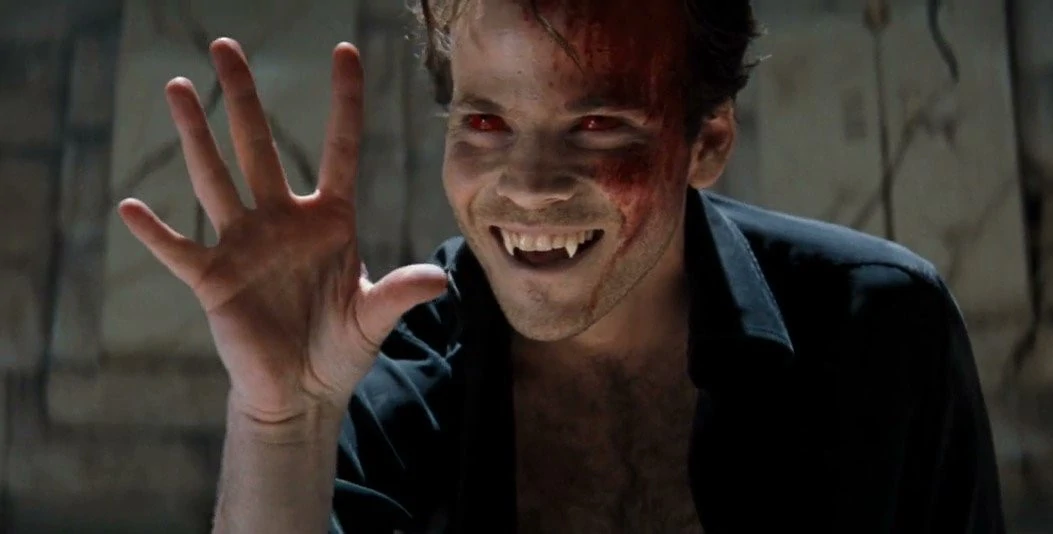
The movies also have other themes that are worth exploring. The first film deals with issues of legitimacy and belonging in the internecine struggles between the ruling class of those ancient and powerful members who were born vampires, and the lower vampires who were “simply turned” and who are therefore lesser in their masters’ eyes. The villain of this film, the vampire Deacon Frost (the same vampire who killed Blade’s mother and created Blade) is somewhat sympathetic in his fight for equality for his fellow “turned” vampires. He also wants to enslave humans as “cattle” for vampire consumption and resurrect a vampire Blood God to rule the world, though, so he’s still the bad guy.
**Spoilers for Blade II in the next paragraph. I’ve tried to keep them relatively vague, but skip this section if you want to go in blind.
In Blade II, near the end of the movie, we learn that the reaper strain was not a natural mutation, but was created in an attempt to bring about a new race of super vampires with no weaknesses to sunlight or silver or garlic. While Nomak and the vampires he infects are certainly horrifying and dangerous to both vampires and humans, again we are left to question whether the circumstances of one’s birth need dictate the course of one’s life. The question is even more pressing here considering the reapers’ condition necessitates constant feeding to merely survive (unlike vampires, who presumably only need to feed sparingly). Eventually Nomak kills both his creator and the new breed of super vampires, but shows a slight bit of (relative) mercy by simply cutting his father’s throat instead of infecting him with the reaper virus and causing a slow death. The creation is ultimately more benevolent than his creator.
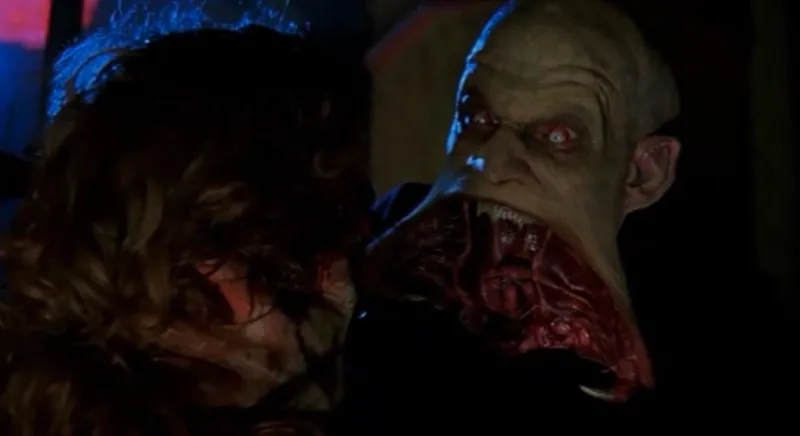
Blade: Trinity continues the “genetic-manipulation-to-create-a-master-race” thread, this time going straight to the source for Drake’s (no, I refuse) Dracula’s DNA. This time, however, the heroes decide to fight back with their own biological weapon, an anti-vampire virus called Daystar that will kill not only Dracula but also any vampires nearby. There’s not much more to add to the section above about this movie, but I did appreciate that Dracula’s true form features a split lower jaw exactly like the reapers in Blade II. This is perhaps hinting that the genetic tampering “reawakened” the feature that had lain dormant in vampires for generations, legitimizing the physiological change in the series’ mythos.
Most of the third film deals with Blade attempting to cope with the loss of his mentor and taking on a mentor role himself. For someone who is used to not being responsible for anyone but himself, Blade is reluctant to join a group of vampire hunters called the Nightstalkers, much less lead them like they want. There is an interesting dynamic in the change of mentor-mentored relationship – Blade is mentored by a man named Abraham Whistler who becomes like a father to him, and then in turn becomes mentor to Whistler’s daughter Abigail after Abraham’s death. Perhaps this is good choice; after two movies exploring liminality and resisting temptation, it’s nice to focus on a different theme that reflects the natural growth of Blade’s character arc. (For a pretty interesting article on Blade and the power of liminal privilege, I’d check out this article here.)

These films also feature an all-star cast. Wesley Snipes obviously occupies the titular role, but the first film also has Kris Kristofferson as Blade’s mentor and mechanic Abraham Whistler. Blade II goes a step further by casting a young Norman Reedus (of Walking Dead fame) as Blade’s other sidekick Scud, as well as a pre-Hellboy Ron Perlman and martial artist/actor Donnie Yen as vampire commandos Reinhardt and Snowman, respectively. Yen is responsible for the excellent fight choreography, which makes up for his lack of even one line in the film. Trinity has Snipes team up with both Jessica Biel (playing Whistler’s badass daughter Abigail) and a pre-Deadpool Ryan Reynolds (constant irreverent quipping and all), as well as a small cameo by Patton Oswalt as the nerdy tech support for the Nightstalkers (think of him as Q to Snipe’s Jame Bond).
Overall, it’s not hard to see why these movies paved the way for the world of quality superhero films we have today. They’re fast-paced, but also have introspective moments. They have plenty of action, but aren’t afraid to touch on deeper elements like loneliness or temptation. And the trilogy’s ending leaves it open for a sequel, which Disney Marvel has decided to take full advantage of by making a new Blade film set to release sometime after 2022. Personally, I feel like Marvel films have become so popular because they allow their heroes to be inseparably associated with the actors who portray them (really, for a man in a suit, how much do we see Iron Man’s face?), so I’m surprised this franchise is one they’d choose to reboot instead of retroactively making the series part of the MCU. Batman can be played by five different actors, but Wesley Snipes IS Blade. I suppose we’ll see.
Next time, we’ll take a slightly darker turn with an infamous entry into superhero movies and film in general, 1994’s The Crow. Until then, eat something with extra garlic tonight, just to be safe.
 Culturally Opinionated
Pingback: Super Cinema Series: X-Men Trilogy (X-Men, X2: X-Men United, and X-Men: The Last Stand) – Culturally Opinionated