Before 2008 and the rise of the Disney-Marvel titan, if you were to ask someone who’s generally unfamiliar with comic books to make a list of any superheros they were familiar with, chances are they would give you a relatively short list. At the top of this list would probably be Batman, Superman, and Spider-Man, with the Incredible Hulk and even Captain America as possible runner-ups. The early 2000s introduced another well-deserved and overdue addition to this list of quintessential superheros: the X-Men.
Created in the 1960s by comic legends Stan Lee and Jack Kirby, the members of the X-Men team and their opponents have done battle on comic page for decades. The X-Men themselves are mutants, “a subspecies of humans who are born with superhuman abilities activated by the ‘X-gene,'” (according to Wikipedia, if you want to get technical). Some of the mutants, led by Professor Charles Xavier (conveniently known as Professor X), wish for mutants and regular humans to live side-by-side in harmony and work tirelessly toward this goal. Other mutants, usually led by Erik Lehnsherr, aka Magneto, distrust humanity (who are admittedly usually hostile towards mutants) and seek to establish themselves over their non-powered “inferiors.” Followers of Magneto make up the Brotherhood of Mutants, while Professor X’s team form the X-Men. Over the years, membership of both teams has changed frequently, giving us household names like Wolverine, Storm, Mystique, and Rogue as well names more familiar to dedicated fans than the general public like Psylocke, Banshee, Mastermind, and Blob.
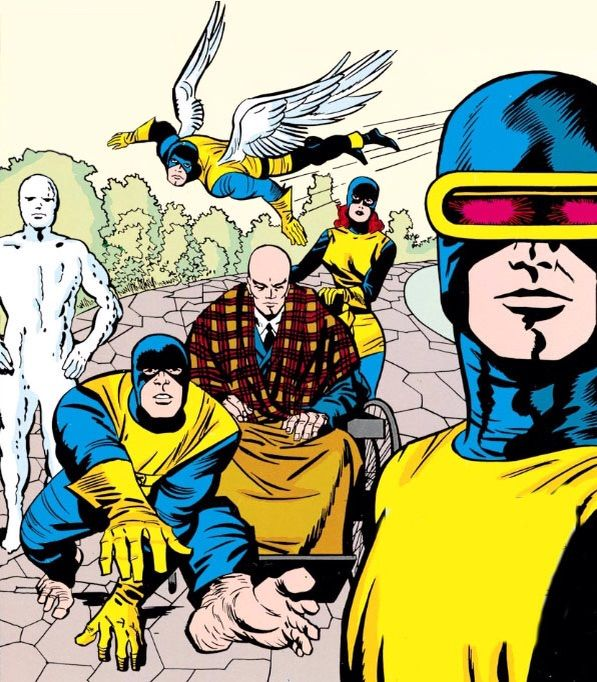
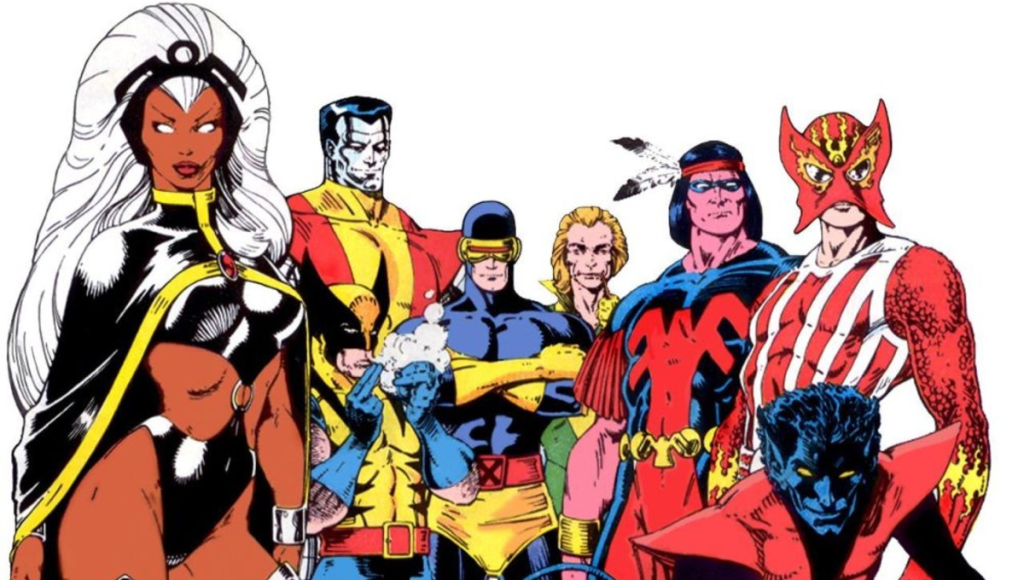
This large and ever-growing cast of heroes and villains is what most appeals to me about this property. There are so many characters from which to choose (or not choose) a favorite, to follow and become invested in because of their powers or their personalities and their relationships to others. My personal favorite X-Men (X-Man?) is Nightcrawler. Real name Kurt Wagner, Nightcrawler has blue skin and black hair, is a German Catholic, and along with his father Azazel, has the power to teleport in a puff of blue smoke. Why is he my favorite? I really couldn’t give you any specifics other than I just think his powers are cool and I’ve secretly always wanted to have blue skin.
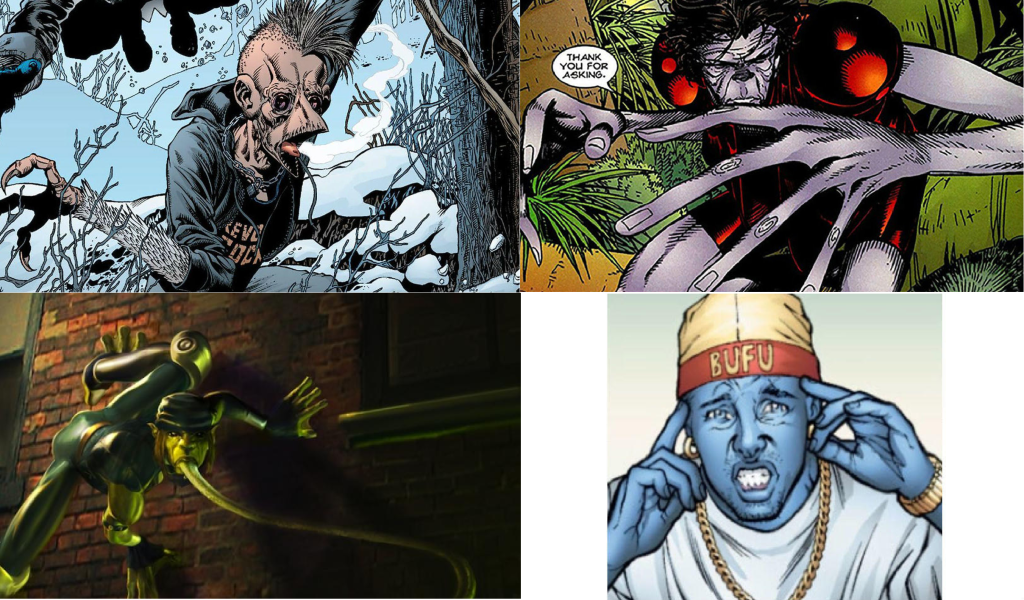
Julia, on the other hand, found Magneto especially compelling for several reasons. Firstly, he’s morally ambiguous and very complex as a character, not wholly good or evil. Magneto IS fanatical in his devotion to placing mutants (Homo superior, as he refers to them) as the rulers of the world over humans by almost any means, so he is obviously a villain. However, he is also a Holocaust survivor and is driven by the comparisons he sees between the situation of Jews under the Nazis and that of mutants in a society that fears and often hurt them. Additionally, seeing as Magneto has the ability to bend metal to his will, his power is actually useful the majority of the time, compared to the abilities of other mutants. (The mutant Toad, for example, can make superhuman jumps and has a super long tongue. Superman, he is not.) Everyone has a favorite, and while some mutants are objectively more powerful or useful than others, your favorite is as valid as anyone else’s.
But the appeal of the X-Men extends far beyond personal affinity for characters. Since the beginning, the X-Men comics have featured stories dealing with touchy contemporary issues such as racism, religious discrimination, homosexuality, anti-Semitism, and genocide, to name a few. The varied and talented writers over the years created stories with complex and layered themes and characters that don’t always conform to a standard good-versus-evil dichotomy. Magneto is the most obvious example, but this complexity extends to nearly all the main characters of the X-Men universe, and has produced some of the most well-loved stories in comic literature.
Needless to say, by the time director Bryan Singer approached 20th Century Fox about making a live-action X-Men film, studio executives were willing to give mutantkind their chance to shine on the big screen. It was a gamble that definitely paid off.
Beware spoilers below, because it would be hard to talk about a trilogy whose story builds on itself with spoiling a little.
X-Men (2000)
As we’ve discussed before, Marvel’s big break into film was Blade in 1998. The choice to ground Blade’s universe a little more in reality certainly had an impact on the X-Men movies, according to this article:
“The unlikely success of New Line Cinema’s Blade film in 1998 woke studios up to the fact that Marvel superheroes could actually work. Fox went ahead with 2000’s X-Men, but learned a lot of lessons from Blade; for example, they ditched spandex, dialed down on the extreme nature of some characters’ superpowers, and tried to darken the tone of the film slightly. At the time, X-Men fans didn’t really care; they were simply delighted at the unprecedented chance to see their favorite mutants on the big screen.”
Remember, this was 11 years after Tim Burton brought Batman to the big screen with Batman (1989) and Batman Returns (1992) to wide audience and critical acclaim. But it was also 5 years after Batman Forever (1995) and Batman and Robin (1997), which conversely were so unpopular that they almost killed superhero movies for decades. (Personally, I don’t think they’re so bad, but I do understand how people that fell in love with the tone of Burton’s Batman would not appreciate the tonal shift of these two films.) People were only comfortable with a certain amount of spandex before it became too silly. So choosing to take the X-Men, with their superhuman powers and more comic-book-esque premise, and present them as people that exist in the real world is a great choice for an introductory movie. Even the mutants with more outlandish powers, such as Storm with her weather-controlling ability or Magneto at one point bending parts of the Statue of Liberty, don’t come across as goofy or out of character with the mood of the universe the director Bryan Singer creates. The movie even acknowledges this departure from tradition: when Wolverine condescendingly asks if the the other X-Men actually go outside in their uniforms, the team’s leader Cyclops counters with “Well, what would you prefer? Yellow spandex?” to references their comic attire (and maybe to poke some fun at Batman’s newer spandex suit).
Spoilers
The plot for the mutants’ first outing is both compelling and “comic-book silly.” The film opens with a teenage girl, Rogue, accidentally almost killing her boyfriend with her unfortunate power (she steals the life force out of living things through skin-to-skin contact) and running away from home to avoid hurting anyone else. During her escape, she runs into Wolverine, himself a misanthropic loner, and the two decide to stop being lonely by being alone together. Their new friendship is interrupted, however, as they are drawn into the main conflict of the story between Magneto and Professor X. Magneto and his followers feel threatened by the outward prejudice of regular humans against mutantkind. To solve this, Magneto builds a machine that activates genes in human DNA to bring out dormant mutations, and plans to unleash this weapon on the world’s leaders so that world politics will align with Magneto’s ideology. Unfortunately, unbeknownst to Magneto, his machine also kills its victims, so it’s up to Professor X and his X-Men to stop him and save the day. This movie superbly balances these two stories, giving us an exciting clash of titans with the fate of the world at stake while also finding time to address the idea of runway mutants who are looking for a safe home in a hostile world.
End of Spoilers
X-Men is, of course, the introduction of Hugh Jackman’s portrayal of Logan/Wolverine, the Canadian mutant with an unbreakable skeleton of fictional metal adamantium, no memory of his past, and claws that can rip through pretty much anything. Wolverine is brought into the world of mutants and the X-Men from the outside, and so he acts as a proxy for the audience in their introduction to the struggle between the forces of Professor X and Magneto. It’s natural for the movie’s narrative to focus on him. This unfortunately means that other characters are sometimes pushed to the sides of the action, but with such a large cast of important characters, it would be very difficult to give everyone their deserved amount of attention in 104-minute runtime (at least until Avengers: Infinity War and Avengers: Endgame). Wolverine is an engaging character and was a fan favorite for comic fans, so this choice definitely works in the movie’s favor. But it also begins a trend that will become a problem for the franchise as a whole, especially by the time we get to X3.
To someone like me who didn’t read comics growing up, X-Men leaves a fantastic first impression, both as an introduction to a larger world to explore and as an action movie by itself. My only real critique is that, of the three movies in the original X-trilogy, this is the one whose effects have aged the worst. Even in a genre where people change their outward appearance at will and shoot lasers from their eyes, there were occasionally points where the obviously fake effects were jarring. Maybe I’ve just been spoiled by the high quality of the MCU. I’ve also heard some criticism that this movie does so much setting up the universe that it barely leaves room for a story. It’s a valid point, but for me seeing this for the second time and Julia for the first time, the movie didn’t strike us as being too cluttered at all. Again, neither one of us are comic-readers who went into this movie waiting to see Mystique take up all the screen time, so that might have something to do with our favorable take.
X2: X-Men United (2003)
A sequel should do several things in order to be considered “great” in comparison to the original. It should improve on the original by deepening and developing the characters from the original, as well as growing the universe and lore that was introduced. This can involve adding new locations or new characters to the story, upping the stakes of the story, or even sacrificing characters to stimulate the growth of others. It’s generally accepted that some of the best movie sequels ever made include The Empire Strikes Back, Aliens, Terminator II, and The Godfather, Part II. In my opinion, X2 also deserves a place on that list.
Spoilers
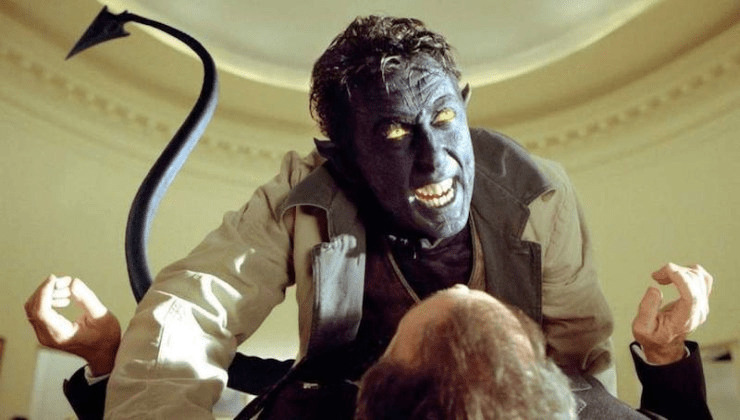
X2 isn’t held in as high esteem as the films listed above, but in terms of its quality as a sequel to its original, it hits the mark dead on. It deepens several characters: a large part of the movie reveals Wolverine’s origins, for example, and Rogue develops connections with some of her classmates and even develop a romantic relationship with fellow student Iceman (something the first movie denied her based on her life-stealing powers). It gives us new mutants, both good and evil, to be invested in (and to sell toys, of course). A younger generation of X-Men begin to come of age, including Rogue’s fellow students Iceman and Pyro (predictably with ice and fire powers, respectively). A new villain, Lady Deathstrike, is another adamantium-infused mutant who provides a deadly match for Wolverine. My favorite addition is Nightcrawler, who features in the movie’s opening by trying to assassinate the U.S. President. It’s later revealed that he is under mind control and not responsible for his actions, making him a reluctant but welcome member of the X-Men; nevertheless, the way he is able to subdue an entire White House full of agents is a great opening to an action movie.
The movie’s villain, Colonel William Stryker, serves two purposes. On the one hand, he is the man who “created” Wolverine, fusing the indestructible adamantium metal to his skeleton (Wolverine already had the claws, made out of bone) in order to use Wolverine as a military weapon. Wolverine, naturally, wants revenge for being used. On the other hand, Stryker has a plan that once again straddles the line between comic book goofy and realistically terrifying. Professor X is able to use his telepathic powers to locate mutants around the world, amplified by a machine he and Magneto created called Cerebro. Stryker, who hates mutants as a whole and Professor X specifically, wants to use a mind-control agent to trick the Professor into using Cerebro to find every mutant on the planet and then kill them. Keep in mind that there are far more mutants in the world than those we see in the X-Men or the Brotherhood, so this is basically a genocidal act. I think Stryker acts as an thought-provoking villain, especially when compared to Magneto. Both human and mutant despise the other group and are willing to go to extremes to ensure their group remains dominant. Their fanaticism parallels each other beautifully – after stopping Stryker, Magneto attempts to use Cerebro to kill all humans instead. The threat posed by Stryker even causes Magneto and Professor X to team up, forcing enemies into an uneasy alliance that is nevertheless lots of fun to watch.
X2 continues the trend of “middle movies” of a trilogy of ending on a cliffhanger. Near the film’s climax, the X-Men’s jet is in danger of being destroyed by a broken dam along with everyone on it. Jean Grey, whose powers have been increasing throughout the film, realizes she is the only one powerful enough to save her comrades, but at the cost of her own life. She sacrifices herself to allow the jet time to escape, and while the entire school mourns her death, both Wolverine and her lover Cyclops take it the hardest. However, at the very end, we see that the lake that has become Jean’s grave is now the source of some strange activity in the shape of a phoenix, foreshadowing one of the most famous comic storylines ever to come.
Again, there is so much more to talk about in this movie, but it’s so good that I’d rather people watch it than have me just explain it to them.
End of Spoilers
X2 continues the tradition of its parent comics in substituting mutants for other marginalized groups to approach controversial issues. Nightcrawler, for example, is a devout Catholic who is ironically racked with guilt because he looks like a demon. He’s covered in self-inflicted scars, one for each of his sins. And yet when he asks the similarly blue-skinned Mystique why she doesn’t use her powers to look “normal” all the time (a power he longs to have), she answers “Because we shouldn’t have to.” At another point, several of the younger mutants and Wolverine are on the run and take refuge at the house of one of the students, Iceman. Iceman’s parents don’t know he is a mutant, and when he reveals that he and his friends are not just at an exclusive boarding school but a mutant academy, his parents are stunned. He’s still their son and they love him, but they are a little afraid of his powers. His mother even asks “Have you ever tried not being a mutant?” not out of maliciousness but out of confusion about how to react to this news.
All in all, it’s a fantastic movie for hardcore fans and casual viewers alike, and while the first movie’s special effects are a little dated now, X2 holds up with the best of them. Which makes what happened to X-Men: The Last Stand so confusing and (for many fans) disappointing.
X-Men: The Last Stand (2006)
Ask any comic book fan to make a list of the worst movie adaptations of a comic book story or character, and after the inevitable entries like Catwoman, Fantastic Four (2015), Superman IV: The Quest for Peace and more recently X-Men: Dark Phoenix, that list would most likely include X-Men 3: The Last Stand. While I can definitely understand why fans would label the movie as such compared to the first two movies of the trilogy, it’s more disappointing than bad. After all, Howard the Duck is much worse than X3, but I don’t think anyone was as invested in that movie as comic fans were in the end of the X-trilogy.
Unfortunately, there’s no way to talk about this movie without spoiling some of it, so be warned.
Spoilers
Mutant Cure Story line
The movie tackles two different but connected storylines, both based on existing comic runs. The first plot is more in line with the social commentary aspect of the X-Men comics. Seeing as mutants get their powers from a mutant gene, mutantism is based in science and genetics. By manipulating the genetic code of a mutant called Leech whose power is that he negates any other mutations in his immediate vicinity, scientists develop a cure that will remove mutations from individuals once administered. The scientists then offer the mutants of the world the ability to become normal humans in what they truly consider a benevolent gesture to ease the suffering of mutants. Some mutants jump at the chance to lead a normal life without their harmful powers– Rogue is one of them. Her touch of death keeps her from having a romantic relationship with Iceman, and after seeing him innocently spending more time with another female classmate, Rogue sees this cure is a godsend. But the presence of a cure at all raises questions, for both the story’s characters and the audience, about whether or not mutantism is a disease that needs to be cured. One exchange between Professor X, Rogue, and Storm lays out this conflict perfectly.
Rogue: Is it true? Can they cure us?
Professor X: Yes, Rogue. It appears to be true.
Storm: No, Professor. They can’t cure us. You want to know why? Because there’s nothing to cure. Nothing’s wrong with you. Or any of us, for that matter.
On the surface, this statement by Storm seems like a perfectly normal response. As well-meaning as the scientists may be, their work spits in the face of mutants like Storm who consider their powers part of who they are and who they were born to be. On the other hand, however, Storm and similar mutants have awesome powers that they WOULD be proud of; controlling the weather is far superior to being forced to constantly watch who or what you touch for fear of killing them. And I’m far from the only one who thinks so:
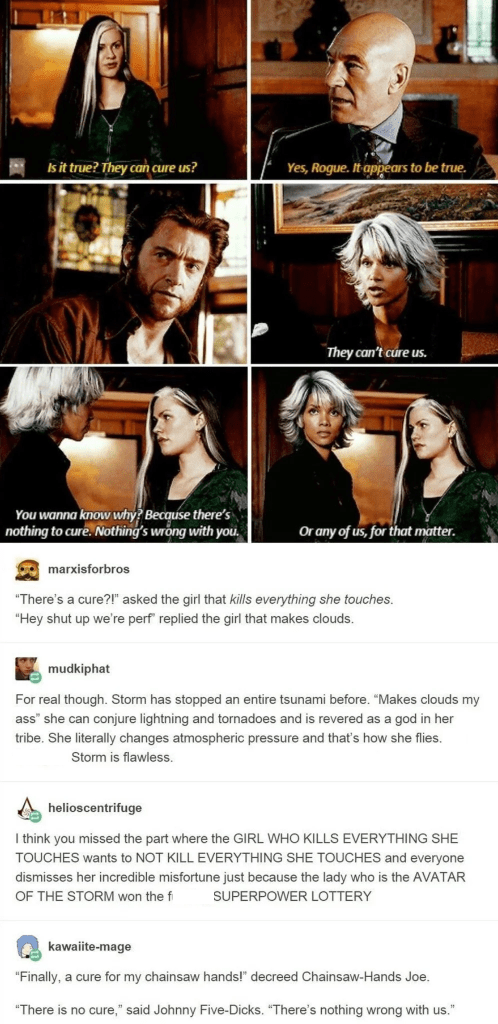
But instead of seeing this as an inconsistency on the writers’ part, I think this is a great example of the complexity of the story. No one is wholly right or wrong, even characters who are usually labeled “good” or “evil.” And remember, the films pull from the comics, which to me is another motivation for the general public to see comics as a legitimate storytelling medium.
Dark Phoenix Story line
The other storyline of the movie, however, is the one fans find more disappointing. You’ll remember that X2 ended with the death of Jean Grey, who sacrificed herself to save her teammates. This, along with the final image of the film, let comics fans know that we would finally see one of the most famous and ambitious comic stories ever printed: the Dark Phoenix Saga. A summary of this story would be much too long to go into here, but I would recommend if you’re interested to either watch this extremely simplified summary here or these two longer videos that are more in-depth (here and here). Suffice to say, anyone attempting to adapt this multi-issue story has an extremely difficult task on their hands, and as the recent 2019 film Dark Phoenix has shown, no one has yet succeeded.
For the purposes of our discussion here, know that Jean Grey does not die at the end of X2, instead being protected by a mysterious force that has been present in her since she was born called the Phoenix. The Phoenix is extremely powerful, and young Jean was unable to control it. To protect Jean and the world, Professor X manipulated young Jean’s mind to seal away the Phoenix, a fate the Phoenix did not appreciate. It grew enraged and mad in its isolation in Jean’s mind, and once it saves Jean from death it takes over Jean’s mind with the intent to destroy everything in its path that opposes it. The Phoenix goes on a rampage, first killing Jean’s lover Cyclops and then Professor X himself, before agreeing to help Magento destroy the mutant cure facility and the scientists who created it. In a climactic battle between Magneto’s much larger Brotherhood of Mutants and the remaining X-Men, Wolverine and the other heroes are able to repel the other mutants and subdue Magneto, but are still faced with the seemingly unstoppable force of the Dark Phoenix’s power. Jean Grey is able to break through the Dark Phoenix’s control just long enough to beg Wolverine to kill her before she destroys everything, which he tearfully does. The day is saved, and everyone attempts to move on with their lives.
The Dark Phoenix Saga takes place over years in the comics, so trying to tell the same complex story over the course of at most a week simply doesn’t work. Jean is stripped of almost all her character save for the scene where Professor X attempts to reason with her and the very end. For most of the film, Jean/ Dark Phoenix is relegated to standing behind Magneto and looking menacing. It is sad that the Phoenix destroys Jean’s life and people who cared about her, but the sadness is undercut by Jean’s large absence in the movie, if not physically then as a character. Near the end of the siege of the island facility, I actually forgot Jean was there until she walked out from behind some rubble and started making things float with her mind.
End of Spoilers
One of the biggest criticisms of X3 is the flippant way it treats some of the mutants who aren’t main characters. Before Marvel Studios and the Avengers films proved it was possible to use 500 characters in a single movie and give them all their due, X3 tried to do the same thing and fell short. Granted, the mutants who cameo in this film are just that; they aren’t meant to be given full developed stories and background, but just an appearance and maybe some lines of dialogue as a nod to fans. There are a few exceptions: Ellen Page plays Kitty Pryde, a mutant who can phase through solid objects and who becomes the object of Iceman’s affections (and Rogue’s jealousy). She becomes an official X-Man in this film and is presented as a fleshed-out character. The other is Beast, the blue-furred mutant who is a member of the U.S. Cabinet as the Secretary of Mutant Affairs. Beast is played by Kelsey Grammer and is one of the most spot-on casting choices of all time. I’m no expert on the character, but from what I’ve read Grammer’s portrayal matches his comic book counterpart. Plus, as someone whose favorite show is Frasier, it was especially satisfying to me every time Grammer was in a scene.
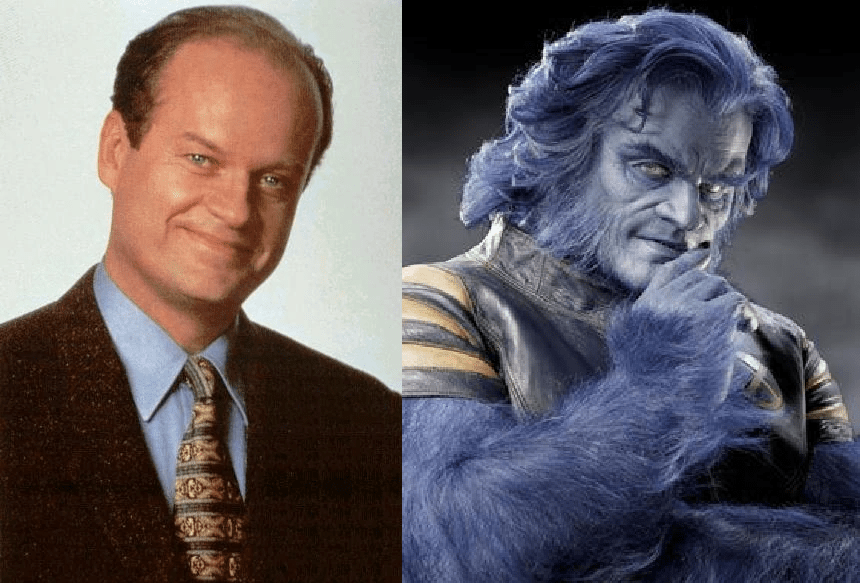
But I can certainly understand that more hardcore X-Men fans who were excited to finally see Juggernaut or Arclight on the big screen might be disappointed in their favorite mutant being relegated to a small cameo.
In short, X3 was my least favorite of the three movies, but I still enjoyed it. In researching for this article, I came across the troubled history of X3‘s production. It’s a very interesting read, and I think explains a lot of the problems this movie had upon release. The change in directors from X-Men and X2‘s Brian Singer to Brett Ratner for X3 account for most of the changes in the approach to certain characters and the presentation of mutants as a whole. For example, Singer was concerned with keeping some of the more fantastic elements from the comics out of the films that attempted to ground themselves a little more in reality. The character of Iceman in the comics is usually presented in his ice-form, completely covered in ice or snow with no human skin showing. Singer chose to keep Iceman exclusively human for his movies to fit his chosen style. Ratner, on the other hand, decided to introduce some of these elements back into the films, and as a result we see Iceman’s ice form late in the film. The necessity of the change is largely a personal preference, but is just one of many examples of the behind -the-scenes changes that affected the final product.
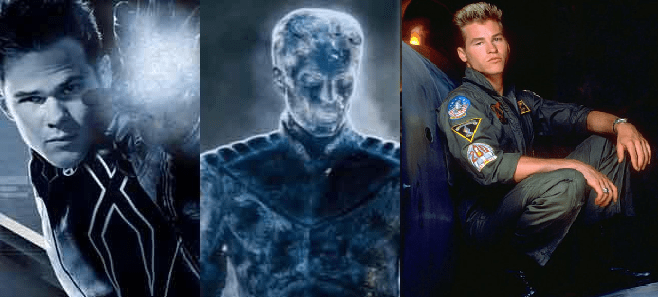
The movie certainly has its flaws, like every movie, but it’s not as bad as everyone seems to remember. If anything, I would argue it’s more disappointing to long-time fans in its handling of some of its characters and the Dark Phoenix Saga. It’s definitely necessary viewing for anyone who has seen the second film in order to obtain closure.
Overall
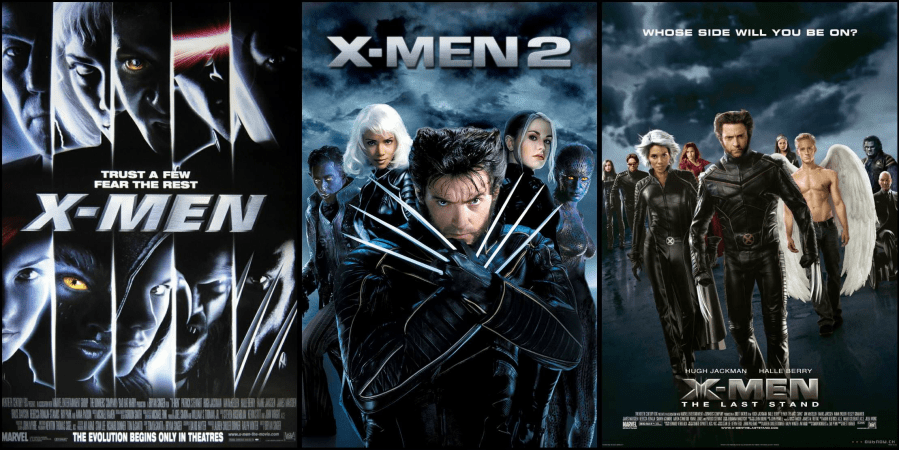
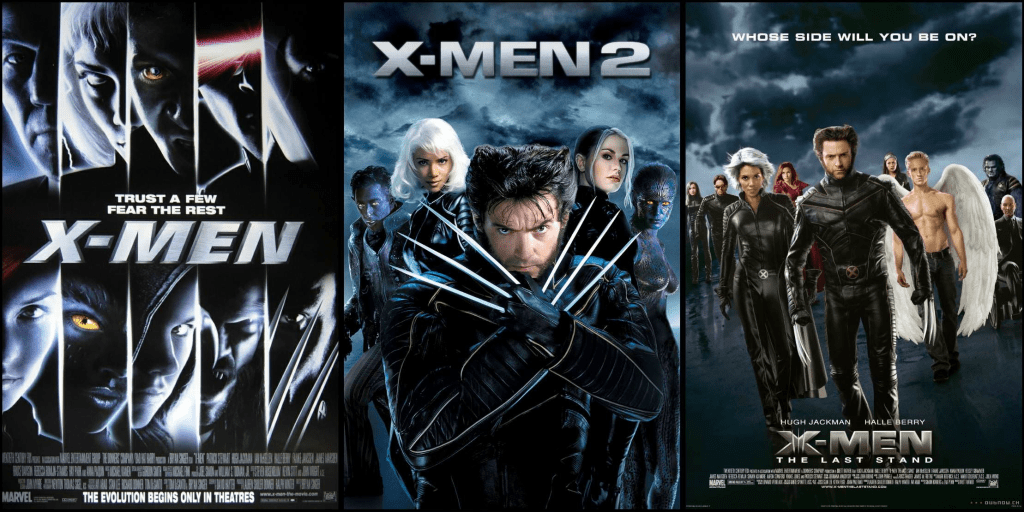
So here’s something we haven’t talked about yet. Looking at these promotional pictures for the trilogy, what similarity do you immediately see?
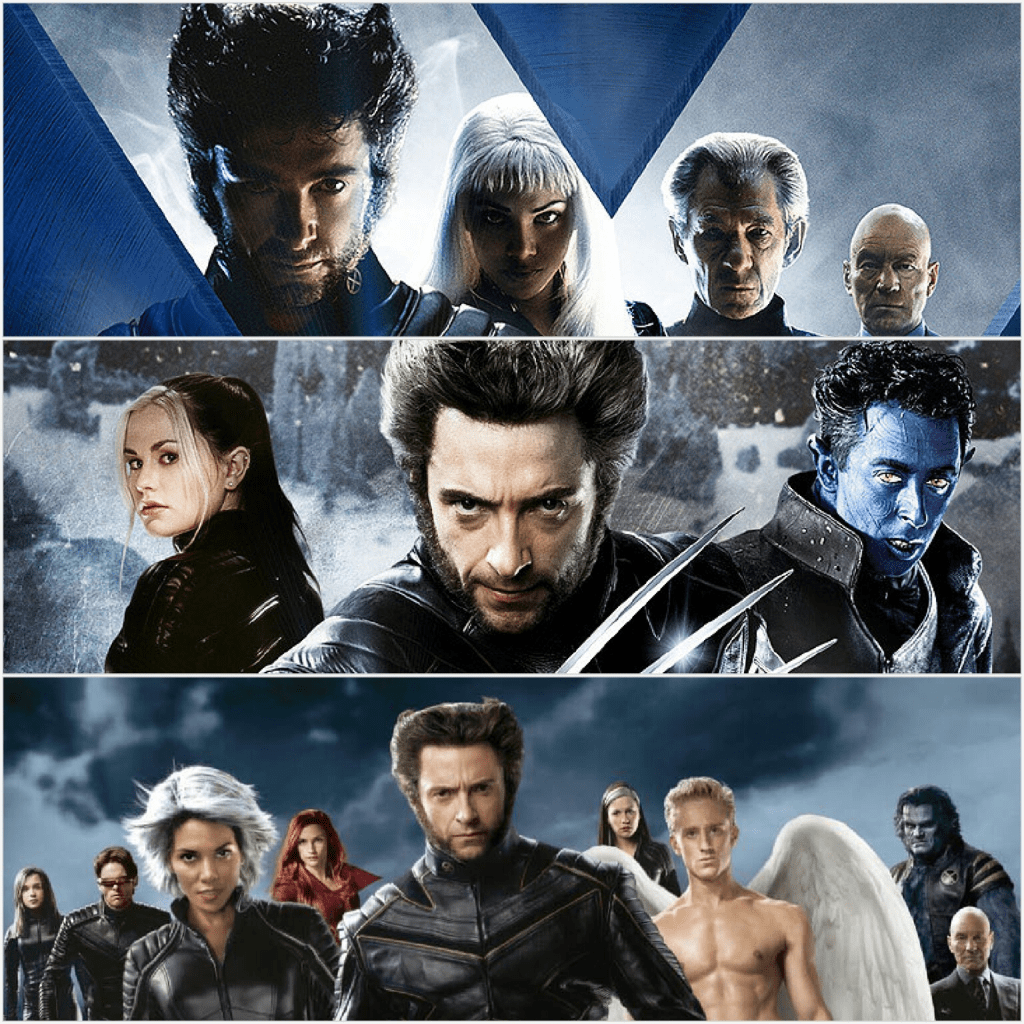
Yes, Wolverine seems to be the main focus of these movies, to the point where you could call it The Wolverine Trilogy. There a couple reasons for this. First, Wolverine had already become a fan favorite before the movies, although this Wolverine was a short, hairy man in a yellow spandex suit. Because this presentation presumably would not endear the wider movie-going public to the character, the filmmakers cast Hugh Jackman as the cranky Canadian. But the changes didn’t stop there. Between films, Wolverine becomes steadily more muscular to the point where his first “manly” appearance is almost laughably “un-super.”
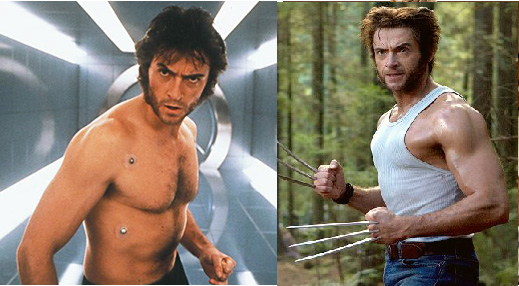
Wolverine is also a good choice because he’s a superhero who doesn’t look bestial or require massive prosthetics or CGI to render (think Beast, Nightcrawler, Wolfsbane, Angel, Colossus, Iceman, or Mystique). His superpower is action-focused, meaning his confrontations make for interesting cinematic fights instead of filming someone standing around looking at things intensely using telekinetic or energy-based powers (like Cyclops, Storm, Phoenix, Professor X, or Magneto). Finally Logan has the best story arc of any character in the three films which spans the entire trilogy. When Logan is recruited by Professor X, he actively hates the idea of being a member of a team and prefers to do things alone. In X2, this loner mentality is exacerbated when Logan decides to take care of Colonel Stryker himself. There’s a scene where the X-Men and Magneto are devising their strategy together when Jean looks at Logan and realizes he’s already run off. Even sworn enemies can work together as a team (briefly), but Logan can’t bring himself to join them. X3, however, shows Logan finally taking responsibility for the students under his care. During the final battle of the film, he even takes command of the X-Men, stating “We work as a team!” It’s very satisfying.
I also appreciated the real-world grounding, as mentioned before. One of the neatest examples of this concerns Magneto. Given that most of the world’s weapons are made of metal and Magneto obviously has control over metal, how can anyone who isn’t a mutant possibly fight him? The movies solve this problem by putting Magneto in a plastic prison and using plastic guns and bullets. It’s creativity like this that helps bridge the gap between comic book silliness and grounded reality to create the happy medium of these movies.
Aside from Hugh Jackman, the first X movie also features Sirs Patrick Stewart and Ian McKellen as Professor X and Magneto, respectively, which in my opinion is perfect casting for these eternally ideologically-opposed characters. Halle Berry portrays the weather-controlling Storm in another example is also great casting. It’s a shame that Storm doesn’t have a bigger role in these movies, especially this first one. But of all the characters whose complexity from the comics was sacrificed at the altar of “More Wolverine in the Movie,” however, Cyclops and Jean Grey fared the worst. As the X-team’s leader, Cyclops is actually a competent leader and a nice guy. But because Cyclops is played by James Marsden, who was doing other things while filming these movies, his role becomes more minimal with each passing film. Combine that with the fact the he has to be presented as an obstacle to Wolverine (the audience’s surrogate) for Jean’s affections and there’s really no hope for him in these movies. Jean also suffers in her portrayal, most notably in the context of the Dark Phoenix story. But again, presenting the number of characters and the amount of history for each of those characters amounts to a Herculean task, and I think the crews and actors did a fantastic job with these films.
Julia’s Corner
And now it’s time for what you’ve all been waiting for: Julia’s Corner!
While I love a good romance story, I HATE a forced love triangle. Jean and Scott are a good couple– they’re well-matched, have a history together, and look out for each other the way an engaged couple should. Why on earth would she look at Logan as anything other than a friend and new member of the team? George informs me that in the comics the attraction is completely one-sided (Logan ->Jean) but that is not at all the way it comes across in the movie, and I started losing respect for Jean (and the writers) the second she began giving wolfman second glances. Poor Scott. James Marsden is too pretty to be sidelined like that.
There is so much I haven’t talked about in these three very popular movies, like changes to Mystique’s character or the many excellent fight scenes throughout the trilogy. But this article is long enough already, and if you’ve stuck with me this far you should be rewarded with some great movies anyway. Be sure to keep trilogies in mind, however, because next time we’ll be looking at an equally popular and lasting set of films: the Spiderman Trilogy. See you then!
 Culturally Opinionated