
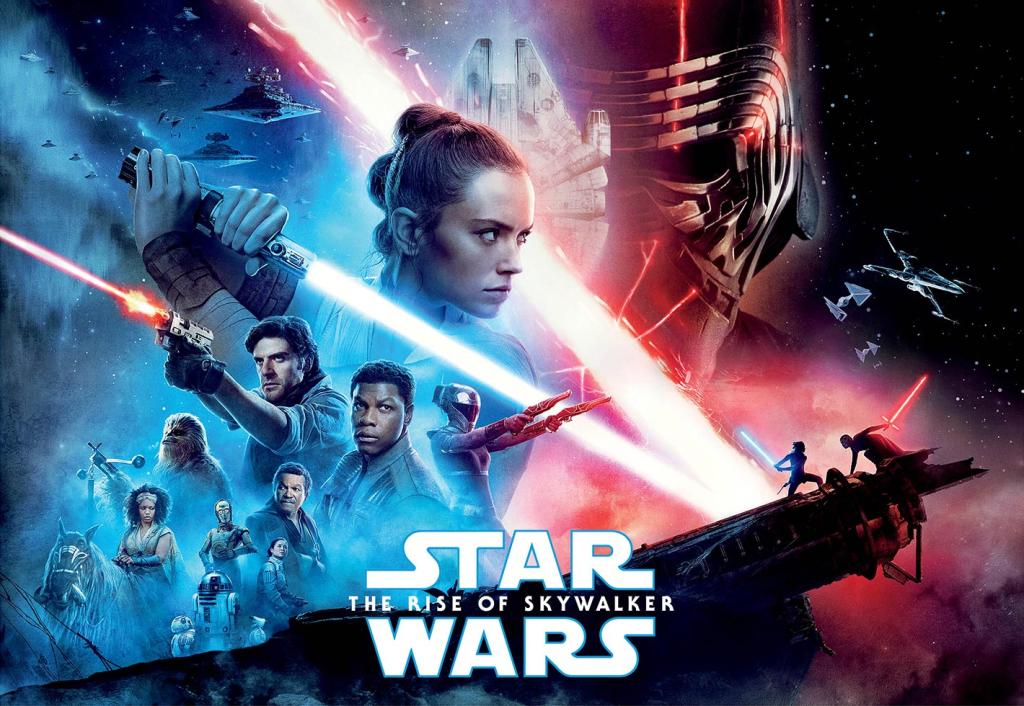
When The Rise of Skywalker was released in theaters last December, I went to see it with Julia on opening night. Considering how critical I’ve been about Disney’s Star Wars, it might seem surprising. Usually midnight releases of movies are only attended by the most devoted and excited fans. But as much as I have disliked the Disney era of Star Wars so far and as much as I think The Last Jedi is without a doubt the worst Star Wars film ever made, I couldn’t help being at least a little excited for this final movie in Disney’s Sequel Trilogy. After all, I thought, here at the end of the story, director J.J. Abrams and the other writers would surely try to wrap up the loose ends of their trilogy for a satisfying ending. And who doesn’t enjoy the movie-going experience of a dark theater and a big screen with surround sound, especially for a Star Wars movie?
I had tried to avoid reading or listening to anything about the movie leading up to its release so I could experience the story as unspoiled as possible. The exception was the final trailer for the movie from several months earlier, and I had been simultaneously excited and confused that the Emperor (who had died 30 years and 2 movies before this one) was apparently going to be present. Aside from that, I was proud at my self-restraint staying away from YouTube videos and internet articles trying to guess the film’s ending. And so I walked into the theater on opening night, popcorn in hand, tentatively optimistic about how Disney, Abrams, and Lucasfilm would end the story that is so much a part of my everyday life and the lives of the American public in general.
Two hours and twenty-two minutes later, Julia and I were on our way back home around midnight. Though we shared our opinions about some of the movie’s larger moments, the car ride was mostly silent as I gathered my thoughts. Julia finally asked me what I thought of the movie overall.
“Honestly,” I answered with a sigh, “it was…disappointing.”
The ending of The Last Jedi left me shocked and angry at the lack of respect director Rian Johnson had shown this beloved franchise in the name of “subverting expectations.” Rise of Skywalker, on the other hand, had simply left me disappointed at how everything had ended. I know there are plenty of fans, young and old, who enjoy these new films and everything about the new Star Wars universe. But for me and other (mostly older) fans, the thematic direction of these new movies doesn’t pay homage to Lucas’ vision, and at times seems to gleefully spite them. Rise of Skywalker was the last chance at redemption for the Disney-era Star Wars trilogy for fans like me, and in my opinion it was wasted. I had gotten my hopes up that the end of the 30-year “Skywalker Saga” would be satisfying, and the fact that it wasn’t for me was just a real downer for me.
According to Julia, even my body language made it clear how I felt about this franchise I put so much investiture in. During an hour-long car ride with Julia the day after seeing The Last Jedi, I had so many grievances to air that I had barely stopped talking long enough to breathe. (This is a story that my unwilling and captive audience Julia grumpily reminds me of whenever she needs a little peace and quiet.) But disappointment for this movie had left me not with fiery indignation but morose resignation.
It may seem like an overreaction But for better or worse, Star Wars is an integral part of our modern mythology in 21st-century America. Trying to write it (and fans) off by cynically categorizing it as “just a space wizard movie for kids” is being willfully ignorant of the cultural impact is has had and continues to have.
That weekend was mostly spent moping around the apartment. But by Monday morning, my disappointment had changed to acceptance and relief that this trilogy was finally finished.

Now, almost three months later, I’ve recently read an article from the online publication The Artifice titled The Rise of Skywalker Succeeds as a Legacy Film But Illustrates the Flaws of the Disney Star Wars Era by Sean Gadus. In response to this article, I think now is as good a time as any to finally vent a little about my frustrations with this final film.
For the most part, I think this is a great article. I especially think Gadus nails some key issues in Part II (“The Rise of Skywalker Fails To Provide A Satisfying Conclusion To The Sequel Trilogy And Demonstrates The Flaws Of Disney Era Star Wars“) about this trilogy’s main issue: that there was little to no overall plan for the story going in at all from the Lucasfilm story group. The entire trilogy really suffers for it. Even though the Prequels get a lot of hate, at least they have the advantage of being created by the same mind that thought up Star Wars in the first place. To quote Lucas, “It’s like poetry, they rhyme.” Switching directors between movies as the Sequel Trilogy did takes away this commonality of theme and tone, especially when one of those directors sets out to actively go against what has come before.
And as much as I don’t personally care for the Disney tenure of Star Wars so far, I’m glad younger people can enjoy what is basically THEIR Star Wars now. As someone who grew up with the Prequels, I understand what’s it’s like to have “your” version of something be constantly criticized.
But I strongly disagree that this movie is a love letter to the Star Wars that came before it. This movie isn’t even a love letter to the movie that immediately preceded it. This is evident from one of the first scenes, where Kylo Ren is speaking to the resurrected Palpatine and passes by a vat of half-grown clones of Supreme Leader Snoke, the villain of the previous movies. Palpatine punctuates this image with the revelation “I made Snoke.” This seems to be included primarily to appeal to those fans whom Johnson upset and agitated. The fact that J.J. Abrams introduced the mystery of Snoke’s history in the first place and had that mystery trivialized by the next director is probably not unimportant either.
I do think it’s obvious that the film is especially reverent to the Original Trilogy, but only insomuch as it features little callbacks or Easter eggs to the movies Disney knows the majority of their audience like. Billy Dee Williams returns as Lando Calrissian. Chewie finally gets a medal that he didn’t receive at the end of A New Hope. Leia dies in a mysterious and Force-filled way to honor Carries Fisher’s passing. Wedge Antilles, the only Rebel pilot who isn’t a main character to survive all the battles of the original movies, makes a one-line cameo during the final battle of this film from the seat of his X-Wing. Some may consider these additions to be fun connections to the story of what has come before. I don’t. If anything, given the way the current Lucasfilm has treated the material they inherited, these references in Rise of Skywalker are Disney/Lucasfilm cynically attempting to placate both casual and more devoted fans after the split caused by The Last Jedi.
Let me give a quick example: In 2014, when the franchise changed ownership, Disney/Lucasfilm famously de-canonized all the material of the Star Wars Expanded Universe (the books, video games, and comics not touched by George Lucas) that had accumulated over almost 30 years. This included throwing out numerous Dark Lords of the Sith who existed outside Lucas’ movies, such as Darths Revan, Tenebrous, Bane, and Nihilus. However, in the visual dictionary for Rise of Skywalker, we learn that all the legions of Sith Troopers (the red stormtroopers in the movie) are named after these ancient, non-canonical Sith Lords (the Revan Legion, etc.).
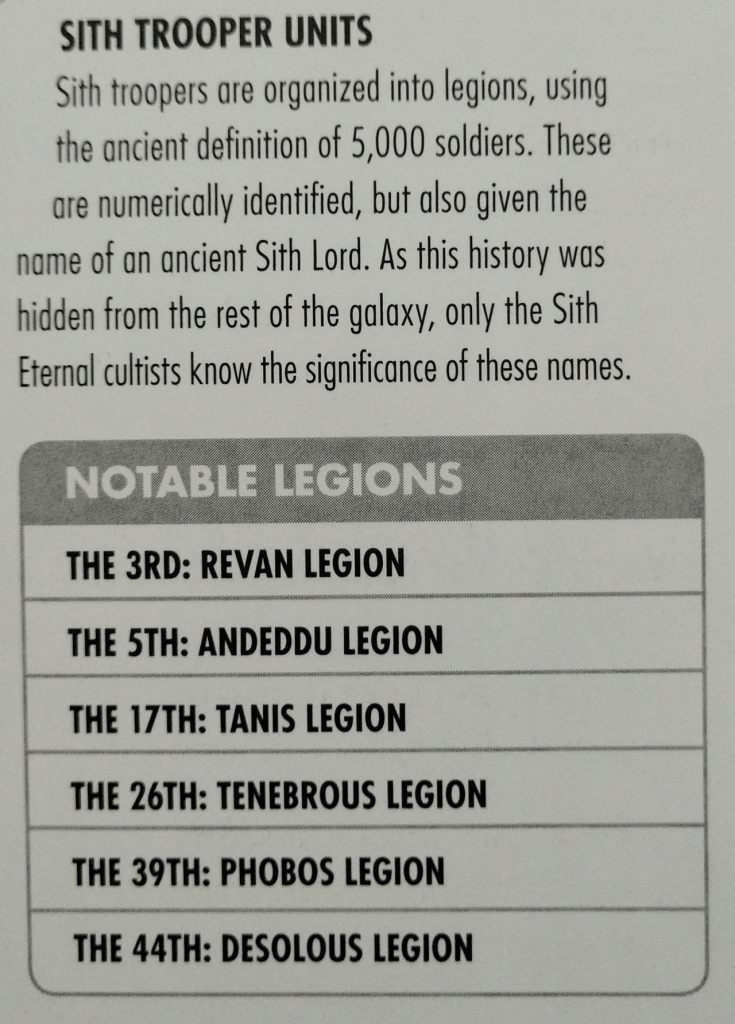
Why does Lucasfilm suddenly find the desire to reintroduce these names, and by extension these characters, back into canon here at the eleventh hour of the story? Perhaps it’s cynical of me to think so, but I have a feeling this decision has nothing to do with a genuine concern from Lucasfilm about reintroducing fan-favorite concepts back into canon to foster a good relationship with their fans. Instead, this is an attempt to placate fans who were angry with the perceived mistreatment of core franchise elements in The Last Jedi by throwing some names these fans will recognize into the movie. (These references obviously aren’t meant for casual fans, seeing as they are not mentioned in the movie itself and only appear in the visual dictionary that presumably only dedicated fans are going to buy.) These characters and elements weren’t important enough to keep in-canon before, but now are suddenly both fun and important additions to the story.
I am skeptical. As a long-time fan, this isn’t a love letter. This is a letter from an ex who cheated on me referencing the good times we had and begging me to love them again.
And considering that current Lucasfilm has been attempting to distance themselves from Lucas’ Prequel Trilogy as much as they possibly can, this “love letter” continues to have less and less love for me. Disney has brought back The Clones Wars (a Prequel-era TV show) for one final season on Disney+ solely because they know the fans love the show and will spend money on merchandise. The irony that the current Disney/Lucasfilm cancelled the show after acquiring Lucasfilm and is reviving it this way is hopefully not lost on them. Anything else to do with the Prequels, however, is shunned like the plague.
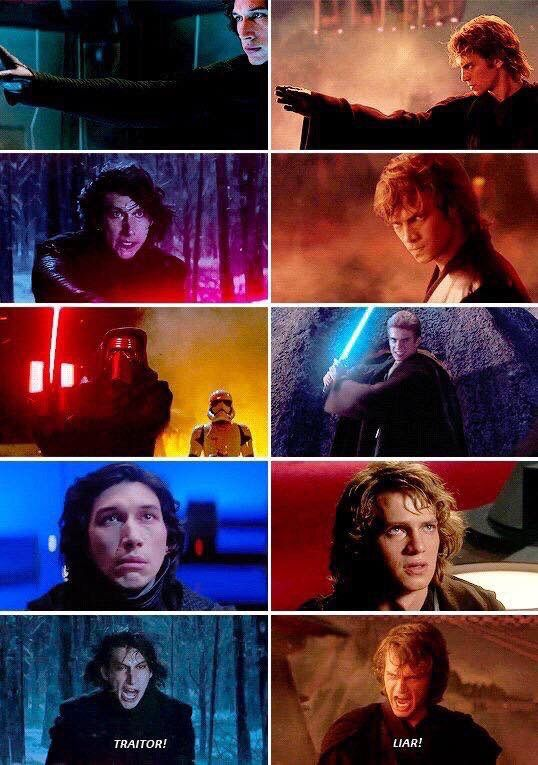
In Rise of Skywalker, there is one scene where various Prequel Jedi briefly speak to Rey as she’s fighting Palpatine. Aside from this, where are any of the Prequels references in the new trilogy? Is Darth Vader EVER referred to as Anakin Skywalker in these films? Or do they only reference Darth Vader, a character from the Original Trilogy? Did no one think that Kylo Ren might benefit from a visit from his grandfather’s spirit where Anakin tries to stop Kylo from making the same mistake falling to the Dark Side that he did? Much like the emotional scene where Han (or Kylo’s memory of his father) speaks to Kylo and forgives him, a similar moment with the ghost of Anakin would be a terrific addition to this movie. But even though these films are the “end of the Skywalker Saga,” no one thought including the original Skywalker was important.
Similarly, is it ever addressed that Palpatine’s unexplained return in Rise of Skywalker invalidates the prophecy of the Chosen One who would bring balance to the Force, a central theme of the Prequels? Did Anakin’s sacrifice and redemption to save his son at the end of Return of the Jedi mean nothing, since the Emperor survived? The answers are apparently “Yes” and “No,” respectively. Lucasfilm knows the Prequels have a negative reputation with general audiences, and they don’t want this to infect their new movies, regardless of the Prequel material’s thematic importance to the Skywalker Saga that Rise of Skywalker is ending.
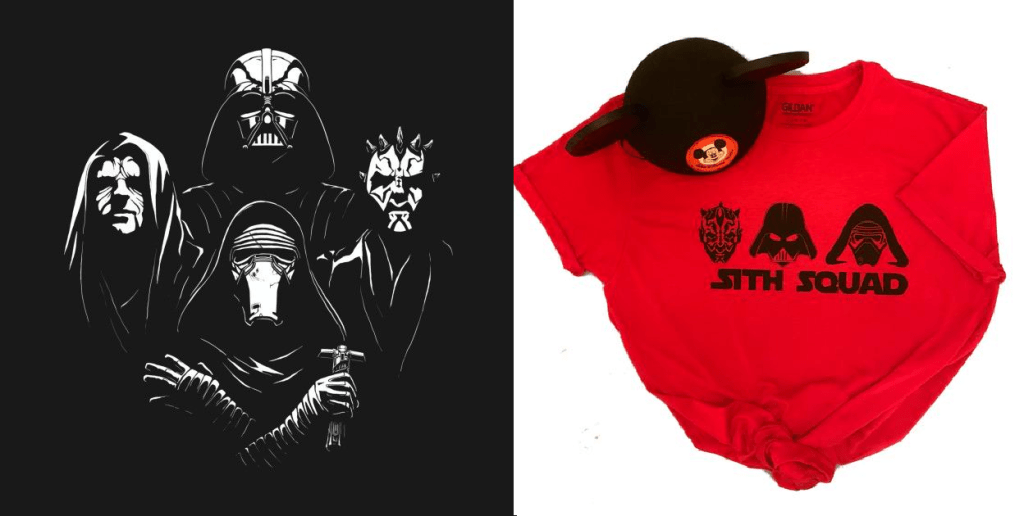
On a very minor note, one of my personal peeves with the lack of continuity from Lucasfilm is how the classification of Kylo Ren as a Sith continues to change. In Star Wars, you are only a Sith if you are instructed in the Dark Side by another Sith. There are plenty of Dark Side users who aren’t Sith (such as the Nightsisters of Dathomir, who feature prominently in The Clone Wars). With Vader and Palpatine (presumably) dead, the line of the Sith was assumed ended after Return of the Jedi. So when Kylo Ren is introduced in The Force Awakens, we assume he is not a Sith. He’s evil, and his master Snoke is a powerful Dark Side user. But unless Palpatine personally taught either one of them, they would not be Sith. And yet even though J.J. Abrams said in a 2015 interview “Kylo Ren is not a Sith. He works under Supreme Leader Snoke, who is a powerful figure on the Dark Side of the Force,” every piece of merchandise from Disney continually lumped Kylo Ren with Darth Vader, Darth Maul, and Darth Sidious (the Emperor). I’m sure it only irked people like me who would nitpick this way, since general audiences would understandably think “Star Wars evil = Sith.” Nevertheless, the keepers of Star Wars lore seemed to be dropping the ball with their continuity.
In Rise of Skywalker, however, we learn that Kylo’s teacher Snoke was created by Palpatine, and was presumably taught by Palpatine himself. Not only that, but every voice Kylo had ever heard tempting him to the Dark Side, which Kylo assumed was his grandfather Vader, or Snoke, had actually been Palpatine all along. So logically, this would make Kylo a Sith. He was taught Sith ways by a Sith master, albeit indirectly in some cases. He took a Sith weapon (a red lightsaber is specifically used by Sith, not just bad Force-users in general). He aspires to be as much like his grandfather Darth Vader as possible, most of all to extinguish the Light Side of the Force and wipe out the Jedi once and for all. In all but the honorific “Darth,” Kylo Ren IS a Sith in these movies. Even so, the canonical sources all list Kylo as a “Dark Side user” or at best “Leader of the Knights of Ren.” Abram’s quote is featured prominently on Ren’s Wikipedia page with nothing to contradict it. Perhaps the editors of the Star Wars lore are waiting until Rise of Skywalker is out of theaters to update these kinds of changes. But the inconsistency between directors, lore-keepers, and executives is mildly frustrating to me.
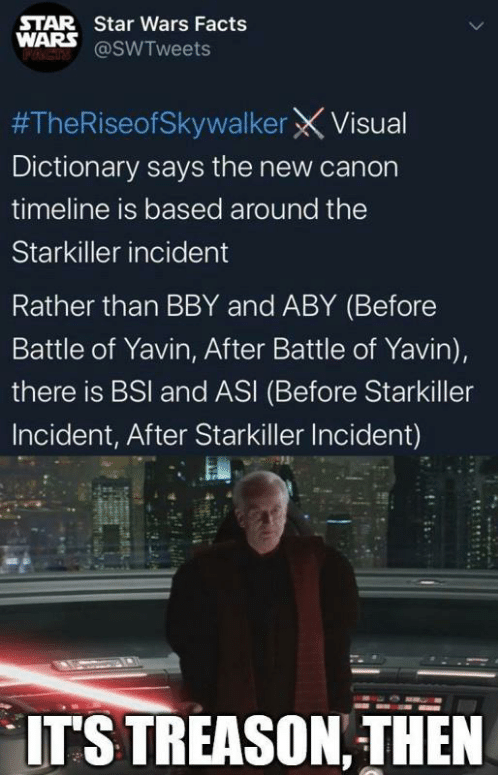
But perhaps the most glaring evidence of how little respect this current Lucasfilm has for the Lucas-era Star Wars involves how they have changed the dating system for the events in the films. From the moment someone decided to make a timeline of Star Wars events, dates have been designated as BBY (Before Battle of Yavin) or ABY (After Battle of Yavin) in reference to the battle over the Death Star from the original Star Wars movie (the planet the Death Star is circling is called Yavin, with the Rebel base located on one of its moons, Yavin IV). This makes sense, seeing as this event is probably one of the most recognizable moments in the Star Wars franchise. The creators of the new trilogy, however, apparently decided that their events are more important to the Star Wars story overall, and introduced a new system of dating based instead on the destruction of Starkiller Base at the end of The Force Awakens (itself largely a remake/soft reboot of the original Star Wars). What a way to show respect for what came before and gave you the circumstances to make your movies at all.
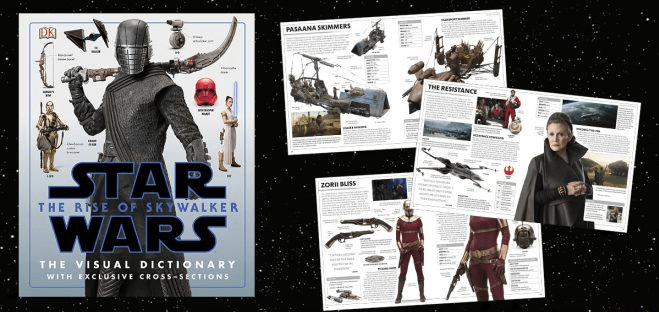
Outside of the story for a moment, let me just say that leaving out necessary plot elements of your movie and then only introducing them in a companion dictionary moviegoers have to buy separately is just irresponsible. In the film, Finn keeps trying to tell Rey something important, but when he’s asked about what his secret is, he says it’s nothing. Then this secret is never revealed or addressed again at all in the movie. It’s only through buying the visual dictionary that you learn Finn was trying to tell Rey that he’s Force-sensitive. If you’re going to introduce a mystery for the audience to get invested in but then never deliver on it, and it doesn’t affect the story anyway, why bother including it? All sorts of questions are answered in an extra book instead of in the film this way, and not just questions like “How old is Babu Frik?” (85 years old, by the way, which is apparently “very old.”) It’s bad storytelling, and just plain greedy on Lucasfilm’s part. At least this has not gone unnoticed by moviegoers. If it isn’t important enough to get mentioned in the movie, it’s not important.
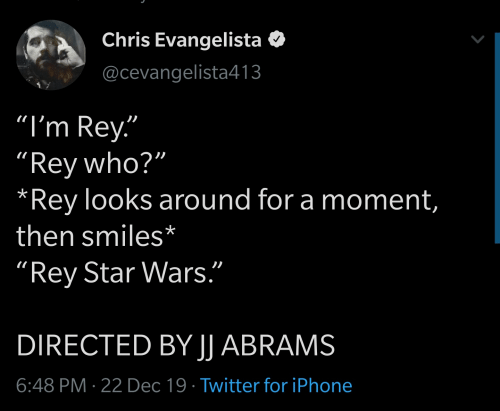
The tone-deafness of this trilogy is epitomized by its end. Rey returns to Tatooine to bury Luke and Leia’s lightsabers outside the Lars homestead where Luke grew up. This is presented as a funeral of sorts for the twins, although it seems a strange place for one: Luke wanted nothing more than to leave Tatooine and specifically the homestead where the Empire murdered his aunt and uncle, and Leia had never even been to Tatooine outside the time she had to rescue Han and ended up being a slave for Jabba the Hutt for a few days. When the old woman asks who Rey is, she of course replies “Rey.” When the woman presses “Rey who?” Rey confidently looks the Force ghosts of Luke and Leia right in the eyes and replies “Rey Skywalker.” And for me, this was the last 6 years of Disney Star Wars in a nutshell. Rey is a character who has no connection to the Skywalker legacy, and yet buries the weapons used by members of an incredibly powerful family who shaped the fate of the galaxy, and then takes their name. It mirrors a trilogy that simultaneously stole from and disregarded the legacy it was built on, then called itself the “end of the Skywalker Saga.” I cannot think of a more thematically-appropriate ending to this trilogy.
Now that Disney is leaving the Skywalker Saga behind, I hope we can have a relatively fresh start for Star Wars going forward. The Mandalorian is entertaining to general audiences and longtime fans alike, and Baby Yoda will keep customers buying merchandise for a long time. As I said at the outset, I genuinely am glad that fans of this new era of Star Wars, especially younger fans, can enjoy these movies. Articles like Sean Gadus’ show that these movies are obviously successful with people. There’s no reason one group of fans of any franchise should have a monopoly on what is or isn’t “good” material. I just wish what these fans were being given was less disappointing.
 Culturally Opinionated