

I’ve said before during this series that I’m generally more forgiving toward the flaws of comic book movies, mostly because I didn’t grow up investing my time in comics or superheroes in general. Of course, I would watch the critically-acclaimed “Batman: The Animated Series” when it was on Cartoon Network after school, and who didn’t spend at least some time during their childhood creating and designing their own superhero? But for the most part, my entertainment interests lay elsewhere, vanquishing evil in a galaxy far, far away and trying to be the best like no one ever was by catching them all, in true 90s-kid fashion. Though I’ll admit I didn’t watch the 90s X-Men cartoon and didn’t memorize its iconic theme song, which according to several Buzzfeed articles is a prerequisite to that elusive true 90s-kid clout. It remains my secret shame.

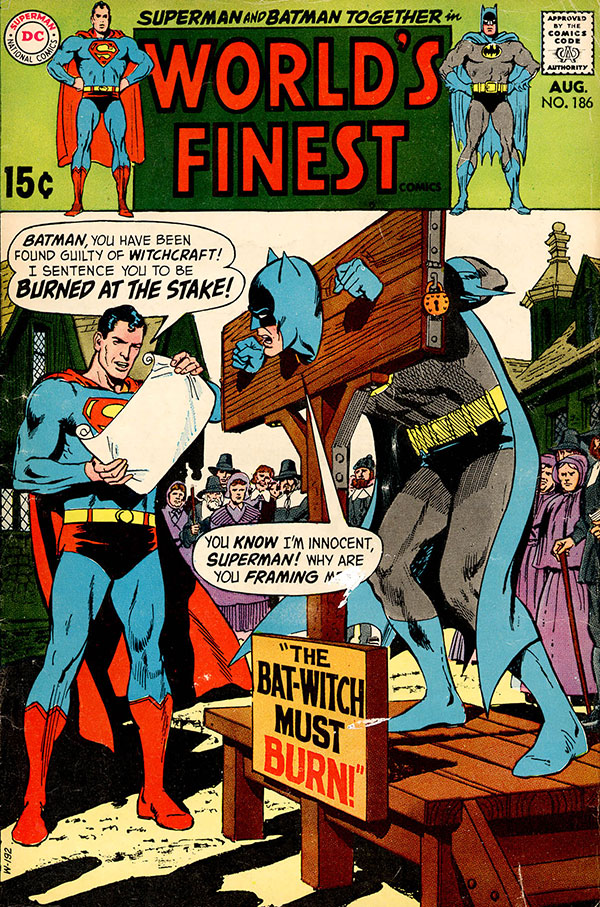
As a result, I didn’t really learn about many superheroes and their stories until well into my high school and college years. We’ve all heard of Batman and Superman, but how many can remember their many adventures like time-traveling to the Revolutionary War and almost burning Batman for being a witch?
I’ll freely admit that I didn’t know really anything about the Avengers at all until the end credits scene of Iron Man, and now the Infinity War saga is one of my favorite movie stories. So vigilantes Daredevil and Elektra wouldn’t really enter my ever-growing mental roster of superpeople to keep track of until I was almost out of grad school, when Netflix aired their version of the Daredevil story.

But while I did enjoy the first two seasons of Netflix’s Daredevil, and their version of both vigilantes, there are earlier tellings of these stories. Back in the far-off year of 2003, the Devil of Hell’s Kitchen and [no cool nickname found] Elektra made their big screen debut in Daredevil. Two years later, Elektra would continue her story in her own film, Elektra. Despite the similar(ish) themes these movies share about vengeance and revenge as well as their shared universe, both movies feature elements that make them distinct from each other as well as notable entries into the superhero film genre. And not in a good way. Both movies are also treated as nadirs of the post-Blade, pre-Iron Man superhero film period, and they deserve it.
Since we’ve tackled movies and their sequels in this series but never movies and their spinoffs, we’ll look at each separately. And just fair warning: I AM going to spoil these movies’ endings, because I can’t not talk about everything I want to without doing so. Trust me, if you watch these at all, I won’t be ruining the experience for you.
Part I: Daredevil

Daredevil in his comic form has existed in three different incarnations throughout the years: his early days from 1964 until the mid 70s, where Daredevil was essentially a Spider-Man character who quipped lightheartedly with villains as he fought them in the streets of New York; his extremely dark period from the 1980s into the 2000s, where the legendary Frank Miller rebooted the character and turned him into the flawed antihero most are familiar with today; and the 2011 reboot, which features an exposed Daredevil trying to balance superhero and lawyer duties and which is still ongoing. The 2003 film decided to combine elements of the only two version which existed at the time, marrying the original origin story to the dark tone of the 80s and 90s.
In brief summary: Daredevil is the alias of Matt Murdock, a kid who grows up in the aptly-named Hell’s Kitchen neighborhood of New York as the son of a boxer named Jack Murdock. Jack, whose glory days are behind him, has resorted to working for crime boss Kingpin to make ends meet. He is ashamed of his work and hides it from Matt while encouraging his son to devote his time to studying so as to make the most of himself and escape their life of poverty. When Matt one day sees Jack roughing someone up for “insurance money,” he runs away in disgust, but becomes a victim of an industrial accident and has chemicals splashed in his eyes, blinding him. In true Marvel fashion, however, the chemicals that take his sight grant him heightened other senses, allowing Matt to “see” the world mostly through sound.
Not to mention he saves Stan Lee at one point.
Jack feels responsible for his son’s condition due to his lies and his shame at turning to a life of crime. But his son’s tragedy inspires him to take up boxing again to set a good role model for his son, proving that hard work and honest dedication leads to success. One night, however, Jack is approached by Kingpin’s underlings and told to throw the fight in exchange for money. Jack initially seems to concede, not moving after his younger opponent lays him low in the ring. But Matt’s cheers from the crowd reminds Jack why he’s there, and he goes on to win the fight. But soon after, while Matt waits for his victorious father to exit the stadium, Jack is beaten to death by thugs and left in the gutter. Matt finds Jack’s body, and amidst a swarm of bats the pouring New York rain vows vengeance for Thomas and Martha Wayne his father and to defend all of Gotham Hell’s Kitchen from the tyranny of injustice. To that end, Matt eventually becomes a lawyer so that he can defend the weak in the courtroom by day and in the streets as Daredevil by night.
There are a lot of things I could say about this movie and that I’m sure have been said better elsewhere. But for the sake of brevity, I will keep my comments relatively short about what I consider the good, the bad, and the angsty.
The Good
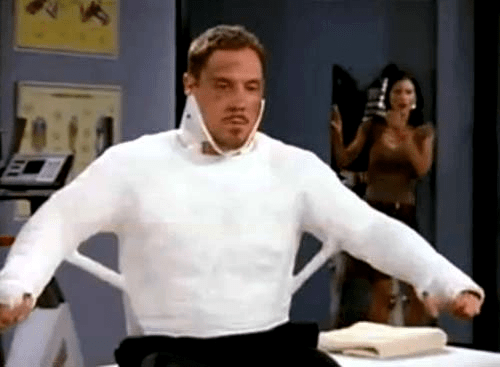
There are two excellent casting decisions which deserve mention here. The first is Matt’s legal partner and best friend Franklin “Foggy” Nelson played by Jon Favreau. Favreau is a welcome lighthearted edition to the dark world of Daredevil, wisecracking in answer to Matt’s moody somberness throughout most of his scenes. He also represents the all-important tie to the ordinary man that superhero stories so often feature. Foggy is the one who has to deal with his and Matt’s clients paying them in fish and sporting goods surplus instead of cash, and the one who attempts to get them business from richer clients to keep their doors open. At one point, Foggy is left alone by Matt in a courtroom defending their client, severely under-prepared for the defense because of how overworked he is. Matt is brought back down to Earth by his friend’s constant steadfastness, with Foggy unknowingly helping to remind Matt why he put on the mask in the first place.
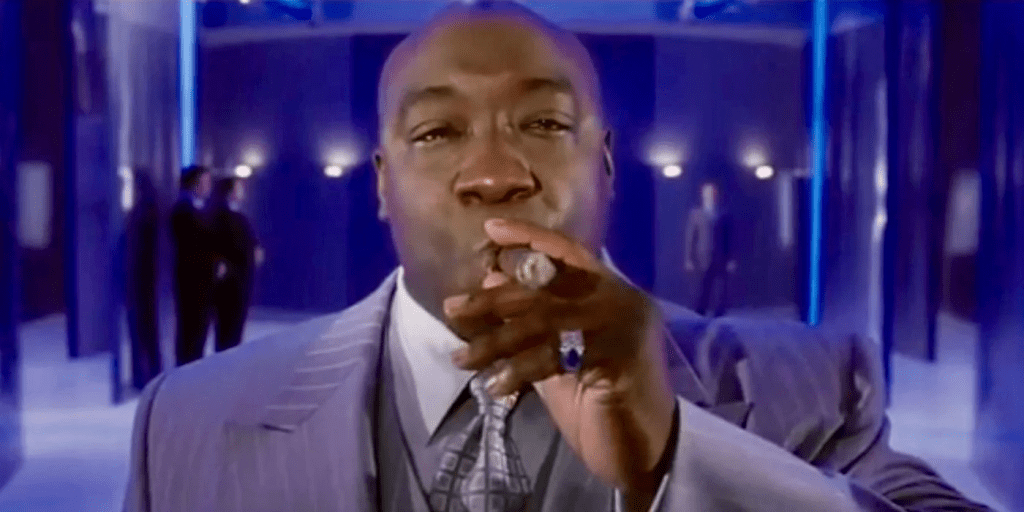
The other great casting choice is the late Michael Clarke Duncan’s portrayal of villain Wilson Fisk, aka the Kingpin. In the Daredevil and Spiderman comics (Kingpin was originally a Spiderman villain), Fisk has always been larger than life. Not only does he run a criminal empire and constantly cause harm to fictional New York’s do-gooders, he is a menacing and powerful physical presence who is not afraid to get his hands dirty. Duncan is great version of this iconic comic character, possessing both the imposing physique to tower over pretty much every other character and the domineering personality that makes Kingpin so feared in his universe.
It’s a shame that Duncan and the character are a little underused in the film. It’s a standard convention of most superhero stories that the villain wins the first confrontation with the hero, in order for the hero to have a goal to strive for and eventually overcome by the end of the movie. In Daredevil, this isn’t really the case, and the film suffers for it. True, Kingpin is (spoilers) the one who ordered Matt’s father’s death, so you could say he “won” their first confrontation without knowing it. But while their final rain-drenched fight is impressive and Kingpin holds his own until the very end of the fight, it takes away a little of the ominous buildup of the crime lord and leaves him more of a forgettable MCU villain than a Thanos-level threat. To be fair, he does make a ending speech about how he’ll be back even if Daredevil locks him up. Perhaps the writers were saving his true form for a day and sequel which would never come.
The Bad
Obviously, in a movie featuring a blind hero who is nevertheless able to whack criminals with his cane/nunchucks and avoid getting shot by said baddies, there are some elements of trying to convey the “how” of Daredevil’s superhuman sense to the audience. There are a couple of ideas about how to accomplish this in the movie, with varying results. One good idea is through the use of rain; in at least two scenes, Daredevil has heartfelt moments with the female lead Elektra (more on her in a second) where he is able to ‘see’ her almost completely as thousands of rain drops bring her into his sight. They even use this in a more symbolic way later. After Elektra’s father is murdered and she begins to withdraw from Matt to keep him from getting hurt, Matt approaches her at her father’s funeral and tries to comfort her. For a moment, Elektra lets the rain fall on her as she struggles with her decision and is visible to Matt; then a limo driver puts an umbrella over Elektra’s head and blocks the rain, both shading her from Matt both physically and reinforcing her distancing herself emotionally. So it CAN be done to some effect.

A worse idea, however, is to use the cover of darkness during intense fight scenes. Instead of showing off how cool Daredevil is for being able to take down an entre armed biker bar in the dark alone, it just makes for a confusing fight where we feel as lost as the bikers getting their asses kicked.

It’s a bad decision, and an even worse one when you consider how successful other films’ dark fight scenes have been choreographed and edited to let the audience know what’s actually going on.

There’s also the bafflingly bad characterization of the film’s secondary villain, the assassin Bullseye, played by Colin Farrell. Now in concept, I think Bullseye is a clever villain for Daredevil — a blind superhero up against a villain who never misses a shot? Neato. But in a movie that is trying so hard to be dark, gritty, and Frank Miller-y as it can and still get away with a PG-13 rating, Farrell’s take on Bullseye is jarringly campy and over-the-top. He’s an assassin who never misses his mark, which is presumably a good quality to have as an assassin. But he also walks around in a black trenchcoat, and has a literal bullseye carved/tattooed/imprinted on his forehead which he walks around with uncovered in broad daylight.

When he’s hired by Kingpin and flies over from Ireland, he literally kills the old woman next to him on the plane by ricocheting a nut into her windpipe because she won’t stop talking.

One article I read summarized it perfectly: “His portrayal in Daredevil is almost as if a villain from a Joel Schumacher Batman movie made an appearance in one of the Nolan’s Batman movies.” Perhaps it was a prophecy of what was to come in a post Heath Ledger’s-Joker world of crazy villainy, but he is definitely in the wrong movie.

Then there’s Elektra herself. We won’t get too deep into her character here, seeing as she DOES have her own movie we’re going to be talking about. but like Kingpin she gets the short end of Daredevil’s walking stick. First and foremost, Elektra’s story in this film isn’t even an Elektra story from the comics. It belongs to another female character named Echo. Elektra’s story does eventually get somewhat restored in her own movie, but here she is a secondary character whose late transformation into antihero hottie comes completely out of left field. One minute she’s a passive Lois Lane-style love interest for the hero, the next she’s wearing leather and spinning sais around?
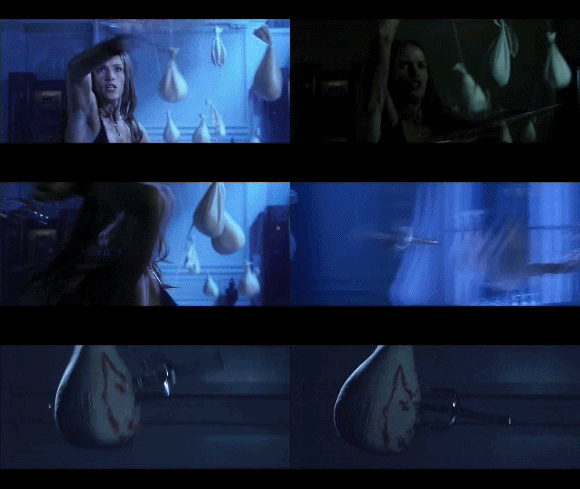
So not only is she co-opting some poor other woman’s story, she’s not even good in it. She’s tricked into thinking Daredevil murders her father (it’s actually Bullseye, our master assassin), and goes to fight him for revenge. She then inexplicably beats a professional in a fight and stabs him in the shoulder, but stops when she removes his mask and realizes who she’s been flirting with this whole time. Then, when Bullseye comes to kill Elektra for Kingpin, she not only loses to a man with a literal target on his head but then dies when he stabs her with her own sais.

Again, we’ll talk more about Elektra in a bit, but suffice to say that Jennifer Garner didn’t spend years kicking ass on Alias to be done dirty like this.
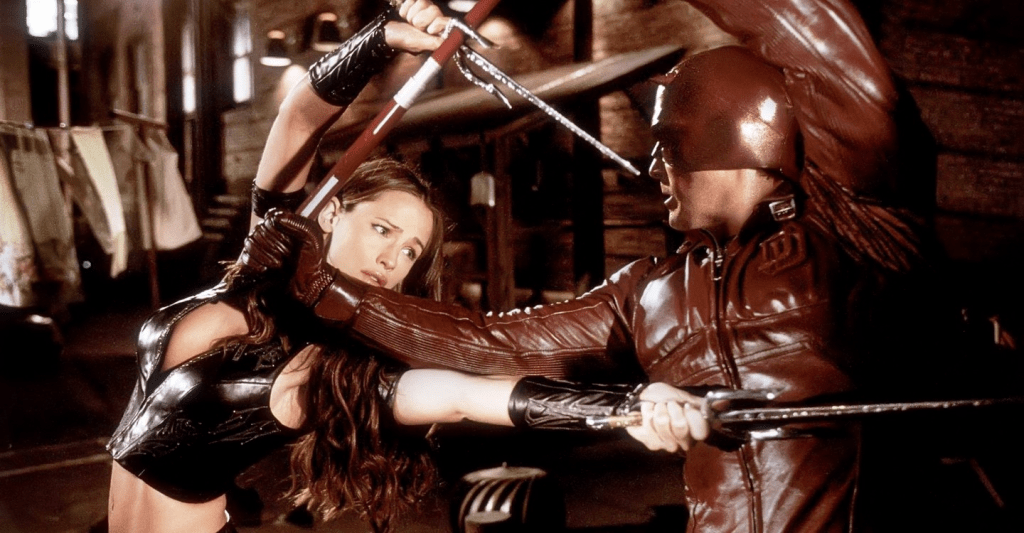
And finally, there’s the playground fight scene between Daredevil and Elektra, or rather between Elektra and a blind lawyer. After trying to flirt with Elektra because he can smell how hot she is (?) and not taking “No” for an answer, Matt creepily follows Elektra to a children’s playground and engages in a pseudo-Matrix fight in broad daylight. Again, as far as anyone knows, this is a woman beating up a blind guy who is looking less and less blind to the casual onlooker.
It’s not a good fight scene from a choreography standpoint. It’s not sexy flirting between protagonists. It’s just…weird.
The Angsty
Sometimes, angst as the driving force of a narrative works as the theme for a movie. Sometimes, it works as a superhero motivation. Rarely does it do both. If The Crow maintained cult status as a result of its inescapable angst, Daredevil became infamous largely because of it.
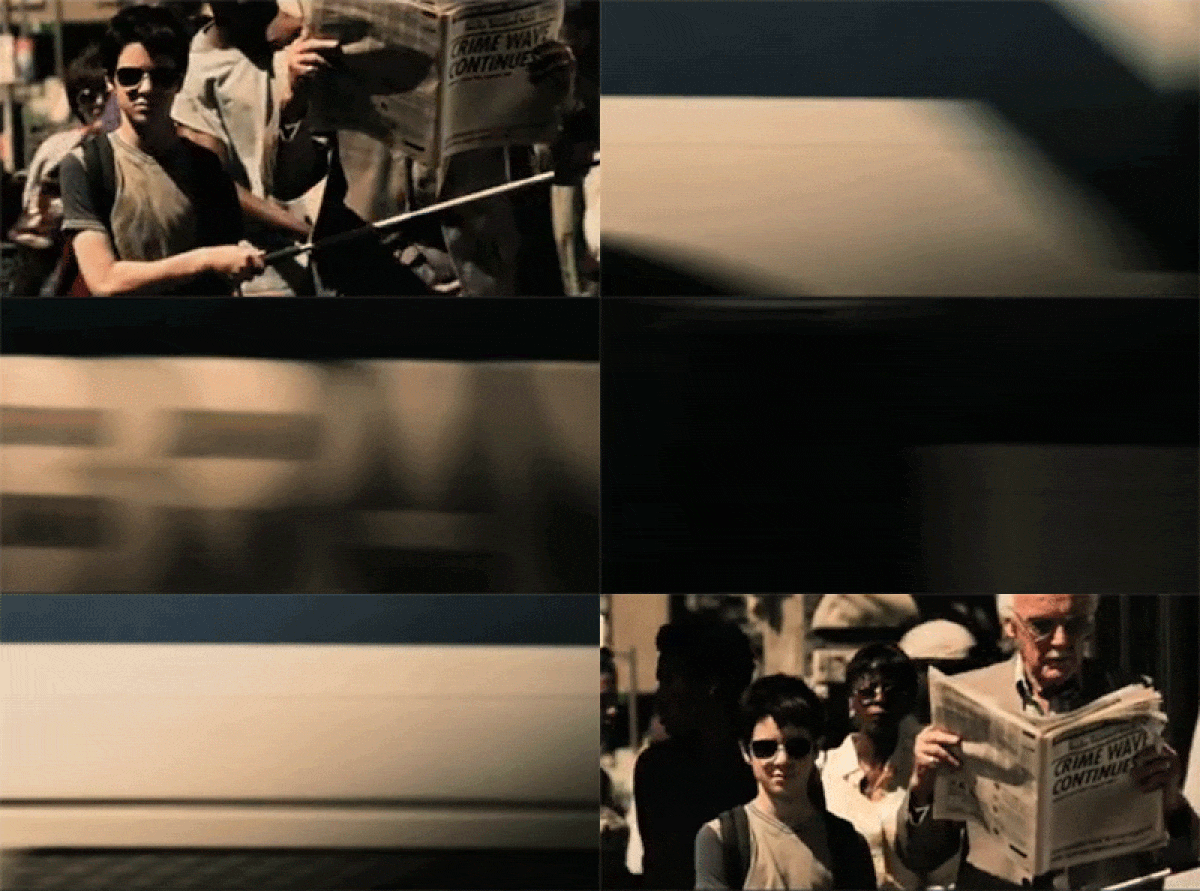
This movie tries so, so hard to be angsty and dark, probably to reflect the current state of the character in the source comics. But instead of a cool and respected style of darkness, it comes off more as a “Oh my god, Mom, this isn’t a phase, this is who I am!” kind of way. Take, for example, the opening shot of the movie.

Now, as you can see, this is a scene recreated from the comics. That in and of itself is something adaptations do all the time, especially comic book adaptations (and this film is apparently touted as one of the most accurate superhero adaptations ever). But while I’m sure the scene from the comic makes sense in the context of its story, in the movie this is the first thing we see of Daredevil before we know anything about his past or the situation he’s currently in. In fact, the majority of the movie is a flashback. At this point in the story, Matt has lost a fight to Elektra who is then killed by Bullseye and is on the verge of being outed as Matt Murdock by the police. He’s at his lowest point since his father was murdered, and he turns to faith as a refuge; fine, nothing wrong with that. But Matt has never shown any inclination to need a religious faith before now, choosing instead to have faith in the legal system he actively participates in, and faith in his fists when even the system fails his sense of justice. And his sense of justice consists of him doing things like saying “Hey, that light at the end of the tunnel? Guess what? That’s not heaven. That’s the C train!” before he literally kills a criminal in the subway. More than character development, it’s an excuse to both pull from the comic and also to open up with an edgy shot of the Devil clutching the cross for comfort.
Not to mention the confrontation with Bullseye which comes soon after this, where Daredevil and Bullseye have a symbolism fight in a church that involves swinging organ pipes at each other and Daredevil giving Bullseye a stigmata wound before throwing him out a stained glass window onto a car hood below.

Perhaps the trope of “using religious elements in an ironic or demeaning way” was new at one point for superhero movies, but as a moviegoer I’m kind of tired of it being an excuse to make a hero look edgy and dark without giving any effort into that characterization. Just because a character T-poses at some point in the movie doesn’t make him a Christ-figure. Some superhero movies can pull this off; Constantine with Keanu Reeves does a great job of melding Catholic symbology and mythology into the dark narrative of its titular character. Daredevil does not.
That being said, at least some viewers liked the religious elements; Focus on the Family’s review really liked that “A man of the cloth is the one person who knows that Matt and Daredevil are one and the same” and “There’s a religious funeral held for Elektra’s father.” (Although they do criticize the film for, among other things, that “This priest tells Matt, ‘A man without fear is a man without hope.’ Except perhaps for a healthy fear of the Lord, the Bible fails to support that statement” and that “Men wager on darts.”)
But the element that contributes most to the edginess and which incredibly dates the film is the soundtrack. The track listing read like an early 2000s teen’s edgy rock playlist on his black iPod Shuffle. Bands like The Calling, Nickelback, Saliva, Drowning Pool, and Hoobastank serenade us with edgy rock that you just know you heard blasting out of Hot Topic at the mall. The movie also features not one but two songs by Evanescence, their hits “My Immortal” and “Bring Me to Life.” Now, I want to make it clear that none of these songs by themselves are inherently bad or cringy. But watching spandex-clad actors fight on the rooftops of New York at night with knives and fists while someone emphatically begs me to “Wake me up inside!” is just too much to watch in 2020 with a straight face. Viewer beware, this movie has so much edge you could cut your baggy jeans and black polished nails on it.
Before we leave Daredevil and move on to Elektra’s turn in the limelight, I think it’s worth mentioning a fact that might explain some of the bizarre creative choices in this movie. Daredevil began life as an R-rated script, intended to truly be a dark superhero outing for older audiences. But then, nine months before it was released, a certain web-slinging hero took the box office by storm and made all the money for its studio with his PG-13 heroics. Suddenly, a movie that would be inaccessible to a good section of the population (and one of their biggest potential demographics) didn’t seem like the best idea for making as much money as possible. So the script was reworked so as to get the R-rating removed, and what was finally released on February 14th, 2003 was a tonally-confused mess that no one liked. For better or worse, your friendly neighborhood Spider-Man had shut down the idea of R-rated superhero movies for a while, and the Devil had to wait for Netflix to make him cool again on the screen.
Part II: Elektra
Back in 2018, Jennifer Garner starred in an action film called Peppermint, where she hunts down her husband’s and daughter’s killers who were allowed to escape justice by a corrupt system. I specifically remember two things from around the movie’s release. First, I remember feeling a little surprised that an action movie would be starring Jennifer Garner, of all people. I wasn’t very familiar with her work up to that point, but from what I had seen her in, she usually played very different roles. She was a wife, or a girlfriend, or a pious, hopeful character in various religious movies. I wasn’t against the idea of her starring in a Punisher-esque revenge film; to me, it just seemed an odd choice.

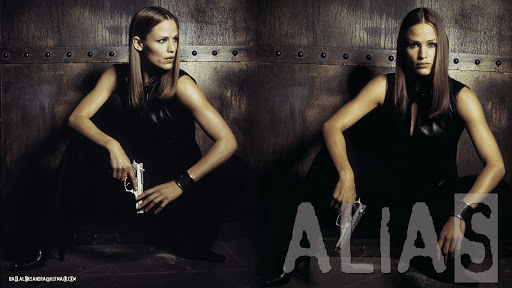
The other thing I remember was that Julia was visibly excited when we saw the trailer for Peppermint in the theater. This shouldn’t have been a surprise to me, in retrospect. You see, Julia had grown up with a very different Jennifer Garner than I had, because Julia got to know Garner in J J Abrams’ action spy thriller TV show Alias. In the show, Garner is a spy named Sydney Bristow and regularly uses disguises, espionage, intelligence, and good old-fashioned ass-kicking to save the world from terrorists and evil shadow organizations. It’s no wonder, then, that where I saw a strange casting choice, Julia saw an exciting return to form for her favorite action star after so many years out of character.

So, let’s take a second to rewind to 2003. Things were looking good for Jennifer Garner. Alias was only halfway through its 5-year run, and she had been part of several films, even starring in 13 Going On 30 (another favorite of Julia’s). When Garner was chosen to co-star in the burgeoning “big-budget superhero movie” genre, she was apparently initially excited. In an interview for MTV, when asked about the prospect of playing the super-heroine, Garner said she thought Elektra was “strong and cool and beautiful and smart,” and that “she’d be a good role model.”
Unfortunately, Daredevil was not the massive success the studio optimistically hoped it would be. They were so optimistic, in fact, that they doubled down on the idea and decided to go ahead with the planned Elektra spin-off regardless of the response to Daredevil. Garner was understandably not interested in reprising her role for a movie no one outside of a Hollywood board room seemed interested in. Unfortunately for her, she would be forced to make the film due to contractual obligations she had agreed to even before Daredevil‘s filming. Still, Garner was able to shoot the entire movie during her summer break between seasons of Alias and keep her talents focused on TV where she felt they were put to better use.

Because of Eletra‘s infamous status as one of the worst Marvel movies ever made, plenty have said much and more about how failure becomes Elektra. I just want to talk about a few things I liked from the movie and we’ll leave it at that.
First, Elektra takes the Batman-esque backstory given to her character in Daredevil (her mother was killed by Kingpin to intimidate her father, so she learned martial arts and an appreciation for leather) and throws it largely out the window. Instead, Elektra returns to her comic book roots consorting with ninjas and magic. If you’ll recall, Elektra actually dies at the end of Daredevil, killed by contract killer Bullseye. Here, the sequel opens with her being resurrected by a ninja named Stick. Stick is a master of martial arts and is also blind (as all the best masters are), and instructs his new pupil in the ancient art of kimagure. This gives her the ability to have brief precognitive visions and also to raise the dead. The former ability makes Elektra an extremely deadly fighter, allowing her to know what her enemies will do about 30 seconds before it actually happens and basically making her brokenly powerful in most any fight. The latter is used only once and for plot reasons, because I guess the writers figured that people who kill people for a living rarely need to bring those people back to life.
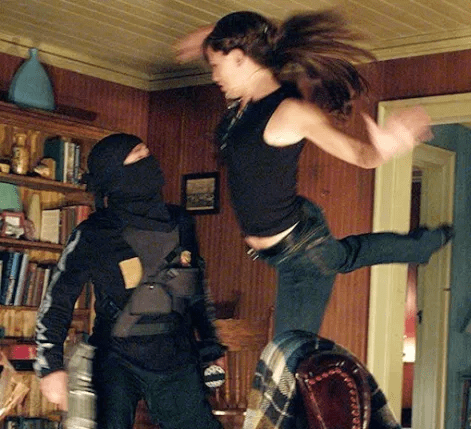
Elektra, however, has too much rage to stay enrolled at Stick’s School for Fortune Tellers and Necromancers, and is kicked out. Since she’s really good at killing people, Elektra decides to become a contract killer who looks out only for herself. Fortunately for her redemption arc, she finds someone to care about in the form of a teenage girl named Abby, and Abby’s father who she is originally contracted to kill. Her refusal to complete the contract forces her into conflict with the movie’s villains, and the next thing I liked: The Hand.

The Hand are a group of ninja mercenaries led by the enigmatic Master Roshi. For thousands of years, The Hand has searched for individuals called “Treasures,” martial arts prodigies who variously serve evil or good. The Hand constantly fight their opponents, the bizarrely-named Chaste ninjas, for control of these Treasures. The current Chaste ninja enclave is lead by Stick and trained Elektra, who herself is a Treasure. Abby, the girl Elektra is sent to assassinate and decides instead to protect is also a Treasure. In order to kill Elektra and secure this new Treasure, Master Roshi sends special warriors of evil to defeat her — his own son, Kirigi, and four super-powered badasses who, as extensions of The Hand, I have chosen to call The Fingers.

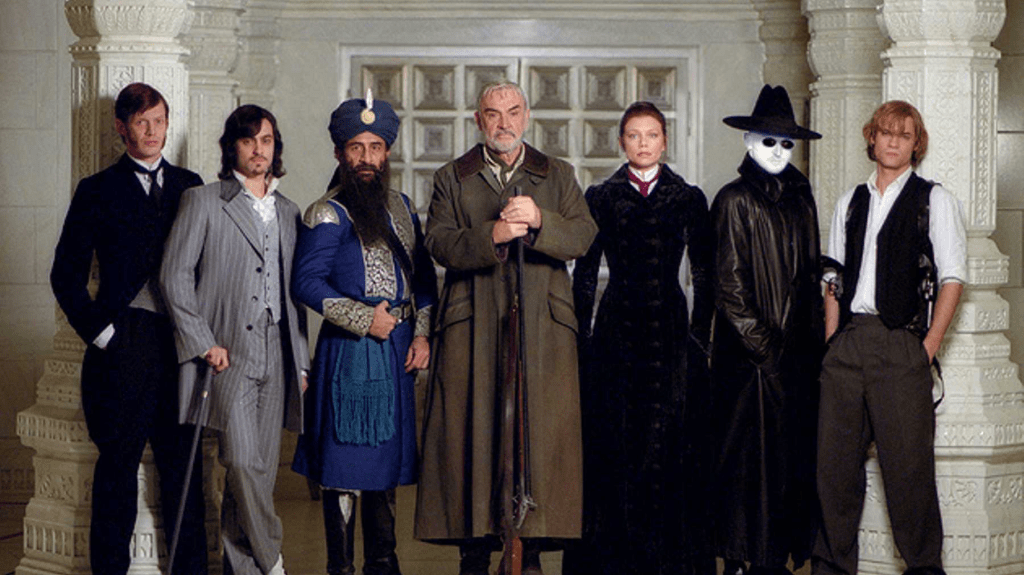
Keep in mind that this movie was made in 2005, five years after the success of X-Men and a mere two after the not-as-successful but highly-underrated League of Extraordinary Gentlemen movie adaptations. Stories about super-powered teams fighting each other were a popular thing to put in your superhero movie (and still are, if the Avengers are any tell). I am very fond of like this trope in these kinds of movies, although these particular characters leave something to be desired in terms of their lethality.
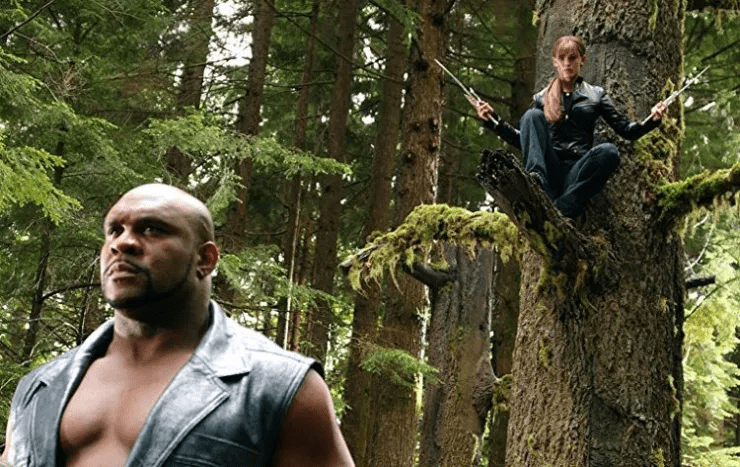
The Fingers, while fun, are not used to their full potential in this movie. Let’s start with Stone, aka The Thumb. His power is that he is big and strong (like most thumbs) and that he can be shot with a shotgun and not be hurt (unlike most thumbs). However, Stone is also the dumbest member. His contribution to the group comes when he 1) sees Elektra hiding in a tree, 2) squeezes the tree so that it begins to fall, 3) turns to kidnap their target, and 4) is then immediately killed and atomized by the same exact tree.
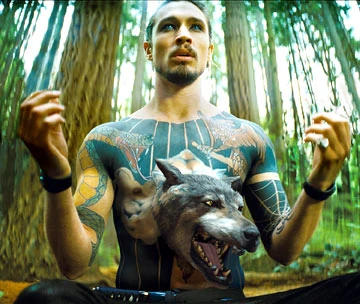
Next, there’s Tattoo, who is the Ring Finger of the group because, much like a properly-adorned Ring Finger is the fanciest finger, Tattoo is the fanciest visually of the mutants. His body is perhaps unsurprisingly covered in tattoos of various animals like snakes, eagles, and wolves. However, these are magical tattoos, and are able to come to life out of Tattoo’s body as real animals. He is arguably the most versatile Finger, letting his animals do reconnaissance and fighting for him in an admittedly cool and unique way. However, he also apparently can’t move while he’s controlling his animals, so Elektra just sort of stumbles across him during the film’s climax while he’s preoccupied with being a snake and kills him.
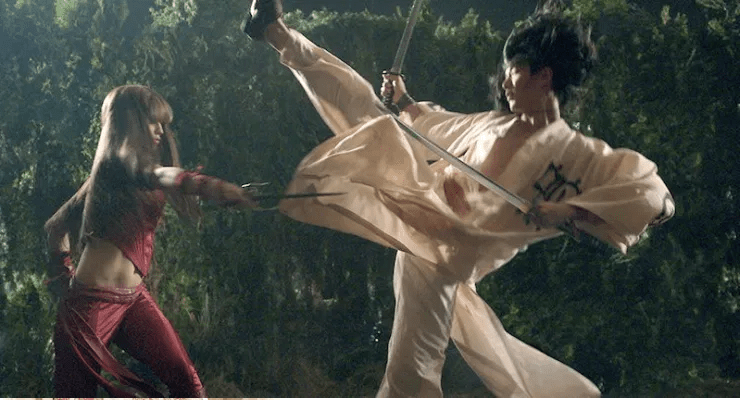
Typhoid is next, being the Middle Finger of the group. Typhoid is arguably the most dangerous member with poisonous breath and a deadly kiss. She at least is able to temporarily incapacitate Elektra and actually kill the Treasure, something none of the other Fingers manage to accomplish. And much like Typhoid, the Middle Finger is the finger most likely to get you into trouble and it therefore the most dangerous. She also has the honor of receiving the most unintentionally hilarious death of the five. To greatly simplify the situation at the movie’s end: Elektra is able to discern Typhoid’s whereabouts on the other side of a hedge maze after Typhoid kills the Treasure, and just absolutely chucks one of her sais into the hedges where it finds and strikes Typhoid with enough force to kill her. Imagine actually completing your contract to kill someone only to be killed by a fancy fork from literally nowhere, with your last words a surprised impression of Tim “The Tool Man” Taylor.

The Pointer Finger, aka Kirigi, is the leader of the group. As mentioned before, he is the son of the Hand’s leader, and is promised control of the Hand if he can accomplish his mission to kill Elektra and capture the Treasure. Much as a Pointer Finger should, he leads the charge to further the Hand’s agenda. He is perhaps the most fit to match Elektra in combat, being skilled with not one but two katanas which he wields alongside superhuman speed, agility, and senses. As the villains’ leader, he also has the most lines to taunt and belittle Elektra during their several duels. However, his reliance on his training is also his ultimate undoing, and he is killed by Elektra after she fights him enough times to learn how to anticipate his moves. He is stabbed by Elektra’s sai, ironically being killed by a weapon with three points, and thrown down a well before exploding.
Last, and definitely least, is The Pinky. The Pinky is so insignificant that I had to look up his name for this article, which is Kinkou. Much like a real pinky exists only to round out and balance the hand, Kinkou only exists to be yet another villain and be immediately killed by the hero to round out the action. And, much like an outstretched pinky indicates a false sense of sophistication, Kinkou is a member of a group of superhuman assassins but does not possess any superhuman powers. On his Daredevil/Elektra Wiki page, under “Characteristics,” he is described as “the weakest ninja in Kirigi’s team, and the only one with no visible mutant power.” He is another in a long line of movie characters who exist simply for the hero to defeat, along with Greedo and that sword-twirler who got shot by Indiana Jones.

Finally, I want to take just just a second to mention Elektra’s costume design in this movie. Looking at the comics, Elektra is usually shown wearing what we’ll generously call a “costume” apparently made of red satin. It’s changed to varying degrees of skimpiness over the years, but the color has largely been one of her defining features (not including, of course, the time she came back from the dead and wore white because she was “pure” now or something.) An exhaustive fashion history can found here.

Bathing suits and red ribbons aside, one important change coincided (most likely) with the Daredevil movie, where the costumers realized they were going to have to put these pin-up outfits on a human being doing wire-mounted kung-fu, so they added a major change to her look: pants!

Jennifer Garner actually addresses the change in an interview for MTV:
“Garner noted the costume would be different, as Elektra in comics often wears red satin but in the film wears black leather. Garner explained, ‘[T]he red would never have worked for hiding a harness, and I know this sounds ridiculous, but you have to protect your skin a little bit. They throw me around so much on the rooftop [that] I got cut through the leather, so imagine if I hadn’t had anything.'”
https://web.archive.org/web/20150826075104/http://www.mtv.com/shared/movies/features/a/affleck_daredevil_feature_030206/

For the safety of its actors, changes had to be made somewhere, even in a film like Daredevil that was extremely constrained by its adherence to the source material.
Which makes it even more baffling when you look at Garner’s costume in the sequel.

Now to be fair, I have spent many episodes of Alias criticising Garner for going into the field with long, conditioned hair flowing behind her. These are movies, after all, and suspending disbelief is part of enjoying the experience. But especially given the context of the changes made in this movie’s prequel, it’s just a weird choice.
At least we can be happy that we have come full circle with her original comic costume. Red? Yes. Superfluous ribbons? Of course. Basically lingerie? You betcha. I know that I’m no ninja, and I only own one pair of shiny red Valentine’s Day boxers, but this outfit looks like something from Marvel’s unreleased line of superheroine teddies. No wonder one reviewer commented that “This is a comic book movie that feels like it might have been made for the Lifetime channel . . . with costumes by Victoria’s Secret.”

———-
Overall, after hearing so much about both these movies in the context of superhero cinema, I’m glad that I was able to see them. That being said, I don’t think I’ll ever revisit these particular characters on the big screen again. I still have that third season of the Netflix show to watch, though, so maybe Daredevil and Elektra can entertain me for just a bit longer and without so much edge. With that, allow me to leave you with this video. I can think of no better end to my dance with the Devil of Hell’s Kitchen (and Elektra).
Next time, we take a slightly different approach and talk about a DC movie, Superman Returns. Until then, stay safe.
 Culturally Opinionated