
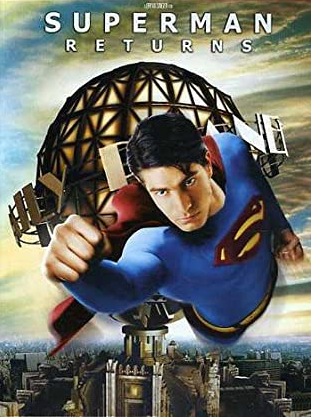
As another Halloween season comes to a close and I begin to pack away my skeletons and pumpkins until next year, we continue our superhero movie project with a bit of an outlier. Up until this point, we have stuck mostly to films featuring Marvel superheroes (with the exception of The Crow). But Marvel’s eternal rival, Detective Comics, was of course busy attempting to reestablish itself on the big screen during the early 2000s. After the initial success and eventual infamy of the 1990s Batman movies, there was a bit of a lull in big-screen adaptations of DC heroes. During this period between Batman’s fall from cinematic grace with Batman and Robin (1997) and the iconic The Dark Knight (2008), the comic giant released a film featuring one of their most recognizable heroes who had not been seen in a film since 1987 (and not in a GOOD film since 1980): the Man of Steel himself, Superman.
As always, beware of spoilers.

The Man of Steel has had a long history on American screens large and small, going all the way back to serials in the 1940s during the Golden Age of Superheroes. George Reeves notably portrayed Superman on the television show Adventures of Superman during the 1950s, bringing the character off the comic page for millions of viewers. More important for our discussion, however, is the actor who most famously brought Superman to the big screen. Christopher Reeve starred in four Superman films (aptly named Superman I, II, III and IV: The Quest for Peace) that, like the Batman films a decade later, would have a huge success and impact initially but would stumble into ludicrousness in later installments.
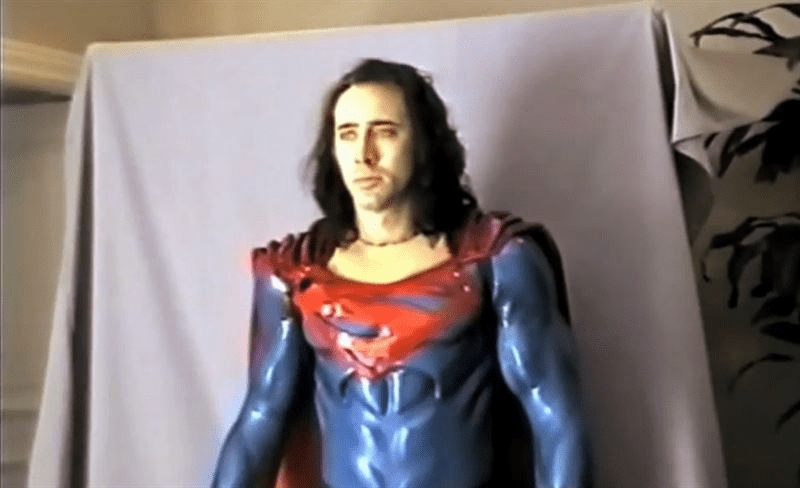
Superman (1978) and Superman II (1980) were seen by many as the last “good” Superman movies for years, and rightly so. In preparation for Superman Returns, I actually watched both films back-to-back and did some research into their development. In some ways, the story of how these films were made is just as interesting as the films themselves: how both films were shot in tandem and the second almost finished before the first; how studio pressure forced director Richard Donner from the project and he was replaced; how Marlon Brando was scrubbed from the sequel because of the obscene royalties he wanted for very little screen time; how the original and superior cut of the second film didn’t see the light of day until almost 16 years after it’s release…
It’s a fascinating tale that I won’t get into here, but that I highly recommend looking into (as well as watching the films themselves, of course). For our purposes, all you need to know is this: These first two films were originally created to be one epic tale that would be told in two films, and Superman Returns was written to be a sequel to the story they told. In this, Superman Returns succeeds beautifully, acting as a successor, soft reboot, and love letter to the contemporary Superman American audiences had come to know and love.
It’s not strictly necessary to view these two films before watching Superman Returns, but I would only argue this is because the story of Superman in general (and more specifically the story of the films themselves) is so well known in American mythology. Like Spider-Man and Batman, nearly every culturally-aware adult in the US knows how Superman came to stand for truth, justice, and the American way. In relation to Returns, the bare minimum knowledge concerning Superman’s relationship to his love interest Lois Lane, his nemesis Lex Luthor, and his alter ego Clark Kent is necessary.
The film opens by revealing that Superman disappeared from Earth for five years. Later we learn this is because he has been searching for survivors of the destruction of his birth planet Krypton, of which he finds none. Saddened by the reality of his aloneness in the universe, Superman naturally returns to his home looking for solace from his loved ones. Instead, he finds that the world has moved on without him, epitomized by an article that Lois Lane herself has written entitled “Why The World Doesn’t Need Superman.”
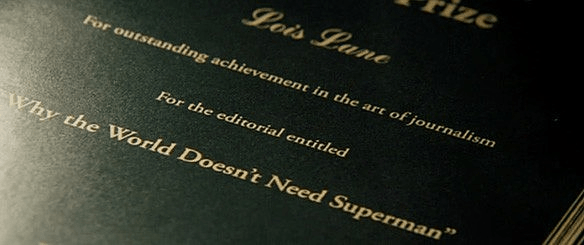
It’s a legitimate question for the universe of the movie, as well as for our post-9/11 reality. Superman swooped in to save the day back in the 70s, but then left us to ourselves. The world hasn’t been a perfect place in the interim by any means, but no one has destroyed the world yet. It’s an interesting contrast to the line from the original Superman spoken by Superman’s father Jor-El in his final message to his son.
Live as one of them, Kal-El, to discover where your strength and your power are needed. But always hold in your heart the pride of your special heritage. They can be a great people, Kal-El, they wish to be. They only lack the light to show the way. For this reason above all, their capacity for good, I have sent them you… my only son.

In the end, of course, the world DOES need a superman to save them from destruction; this isn’t an Alan Moore story, after all. Personally, I think that this reflects the mindset of the general audience of this or any movie. Whatever the name of their savior, the vast majority of people aren’t so cynical that they’re ready to give up the idea of a higher power to look to just yet. The everyday people in this version of Metropolis and abroad seem to feel this way: before Superman reveals himself to the world, many scenes of the Daily Planet and elsewhere feature a citizenry that seems almost resigned to the world around them. They aren’t miserable, but they don’t necessarily seem happy, either. After Superman saves a crashing plane and sets it down in a full baseball stadium, the fans present aren’t just glad the people on the plane are safe. They realize they that Superman is back, and they are ecstatic. Despite the cynicism of a society that gave a Pulitzer prize to an article about “Why The World Doesn’t Need Superman,” the relief and joy that accompanies his return outstrips any negativity by far. I don’t feel ashamed to say that I’m not ready to give up the idea of a Superman yet, and I think Bryan Singer counts on most people feeling the same way. We embraced Superman in the 70s uncynically, and we still do, despite our protests.
One of the biggest criticisms from audiences of the movie is that there isn’t enough action, and that it’s slow and boring. Coming from a genre of literature that is somewhat characterized by its BAM!s and BIFF!s and POW!s, it’s understandable audiences would expect action from a superhero movie. The Marvel Cinematic Universe has certainly made action a large selling point for their films and shown it to be a successful strategy. But this is not a film where Superman is an action hero. Yes, he saves a plane full of people from crashing and stops a city from sinking into the Earth, among other super-heroics. There’s this scene where Superman blocks bullets with his eyeball that I think is great. But he doesn’t throw a punch during the entire runtime, even against his arch nemesis Lex Luthor. Instead, Superman Returns is a more thoughtful look at the character of Superman himself and his relationship to the world that adopted him. Director Bryan Singer obviously had a great passion and love for this project; after all, he left pre-production of X-Men: The Last Stand for the opportunity to make this film.
I think that also might play into another reason people tend to knock this movie over, say, Zack Snyder’s Man of Steel (2013). For several years now (and probably longer), there seems to be a steadily growing trend of superhero movies being accompanied by movies that criticize and critique superhero movies from within the same genre. The Deadpool movies are the most obvious examples of this, actively breaking the fourth wall for its titular hero to point out how bad the “superhero landing” is for your knees. Subtler examples exist even in certain Marvel films; the Guardians of the Galaxy installments made their mark by playfully poking fun at the ridiculous premises of comic books in general. While audiences can still find some capacity to invest in characters who are earnestly genuine about doing the right thing like Iron Man, Captain America, or Spider-Man, more and more the self-deprecating playful irreverence seems to become part of the overall “superhero culture” experience. You can’t enjoy Superman, the most genuine superhero there is, without also appreciating Watchmen, the legendary graphic novel by Alan Moore that does everything it can to convey its author’s contempt for the super genre.
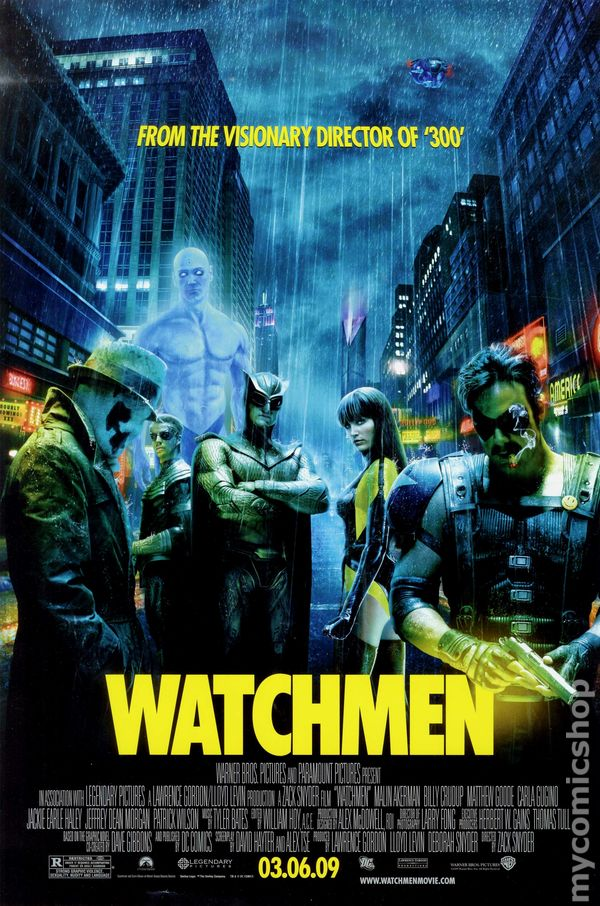
Returning to Superman, critics of Returns seem to be unwilling to enjoy it because of its earnestness. Even Captain America can look back at past versions of himself and cringe at the 1940s-earnestness of his speech and manner in the Marvel movies. Superman continues to be the Big Blue Boy Scout throughout the film, however. It’s a turnoff for an audience that has grown used to a small amount of cynicism in their fandom. I think it allows them to feel superior to people who DO consume superhero stories (or any stories) at face value. They feel like they can see the man behind the curtain instead of being one of the rubes being taken in by the snake oil salesman. I think this is a shame. There’s nothing wrong with studying stories and understanding the meanings behind them. But when it comes at the expense of being able to enjoy stories that don’t actively engage in self-depreciation, that’s when it’s been taken too far.
Frequently, I see people refer to the Superman from Man of Steel as a more “mature” Superman for a more mature world. In contrast, a Superman like that of Superman Returns is seen as somewhat childish. However, having seen both films, I understand that “mature” is perhaps not the correct term when comparing these two. By “mature,” these critics simply mean “more violent” and “darker.” As I’ve mentioned, Singer’s Superman doesn’t throw a single punch in this film. Yet he is still the most heroic Superman I have seen on film in his embodiment of a hero and savior. He is self-sacrificial, caring in the face of apathy, and brave against overwhelming odds without violence towards others. In contrast, Zack Snyder’s Superman saves the day by destroying much of Metropolis in a super brawl with General Zod that kills millions. To it’s credit, I don’t think Man of Steel is a bad movie; in fact, I think there are interesting discussions to be had about its blending of ancient global mythological themes with more modern American mythology. But it is not a good Superman movie. Superman Returns is one of the best Superman films out there.
I would briefly like to mention how good I think the casting in this movie is. Despite what several professional critics said of his performance, I think Brandon Routh is a good successor to Christopher Reeves’s time in the title role. He’s genuine when needs to be, but also convincingly dour and somber when the calls for it (not something Superman is noted for being). And if he’s a good Superman, he’s a fantastic awkward yet loveable Clark Kent.
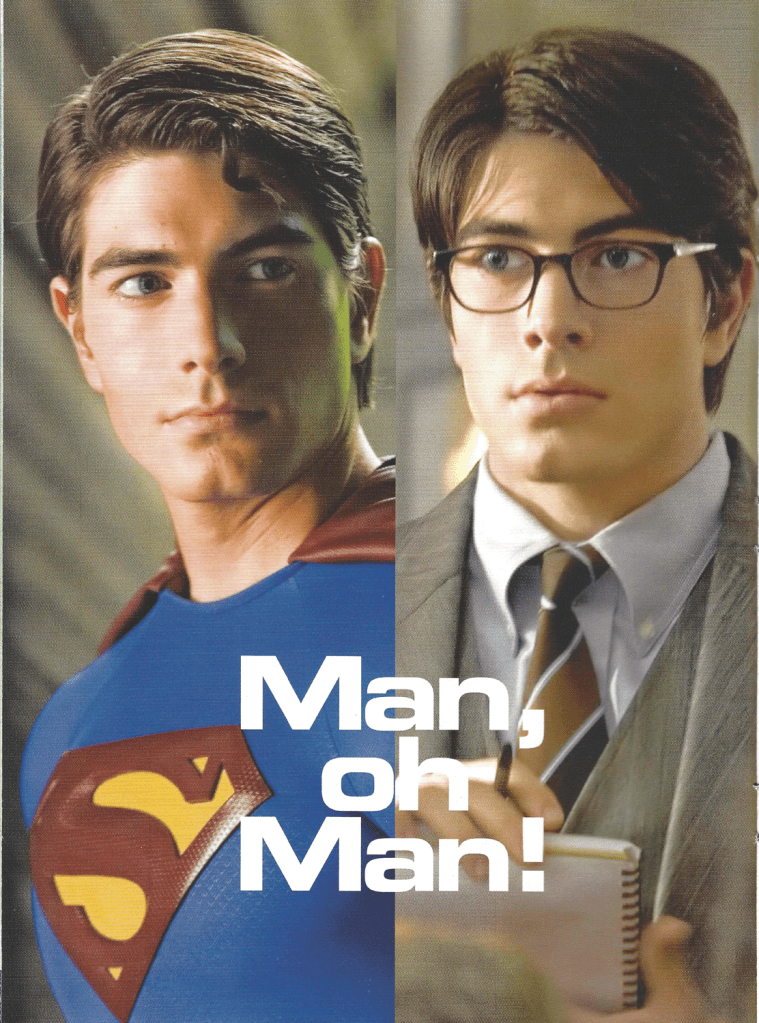
Similarly, I think Kate Bosworth is a great Lois Lane, mirroring both the soft sensitivity as well as the urgent “go-get-’em” reporter portrayed so well by Margot Kidder. One criticism of the movie by Roger Ebert was that Routh and Boworth lacked the chemistry that Reeves and Kidder brought to the screen in their scenes together. But even if that were true, I don’t think it would work against the movie. After all, this is a Clark and Lois who fell in love suddenly and then didn’t see each other for years. Lois feels abandoned by a literal super man, and Clark feels betrayed that Lois moved on without him but is happy that she’s happy in a melancholy way. Is it any wonder that the chemistry wouldn’t be the same?

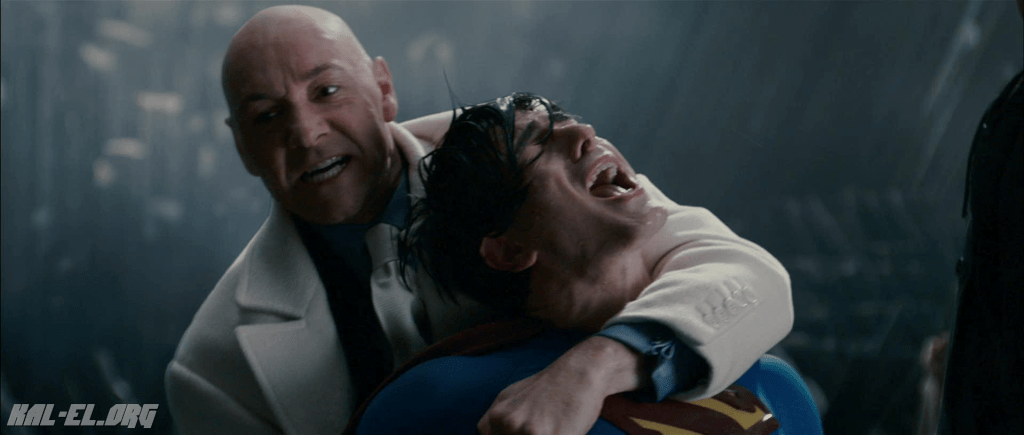
But by far the best casting is Kevin Spacey as Lex Luthor. Now, we all know about Kevin Spacey and why he doesn’t act anymore, and no good person would condone what he has done. Nevertheless, he brings an levelheadedness to the role of Superman’s nemesis that Gene Hackman lacked in his original portrayal. Hackman’s version of Luthor is more “comic book-y”; you almost expect his refined yet boisterous villain to twirl his mustache at times between monologues about how much of a genius he is. Spacey’s Luthor, on the other hand, is not only witty and sardonic but also colder and calculating. He is more subdued than energetic, in my opinion making him more menacing. And this is only made more meaningful when compared to the sudden burst of energy Luthor gets when he attacks a helpless Superman and actually stabs him with kryptonite, almost mortally wounding hi. It’s violent, yes, but in a different and more personal way than Superman being beaten almost to death by Zod in Man of Steel. Instead of yet another strong man getting his face mulched by another strong man, Luthor’s torment and stabbing of Superman feels much more reminiscent of the Passion narrative or a cultic sacrifice. It is made even more personal in relation to a speech given by Luthor earlier in the movie where he compares himself to Prometheus.
Gods are selfish beings who fly around in little red capes and don’t share their power with mankind. No, I don’t want to be a god, I just want to bring fire to the people. And…I want my cut.
This Luthor is dangerous, and I think one of the better villainous portrayals in the DC movie vault.
Overall, Superman Returns is one of the best Superman movies. There’s so much more I could talk about, but like always I think the best way to experience a movie’s story is firsthand. If you’re able to watch the first two Superman movies beforehand (especially the Donner cut of Superman II), all the better. In a movie landscape so inundated by the Marvel juggernaut and by a certain kind of superhero movie in general, this film offers not only a respite from the norm but also a unique superhero story. It asks us to imagine a world without a Superman, and is able to explore the answer in a genuine way without throwing the cultural importance of superheroes out entirely. I would highly recommend it. And if you don’t listen to any other music today, take five minutes and listen to John William’s iconic theme to Superman.
———
Before I end, there is one last thing I’d like to touch on. At the end of the original Superman, there’s a short scene where Superman is delivering Lex and his henchman to prison. As the villains are being taken away, this exchange happens between Superman and the warden.
Warden: “This country is safe, Superman, thanks to you!”
Superman: “No sir. Don’t thank me, Warden. We’re all part of the same team.”
As I write this article discussing a movie made over a decade ago, our nation has just spent the last week showing each other and the world how divided we have become. Whoever you may have personally voted for in the election, the fact remains that there is a great divide that seems to become more and more irreconcilable every day. It makes me sad to hear these words from the mouth of Superman because I’m not sure they’re true anymore. Now I’m not so naïve that I can’t understand that even when Christopher Reeves said these words, there were divisions and problems in our country that sadly still have not all been solved, and in some cases been exacerbated. But it seems like the divides today are greater than almost any other time in our nation’s history, and growing. I don’t feel any shame saying it genuinely saddens me, and it makes me think about how important Superman really is and has been in the mythological landscape of America. Perhaps Jor-El was right, and we DO need some kind of superman to help us all realize our capacity for good. I don’t know what that superman might look like or what form he might take, or even if it will be a person or a symbol. But until we find it, as corny as it sounds, maybe Superman can continue to teach us how to come together so we can stand for truth and justice.

Next time, we’ll be returning to Marvel with another double feature: the Ghost Rider. Until then, stay safe and stay healthy.
 Culturally Opinionated