

As we come to the end of 2020 and all eat a second helping of Hoppin’ John on New Year’s Day, let’s continue our foray into pre-Iron Man superhero movies with Marvel’s dives into demonology, Ghost Rider and Ghost Rider: Spirit of Vengeance.
As I’ve said before, I’ve never been a big comic book reader. Some of these movies we’ve been revisiting are really the only exposure I’ve had to these superheroes. And as we all know, superhero movies can be notorious for creating versions of their characters who act nothing like their comic book counterparts.
So this is to say that everything I know about Ghost Rider comes from these movies, especially the first one, which I saw in theaters. He’s basically a biker tattoo come to life – a flaming skull-headed, leather jacket-wearing, motorcycle-riding badass who roams the Earth collecting souls for the Devil. He also fights supernatural beings occasionally with a flaming chain and any other demonic weapons the plot requires. If there’s more to his character that I’m missing, feel free to correct me in the comments section.
But this characterization of the Ghost Rider actually leads into one of the things I like most about this series – the mythology surrounding it. The world of these movies is permeated by elements of Christian mythology. Angels and demons are fighting an unseen war behind the scenes of the material world we see around us. The Ghost Rider itself is the spirit of a fallen and corrupted angel that possesses humans who have been “cursed” with its power by the Devil. The human in question in these movies is Johnny Blaze, a motorcycle stuntman who makes a Faustian deal with the Devil (or more accurately, Mephistopheles) and ends up burned as a result. We’ll get into more detail below, but in general I appreciate seeing elements not usually included in such a mainstream movie.
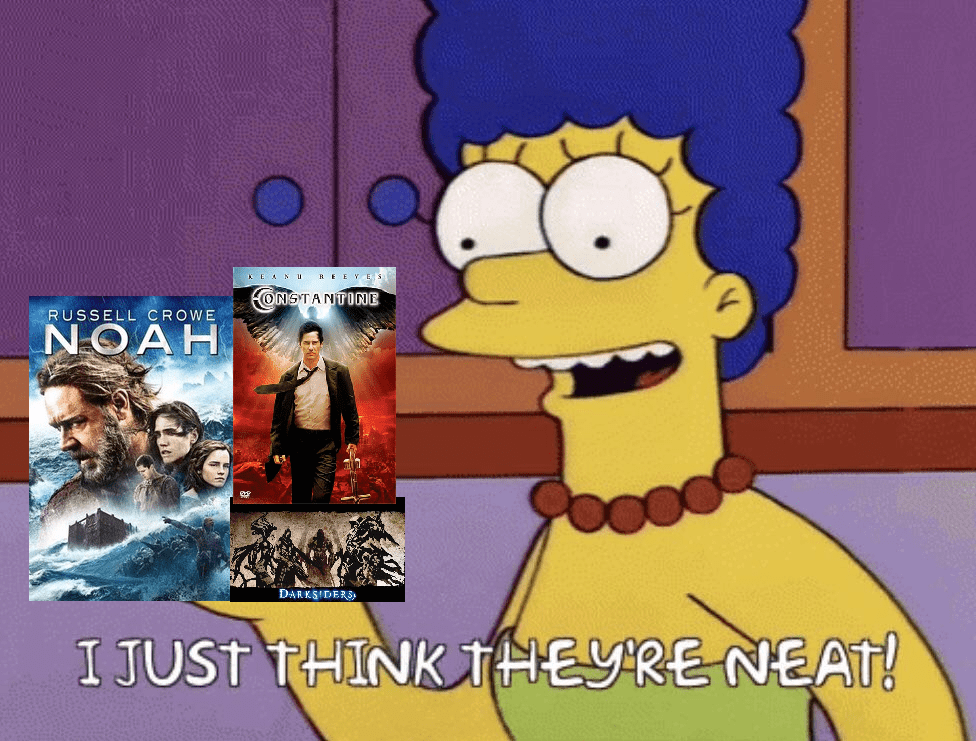
The mythological elements surrounding Christian belief are just as rich and full of meaning as any other cultures’. But because of its close proximity to Christianity, mainstream moviemakers have understandably tended not to incorporate them into many movies. In fact, I can think of only a few pieces of media who use elements that aren’t expressly religious in nature: another superhero movie Constantine incorporates specifically Catholic elements, while the recent Noah movie brings more obscure elements of the Old Testament (such as the Nephilim) into the much more familiar story of Noah’s ark. The video game series Darksiders allows players to control the Four Horsemen at the End of Days, and actually introduces original content into the Revelation narrative to create a unique universe based on established Christian apocalyptic lore. Aside from these, most examples tend to be more in the form of the Left Behind series: detrimentally referential to the source material, preachy, and created for a very specific audience at the expense of the mainstream. With Ghost Rider, I feel like Marvel doesn’t go too far in marrying the religious with the superhero genre, making the final product different enough to interest moviegoers like me and also non-offensive enough to everyone except the ultra-religious crowd who are offended by everything anyway. It’s almost novel because of how underused this rich mythology is, so I appreciate it when I see it done in an interesting way.
I should make a quick note about what I mean by “Christian mythology.” The term “mythology” has come to be synonymous with “fictional” or “fake,” and I have definitely had people get upset at me for referring to anything Christian as mythological. In reality, the word really just refers to the elements surrounding a culture or religion or its stories that explain why the world is the way it is and how it works. Books about Greek or Egyptian or Norse mythology are usually a collection of these explanative stories, albeit ones no one actively believes anymore. In this context, it’s understandable that contemporary Christians might take offense at the term being applied to an explanation of the universe they hold as true. (However, I hope these critics can also understand why the term “Hindu mythology” might spark the same reaction from about a billion Hindus.) To sum up: when I use the word “mythology,” I’m just referring to all the elements surrounding Christianity without any kind of judgement as to their validity. After earning a Master’s in theology, I feel I have a good leg to stand on in doing so.

Now on to the movies themselves. As always, spoilers.
Ghost Rider

Staying in the genre of Christian mythology, I appreciated the backdrop to the more immediate action of the film. The Ghost Rider, as the Devil’s bounty hunter, was sent to collect a contract containing the souls of an entire town of wicked men and women in the deserts of the Old West. Once the Ghost Rider saw how powerful all these souls would make the Devil, however, he ran and hid the contract to spare the world from the Devil’s evil. Now, the Devil’s son Blackheart has decided that the contract and all its souls will help him overthrow his father. As he and his followers scour modern-day Texas and leave destruction in their wake, a new Ghost Rider is caught in the middle of their feud. Even though it’s not exactly a new premise, I think the idea of the Devil trying to overthrow his father is something not really touched on in other works of Christian fiction, much less that said son would have to fight his father’s minion who is actually the protagonist of the story. In a movie that isn’t terrible but isn’t great either, this unique premise was definitely a plus for me.
I also thought the Ghost Rider himself was an interesting sort of anti-hero. True, the actual animation of the flaming skull and some of his movements look dated, but with contemporary CGI being what it is, I don’t begrudge a movie made in 2007 for looking old. The signature power of the Ghost Rider is the Penance Stare, where the Rider will look into the eyes of his target and make them live all the pain and suffering they’ve inflicted upon others in their souls. It’s never really made clear in the movies whether this kills the victim, since visually they’re left looking more comatose than dead, in my opinion. Perhaps Marvel didn’t want their hero, even an antihero working for the literal Devil, to be so graphic.
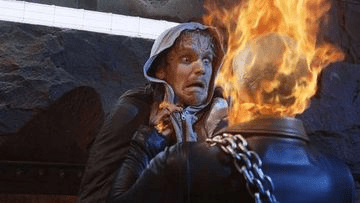
And unlike most superhero movies that have come since, in which the heroes’ power is used to defeat the villain by simply punching harder than usual, the Penance Stare actually becomes integral in defeating Blackheart. As a being with no soul, Blackheart is initially unaffected by the Stare and is able to obtain the contract despite the Ghost Rider’s efforts. However, this means that Blackheart absorbs all the wicked souls into himself, which becomes his undoing as the Penance Stare unleashes its power on his newly soul-infested body a thousandfold. It’s a refreshing departure and a neat way to actually incorporate something introduced earlier in the film into the film’s ending.

Other than this, the story of our actual protagonist Johnny Blaze isn’t as interesting. At its beginning, Johnny is a hothead teenager who does motorcycle stunts with his father, and is a typical insufferable teenager. He eventually plans to run away with his girlfriend whose father does not approve of their relationship. When he learns that his father has a late-stage cancer, Johnny is conflicted about whether he can leave. It is then that Mephistopheles approaches him, promising to cure his father’s cancer if Johnny will work for him. Johnny stupidly agrees and the next morning his father is cancer-free. Not 20 minutes later, however, he dies in the most unconvincing motorcycle death ever to be put to film.
So Johnny runs away from everything, leaving his girlfriend and his life to become a stuntman somewhere else.
It’s perhaps a more tragic backstory than some heroes’, but only slightly more interesting because of the Faustian parallel. After this, it becomes a pretty typical “I was an ordinary man until I got these powers, how are they going to change me from being apathetic to caring and also here’s my hot girlfriend” story that Spider-Man had already done so well and Iron Man would do better the following year.
That being said, we can’t talk about Johnny Blaze without talking about Nicholas Cage and the No Good, Very Bad Southern Accent. Nicholas Cage has a reputation for giving some over-the-top performances in some of his movies, as well as some bizarre casting choices. For every movie like National Treasure or The Rock, he’s also been in plenty of movies like The Wicker Man or Left Behind.
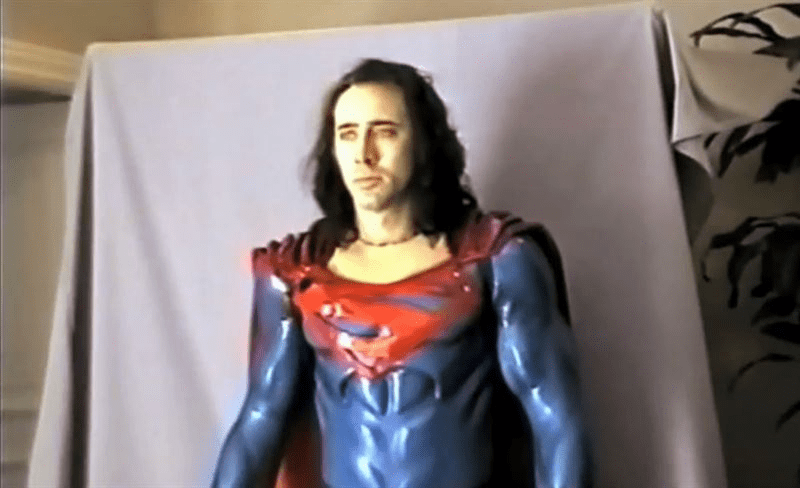
In this movie, he isn’t crazy or zany. But he does have one of the worst Southern accents I’ve ever heard. Personally, I understand how important the right accent can be for any given situation. In my day job, I have been told that being from the South I should have an accent but don’t, which was described as “strange.” I have also been told that my accent is so thick I couldn’t be easily understood. Needless to say, I think that pretty much makes me an expert on the subject.
It’s not a bad performance, just a strange choice. Considering they dropped his character’s accent in the second film, I assume someone in production realized this as well. Interestingly, Johnny is also a bit of a proto-Tony Stark in this movie, being both quippy in the face of danger and eccentric (Johnny drinks a martini glass full of Jelly beans and listens to the Carpenters to pump himself up for a big stunt jump). Marvel perfected this characterization with Tony Stark (and arguably beat it to death with several characters since), but it’s interesting to see where they tried it first with Johnny.
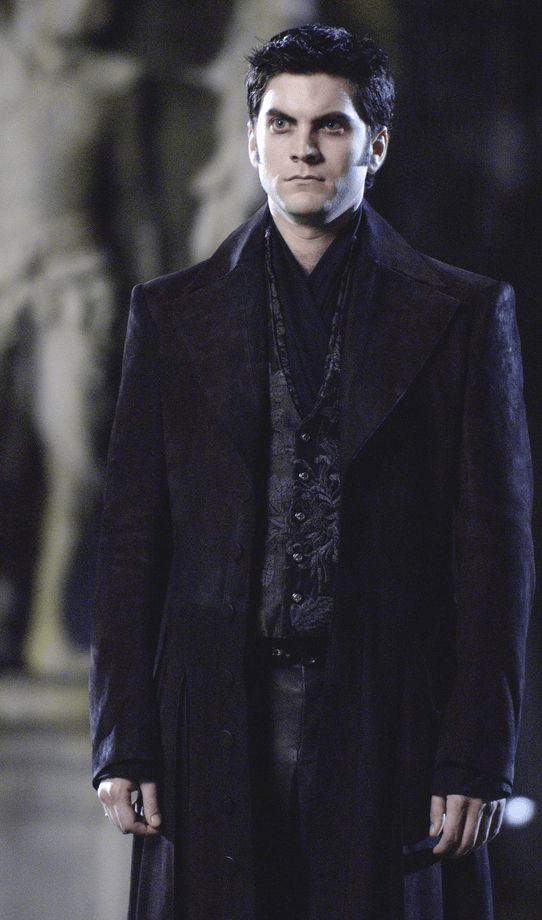
Something that is definitely not intentional concerns the underlings of main villain Blackheart, three fallen angels named Gressil, Abigor, and Wallow with powers over earth, air, and water, respectively. They’re really pretty inconsequential to the story, mostly acting as minor obstacles for the Ghost Rider to overcome and show off his powers in the process. But whoever did the makeup and costuming for the latter two demons, Abigor and Wallow, ended up making them look like a pair of evil James Francos wreaking havoc with the Devil’s son. Every time these characters were on screen, both Julia and I would look at each other and laugh at the resemblance, totally undercutting any gravity the scene might’ve been trying to convey. All we could think was “Poor James Franco’s getting beaten up again.”

Overall, the first Ghost Rider wasn’t quite up to the standard of what would come the following year with the release of Iron Man. But Marvel has seemed to have consistently had that problem throughout our film series. They have never known quite what to do with their antiheroes on the big screen. This is certainly in part because the executives are afraid of alienating potential sources of money members of their audience and choose to go with a safer, more PG portrayal of these characters. And this decision is always to the detriment of the character. Who knew that the Devil’s bounty hunter would harvest literal souls and destroy primordial angels and demons with no remorse but draws the line at killing a random mugger robbing Rebel Wilson?

In the end, the movie’s theme of striving toward redemption for the mistakes of the past fits into the Western genre the movie skirts and the Christian mythological genre it dives headfirst into (as well as the superhero genre where that theme is kind of the entire point). In a way, it’s sort of comforting that Ghost Rider is largely the same as I remember from seeing it in the theater back in 2007. With enough individual elements to keep me interested, I feel like it qualifies for membership in the “Movies you can watch on FX in the middle of the afternoon and reasonably enjoy” category most of these superhero movies in our series fall into.
Ghost Rider: Spirit of Vengeance

The second Ghost Rider movie, in my opinion, has several things going against it. Being released in 2011, it sits between Captain America and The Avengers in the MCU, making it more of a distraction from the story audiences were beginning to care about than its own standalone movie. It was also created by a few different studios than the original, and honestly doesn’t seem to have any of the same attention to detail for continuity purposes that the main entries have. The CGI and writing are noticeably worse. Nicholas Cage returns as Johnny Blaze, but he’s the only returning character, so some continuity is lost there as well. Part of the reason sequels are able to be made in the first place is because studios know people will want to see the continued relationship between characters from the original movie. Since they only bring back one character here, my capacity to care is that much lessened. Overall, GR:SoV is more of a cash grab than an attempt at expanding the universe of the MCU, and it shows.

One of the strangest choices to me is how they decide to connect this movie to its predecessor. At the end of the first Ghost Rider, Johnny is offered a chance to have the Rider’s powers taken away from him so he can live a normal life with his girlfriend, which is something he’s wanted the entire movie. However, being the hero, he instead chooses to keep the powers in order to fight the Devil and his plans to make life miserable for normal people, even though this means he’ll never be with his love. Johnny’s self-sacrifice makes him a hero and helps him atone for his mistakes through carrying this burden.
This film, however, decides that none of that character growth matters. Several years later, Johnny is riding through impoverished Eastern Europe, searching for a way to once again get rid of the Rider so he can lead a normal life. Granted, this is because the Rider seeks out people to punish every night, and importantly does not factor in the severity of his victim’s infraction; both a murderer and someone telling a little white lie are punished with equal prejudice. Still, it’s an almost humorous 180 flip on the ending of the previous movie.

This movie also slightly reboots how Johnny was granted his powers in the first place. The original movie shows Johnny as slightly more of a victim when making his Faustian deal, having him prick his finger on the contract with the Devil and “sign” with a drop of his blood. The fact that Johnny blames himself for his father’s subsequent death is that much more tragic because it wasn’t really his fault.

In the sequel, however, a series of flashbacks show a much more proactive Johnny signing the contract intentionally. It’s a small change but it places more of the blame on Johnny. It’s weird that they simultaneously want this movie to be a sequel to the first but also almost a reboot to give them a clean slate to work with. As someone who values continuity in his franchises, I don’t like it.
Even more baffling, the movie has the same ending as the first one. Without going into any detail of the convoluted plot, Johnny finally gets the Rider’s powers taken away from him, only to need them again to save the day. So he decides to sacrifice his happiness to keep the world safe…just like the ending of the first film. And it’s still a good character arc, but a bit less poignant the second time around.
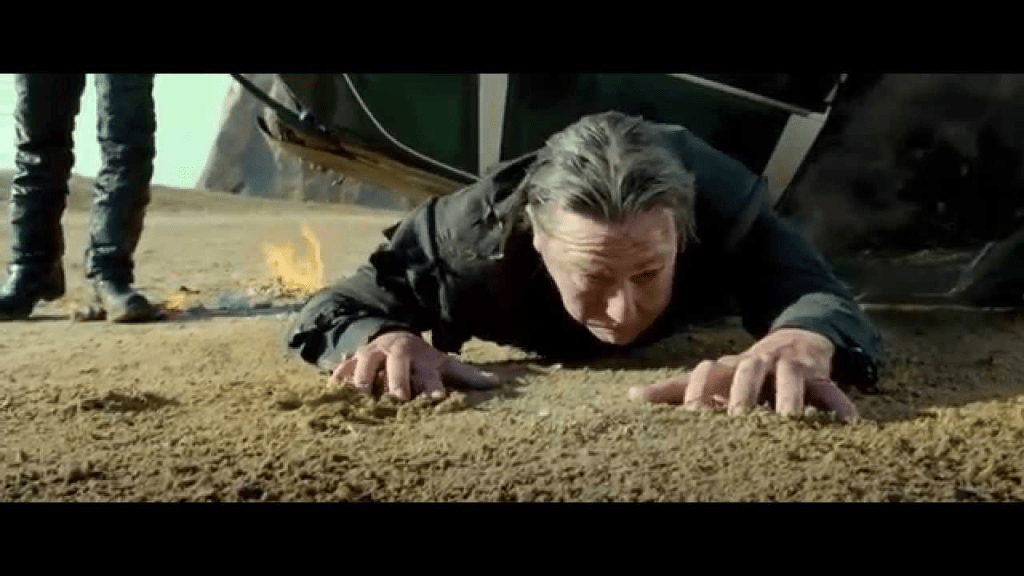
Also, the Devil’s plan here is, because a mere mortal body cannot hold the power of the Devil, to impregnate a human woman so she can give birth to a child who will become his new host. This is very similar to the plan of Emperor Palpatine from Star Wars, first in the Expanded Universe and then in the Rise of Skywalker movie, albeit with making clones to house his spirit instead of impregnating women. Draw from that what you will.

The movie also has a banner during the opening credits designating that this film is part of the “Marvel Knights” series. I had never even heard of anything in the MCU being referred to as “Marvel Knights” It turns out this is because the only other Marvel film with this designation is the also little-known and also little-liked Punisher: War Zone, a low-quality sequel to the 2004 Punisher film. It seems Marvel toyed with the idea of making a series of films and media that dealt with smaller scale, more morally ambiguous antiheroes like Daredevil, the Punisher, and Ghost Rider. Judging by how neither you nor I have heard of this movie initiative, the project didn’t do so well. Although if Marvel’s upcoming Moon Knight project is any indication, they may be giving it another go.
If the plot of the first movie placed itself in a universe populated by angels and demons, the sequel places itself more specifically in a Book of Revelation scenario, Left Behind-style. Now I haven’t read or watched any of the Left Behind series, but I know enough small details to get the gist. GR:SoV shares not only some tonal similarities (the Devil is doing something bad, the end is nigh), but also some rather specific aspects that may have become indicatve of the genre at this point. The movie takes place in Eastern Europe, which seems to be shorthand for “our movie can be set in the modern day with modern guns but we can still blow stuff up without the police caring” in action movies. In the Left Behind series, I know the antichrist comes from Eastern Europe, and considering a lot of this movie centers around the Ghost Rider attempting to protect a child from being taken over by Satan, it’d be weird if the similarity wasn’t intentional in some way. There’s a scene near the end where Satan is ready to perform the ritual to take over the child’s body, and the audience is full of world politicians who are in league with the Devil, which I’m certain is a theme of “righteous remnant” Left Behind theology. There’s also demons and angels fighting in both works, obviously, and redemption and corruption and everything else you’d expect from the “modern Christian mythology” at this point.
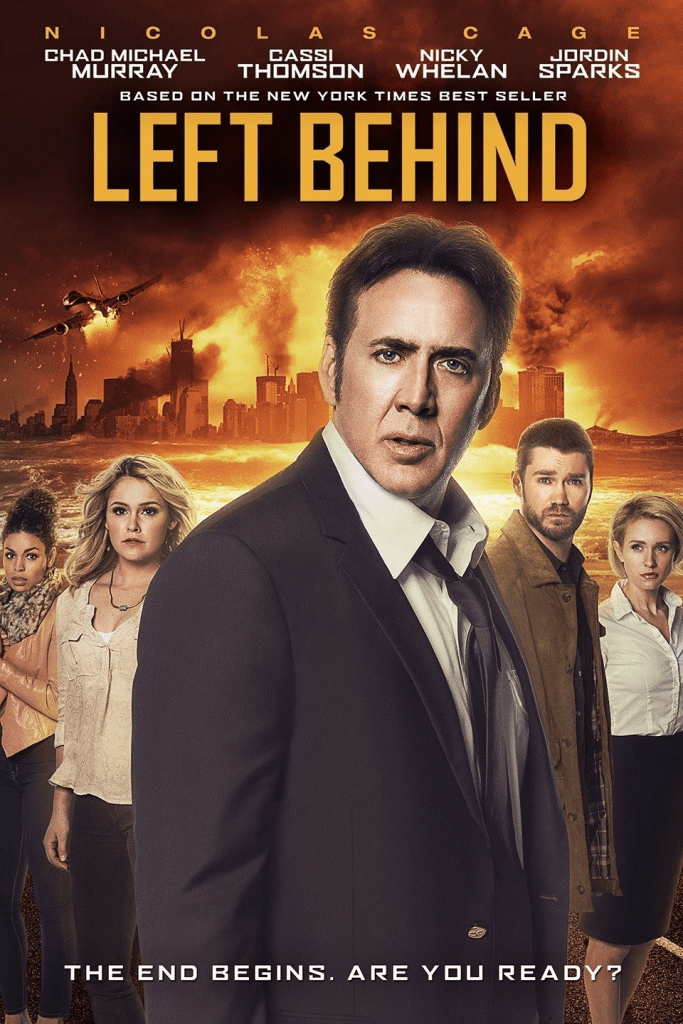
Again, it’s at least refreshing to see the genre explored outside of a particularly conservative Christian context.
Speaking of Nic Cage, he is even Cagier is this movie than the previous one. I think this is partly due to how they alter the history of the Ghost Rider himself. Like the first film, the Ghost Rider was once an angel of justice who was tricked into entering Hell, captured, and tortured into becoming the Ghost Rider. This film pushes that further, however, making the Rider insane to boot. I’m not sure whether the writers took Cage’s acting performances in the past and added the “insane” attribute to showcase that, or the insanity angle was there all along and they just got lucky Cage was playing the character. Either way, it wouldn’t work at all if any other actor tried to do it.
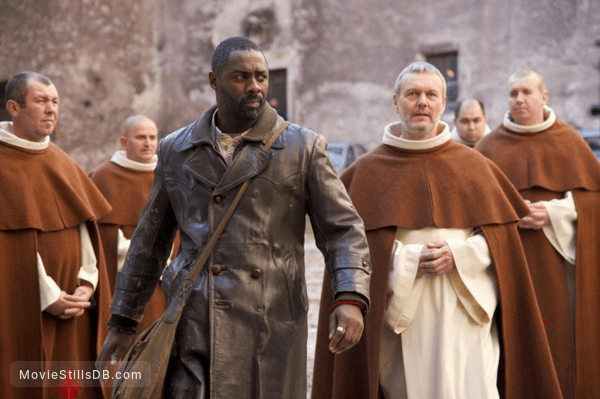
One character worth briefly mentioning is played by Idris Elba as a sort of “jaded yet holy mercenary” figure who helps the Rider in his mission to keep the McGuffin boy safe from Satan. He was in much of the movie, but I don’t remember his name (like most of the characters). I was more surprised than anything to see Elba in this kind of movie. Then is occurred to me that Thor was released the same year, and included Elba as the much more memorable Heimdallr, guard of the Bifrost bridge to Asgard. I guess sometimes actors take whatever paychecks they’re offered, and Marvel seems to be a sought-after employer when it comes to their movies.
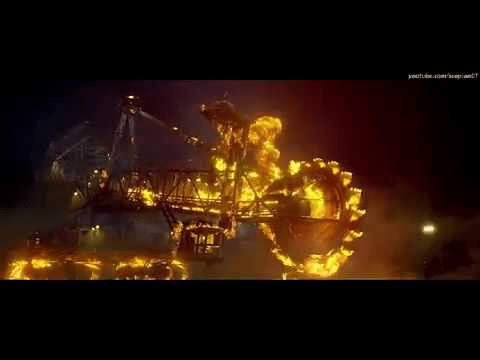
The only other standout aspect of the film I can remember is how I was surprised at how relatively good the action was. One large difference between the first movie and this one lies in Ghost Rider’s enemies. Blackheart and his gang forced the Rider to engage in more hand-to-hand combat with supernatural foes, where here the majority of the Rider’s enemies were ordinary Eastern European mercenaries with AK-47s and bad teeth. Different situations call for different action sequences, and at least this movie seems to recognize that. There’s a pretty good fight scene in a quarry between the Rider and a small army of mercenaries armed with machine guns, assault rifles, rocket launchers, and quarrying equipment that checks the boxes for “good action scene” and not “stupid action scene.” At one point, the Rider is riddled with bullets, only to vomit them back out rapid-fire at his attackers.

The cool meter is slightly reduced, however, when the Rider then proceeds to take demonic control of a huge quarrying machine and wreak havoc on the enemy. It comes across less as as escalation of the Rider’s powers and more just out of left field than anything. The explanation given later by the movie itself that any kind of “mount” the Rider commandeers becomes imbued with his power, including heavy machinery apparently, doesn’t do much to alleviate the bizarreness.
There’s also a henchman-style villain in this movie, whose name I forgot as soon as he was introduced (it’s Blackout) and for whom the only name I could come up with for this article was “Evil Kurt Cobain.”
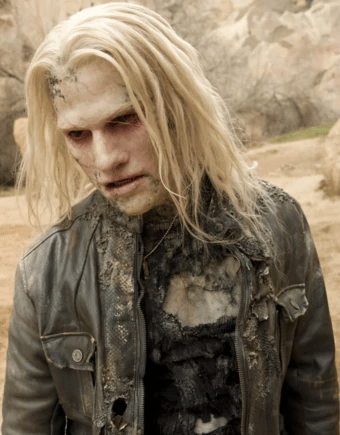
His powers are being able to make the immediate area around a person dark so they can’t see (hence, “Blackout”) as well as causing whatever he touches to instantly start to decay. It’s definitely a scary power (although maybe not against a literal skeleton who’s already undead), until you realize this is the exact power Harry Potter used at the end of the first book to melt Professor Quirrell.
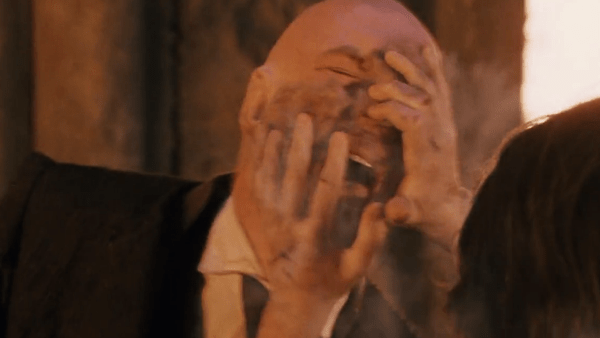
Not to sound too flippant about this movie but there’s not a whole lot more I remember about it to comment on. Spirit of Vengeance, like several lower-quality movies in our series, was not really engaging enough to keep my involved interest for very long. By the time of the climactic end of the movie, when the Rider is able to give Satan himself the penance stare to send him back to Hell and is freed from his torture, becoming the Angelic Rider and wreathing himself in blue flame to protect the innocent, I had lost enough interest that I literally didn’t know that’s what happened until I Googled a synopsis for the movie for this article. There certainly is more to the movie than I am commenting on here, but I would only really recommend watching it if you’re a completionist for the Ghost Rider saga.
If there’s anything I took away from these two films, it’s that I should’ve looked harder for Constantine at the used book store when I was getting ready for this series. My advice: have a Nicholas Cage month sometime this year where you run the gamut of his acting range, and at some point in the middle, at least watch the first Ghost Rider.

Next time, we come to the penultimate film in our series, Green Hornet. Here’s hoping we can get 2021 off to a good start.
 Culturally Opinionated