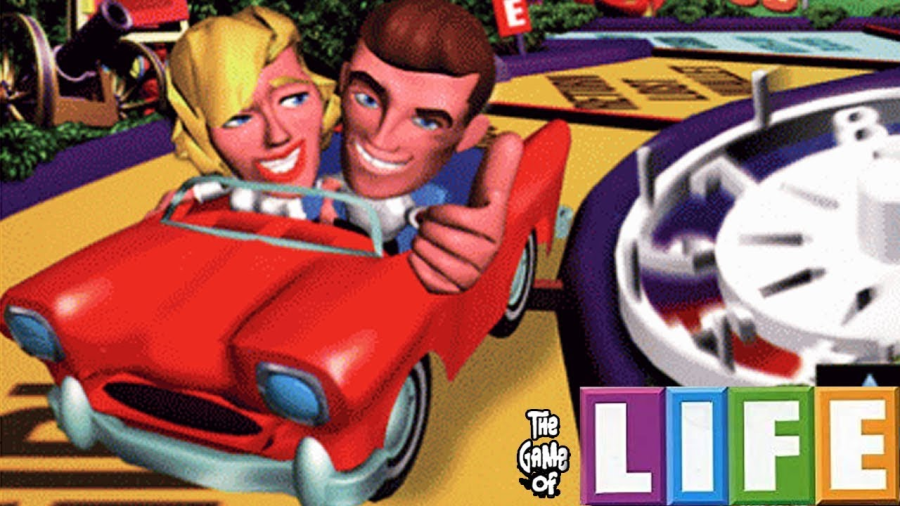
A couple of weeks ago, I was at a local used bookstore looking for Christmas gifts for extended family. I wandered into the video game section of the store and came across something from my past: “The Game of Life” for the original PlayStation. It was a game I hadn’t played in years but had many fond memories of, and I decided to buy it. Aside from purchasing it because of simple nostalgia, I also reasonably figured that my wife Julia, who is not nearly the video game fan I am, might have fun with what is essentially a video game version of a board game. Luckily, I was right; what acted as a fun trip down memory lane for me turned out to be fun for her as well. We’ve both been ready to relax after the busy year we’ve had, what with our wedding and the holidays right after. So while I’m working on several new articles for this blog and since I haven’t posted anything in a while, I thought it might be entertaining to share what happened when I introduced my wife to a game I remember fondly.
But first, a little background about my connection to this version of “Life.” If Julia had to hear about it, so do you.
Video Games and Me
I grew up during the 90s and early 2000s, and like most boys my age I came to love video games. Although most of my attention was taken by the new Pokemon phenomenon sweeping the world, I was enamored by pretty much anything on a screen. As much as I loved video games, however, my access to them was limited. My parents gave me a GameBoy color and Pokemon Yellow for Christmas when I was 8 and instantly regretted it as I sank hours into the game on my quest to be the very best like no one ever was instead of practicing piano or playing outside. Perhaps in part because of this, my experience with the wide world of video games was restricted to my handheld holy grail for several years. When my sister and I were finally gifted a Gamecube sometime later, it was like a dream come true.

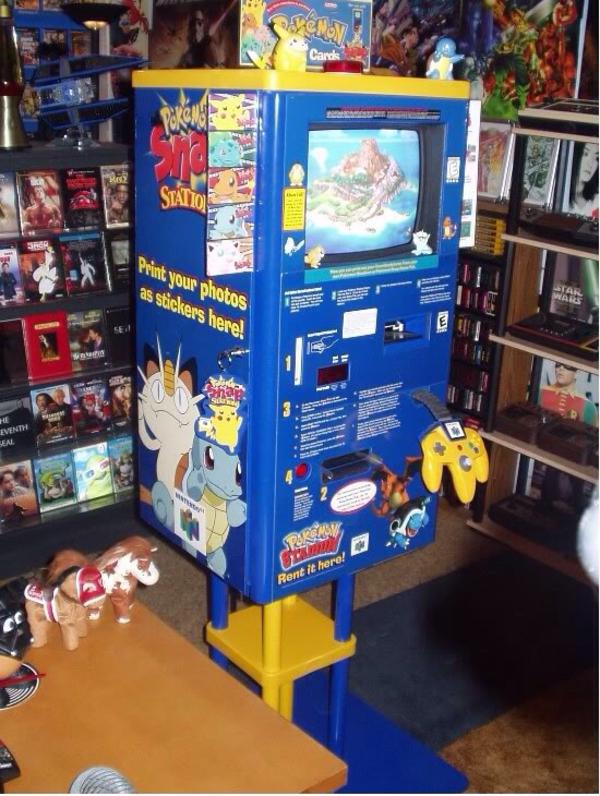
Luckily, there were other avenues for me to experience all that the gaming world had to offer. I had friends who would invite me to over to play their Nintendo 64s and PlayStations. While fun, all this did was whet my appetite for what I could not possess. The public library had computers with games on them, but PC gaming at that time was not nearly as “pick up and play” as console games were. Some retail stores would have consoles available to play demos of games. I can still remember going to Blockbuster and beelining to the N64 display to play the “Pokemon Snap!” demo for the thousandth time. But at the end of the day, my small GameBoy library could only provide me with a glimpse into the larger gaming landscape of adventures, frustrations, and triumphs just waiting for me to experience them.
But for a short time twice a year, that all would change.
While my family lived in Memphis, my mother’s family lived 8 hours away a little past the Tennessee/ North Carolina border. So twice a year, my parents would pile my sister and I into the car and make the all-day trek from the Mississippi River to the Smokey Mountains (that GameBoy was a godsend for those long trips). My sister and I always looked forward to the weeks we would spend in the mountains with my grandmother, our aunts and uncles, and our cousins. Luckily for us, our cousins were all around our age, so it was never difficult to have a good time. Even as the only boy of the group, I never felt out of place in our games. But for all the hours we and our cousins spent running around outside or putting on shows for our parents or learning how to play various board games with the modified rules created by my oldest cousin, I always looked forward to these trips in part for one reason: To play my cousins’ PlayStation.
And play it I did. At my aunt and uncle’s house, my sister, cousins, and I would spend hours playing whatever games my cousins had before being told to go to bed so the adults could finally get some sleep. I would be disappointed to stop playing, of course; why waste hours of my limited gaming time with sleep when there was playing to be done? It was a necessary evil. Until, that is, I developed a workaround. There was an enforced time to stop playing for the night, I reasoned, that was unavoidable. But no one had said anything about how early I could start playing. And so, more times than I care to remember, my aunt or uncle would wake up relatively early to find their nephew sitting in the predawn-lit living room happily humming along with the PlayStation as it took me on its wonderful adventures. Not all of my playing took place exclusively before dawn, however. Especially during the summer, there were entire days my cousins and I devoted to saving the world or virtually beating each other in virtual competitions.
Now as I finish portraying myself as some sort of pale, video game-obsessed Gollum squatting on my aunt and uncle’s couch playing Crash Bandicoot at 3 in the morning, I’d like to take a moment to clarify something about my gaming preferences. As much as I enjoyed playing the hero and singlehandedly saving the world, the primary type of game I looked forward to playing with my cousins were party games that we played together. Outside of Pokemon, my formative gaming years were filled with competitive games like Super Smash Bros. and Crash Bandicoot Team Racing or Mario Party-style games like Crash Bash or Shrek Super Party. Even single-player games were played in tandem as one person would hand the controller off to another after a certain number of minutes. In Rugrats: The Search for Reptar, for instance, my cousins and I were much more concerned with taking turns playing the putt-putt minigame than we were at searching for Reptar and beating the game.

In the same way we loved to play board games or even made-up games together, we frequently bent over backwards to ensure we could play together. And one of our favorite games to play both as a physical board game and as a virtual version was “The Game of Life.”
The Game of Life
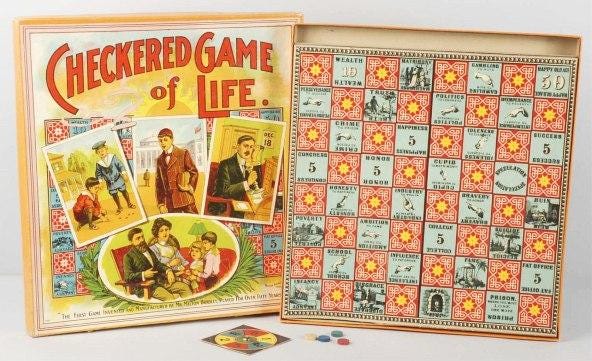
Most people in the US are familiar with “The Game of Life” in some way. First released in 1860 by Milton Bradley under the name “The Checkered Game of Life,” the original game looked very different from its modern version, resembling an actual checkerboard and created with the intention to convey moral messages. It wasn’t until a century later that the game was redesigned into the form we know today and that has remained a staple of American culture for just over 60 years. For those not familiar with the premise: Players move along a track from College/Find a Job to Retirement, facing hardships and successes along the way. At the end of the game, the player with the most money to enjoy retirement wins. You can decide for yourself what the moral of the game has become in our capitalist country.
Overall, the game is pretty fair. Given that the vehicle for moving along the board is a spinner number 1 to 10, the randomness of progression levels the playing field somewhat. Different jobs are also not inherently better than any other, allowing you to avoid paying certain penalties based on what space you land on (a player whose profession is Doctor, for example, isn’t forced to pay when they get sick, but will still have to pay for events associated with other professions like education or sporting events). The same cannot be said for the players’ salary. Although the choices for salary are randomly available to players, money is the name of the game. The lower your salary, the less chance you have to win. Admittedly, the game tries to level this aspect from its outset: You can either start by going to college and have a choice of several salaries but start $40,000 in debt, or choose a salary and job immediately from a much smaller pool. Whichever way you start, however, if you pick the $100K salary card, you will actively have to try to lose due to how much of an advantage you have over the other players. Julia, unfortunately, found this out the hard way during our playthroughs.
Additionally, many of the spaces on the board list life experiences like having babies, visiting the Grand Canyon, winning the Nobel Prize, etc. These spaces give you Life tiles that are translated to money at the end of the game. Supposedly, these endgame amounts can help lower-salary players catch back up. I imagine there’s some sort of message about the benefits to being “rich in experiences” or something; in this game, however, it’s ultimately better to just be plain rich.

In terms of fairness, I would argue that this electronic version of the game makes the experience even more fair for all players in how it removes any ability to cheat. No one can, say, subtly mark the $100K salary card to make sure they get it every time, or volunteer to be the banker so as to surreptitiously skim some extra funds off the top (or convince younger and more gullible players that anytime money was paid to the bank, it actually went to them, the banker). The doesn’t mean, however, that the odds are necessarily stacked in anyone’s favor.
Upon booting up the game, Julia noticed and I was reminded of several things. First, this is a 23-year-old game, and it definitely looks like it. The gameboard itself as well as the two-dimensional drawings that accompany landing on certain spaces were well and good; the 3D models of the playable characters, however, have a polygonal uncanniness that doesn’t belong on human faces. Luckily, you aren’t forced to look at yourself for the majority of the game.

Second, the game starts in 1950 and ends in the 2000s, and features short songs that encapsulate stereotypical music of that decade as background music. The 50s has a “doowop” song, the 80s features upbeat electronic vibes, and the 2000s clips all sound futuristic and terrible. Seeing as this game was released in 1998, we can forgive them some for this. Check them out. Finally, this version of the game features 2 modes of play, Classic and Enhanced. We chose to try out both without knowing what the differences were.
Game 1
![The Game of Life] Full Gameplay (PS1) - YouTube](https://i.ytimg.com/vi/Mkp6tBd3Uxw/maxresdefault.jpg)
Both Julia and I started this first game to win, and in Life the best way to start out is by going to college. Yes, you start with $40K of debt, but I’ve never found that to be too much of a hinderance toward winning the game. In fact, the initial hurdle for both of us was trying to suspend our disbelief that we left college with ONLY $40K of debt. Additionally, upon graduating I was treated to the line “I think my social security should just about cover my student loan!” I’m sure this was intended as a joke, but the student debt that continues to hang over my head makes it hit a little too close to home.
After college, you of course pick your career from a list of answers given by kindergarteners when asked “What do you want to be when you grow up?” (just like in real life).
:strip_icc()/pic2071315.jpg)
The advantage to going to college is that you have three choices to pick from instead of just one, as well as three salaries. Though I would like to know what one should major in to immediately become a Superstar right out of college, as Julia did. I decided to be an Accountant in order to avoid paying anything on a “Taxes Due!” space (again, just like in real life). Luckily for me, I managed to pull the $100K salary card, which essentially ensured my victory, while Julia only managed to rake in $70K as a Superstar. I can’t imagine what type of Superstar only makes $70K a year. Probably some kind of ventriloquists or something.

It was about this time that we noticed two things simultaneously. First, that I was rolling 10s about every other turn and so was unintentionally speeding my way through the game. Julia, on the other hand, was rolling very low, averaging 1s and 2s. Second, I suddenly remember that Life allows players to “buy stocks” by selecting a number 1-9 and paying $50K to reserve that number. Every time another player spins that number, the player gets $5K. So I promptly navigated my way to the Stocks screen and bought the 1 stock. With the number of “Payday!” spaces I was passing as I zoomed down the board netting me $100K each time, I couldn’t NOT spend some of it to benefit off Julia’s lack of luck. The near-constant influx of an additional $10K along with Julia’s glare confirmed I had made the right decision.
Two of big milestones in Life after choosing a career involve Getting Married and Buying a House. You can’t not do these things. Getting married doesn’t really affect your playthrough, simply adding another polygonal monstrosity to your car. It also forces you to marry someone with a corresponding hair color to yours; if you are blonde, your wife will be blonde. Buying a house, however, can come back to bite you. In the Standard version of the game, you are at least able to pick what house you’d like to buy, from the lowly Split Level to the ostentatious Victorian home. The only uncertainty is how much you’ll end up having to pay (each house has a different range of prices you may be forced to pay, including Inheritance). For this first playthrough, I ended up with a $60K Mobile Home. I don’t consider myself to be a mobile home connoisseur, so I can’t tell you whether I got a good deal or not.
Aside from costing you money purchase your new home, Buying a House adds the additional of choosing whether or not to insure your house. Each house’s insurance is proportional to its price. Unlike in real life, you don’t HAVE to buy insurance for your house in Life. But there’s no telling if you might land on one of the various home-destroying spaces that will cost you for a flooded, burgled, or tilted-by-tornado house. I did have my precious mobile home assaulted by a falling tree later in the game, which seems appropriate. Luckily I was insured, and I lived to account another day. Additionally, there are also car-destroying spaces that can be offset by car insurance, which is usually less severe. However, speaking from personal experience, I would rather have a tarantula lay eggs in my ear than go through having my car stolen again.
The rest of my Life flew by as I spun 10 after 10. It seemed like I had just had twins, then one (or both?) of them won the Most Beautiful Baby Contest. In no time at all I was retiring to the prestigious Millionaire Estates. All I could do now was wait for Julia to catch up to me, one 1 spin at a time.
Julia had a harder time of the game. Since she spun lower, she ended up having more happen to her as she landed on more spaces. One thing this translated to was a large stack of virtual Life Tiles to be cashed in at the end of the game. Unfortunately, she also managed to land on some bad tiles. Despite my careful planning to use the Accountant career to avoid paying taxes, I didn’t land on that tile once, having perhaps seen it in my review mirror as I sped down the game board. Julia hit it twice. The game rubbed it in with an animation of a building labeled “IRS” just straight up burning her money. She also spun to buy the lovely little Country Cottage, for which she was forced to pay $100K. (I would’ve lent her one turn’s salary, but Life doesn’t let you do that.)
Unlike the financial asset my contest-winning children turned out to be, Julia was more penalized for having children. She just kept landing only child-granting spaces, gaining first a boy, then a set of twins, then a second adopted set of twins. She consoled herself with the fact that collecting children was a very “Superstar” thing to do. This was not much consolation, however, when she was forced to send her children to summer school and pay $5K per child. After this, however, Julia received a break. She landed on the Night School tile and was able to change jobs, transitioning from Superstar to Teacher. More importantly, she was able to transition from $70K to $100K salary. This change turned out to be fortuitous, as soon after she landed on a space instructing her to send her children to college for $50K PER CHILD. In her new career as a teacher, however, she did not have to pay, which was a welcome change of luck.
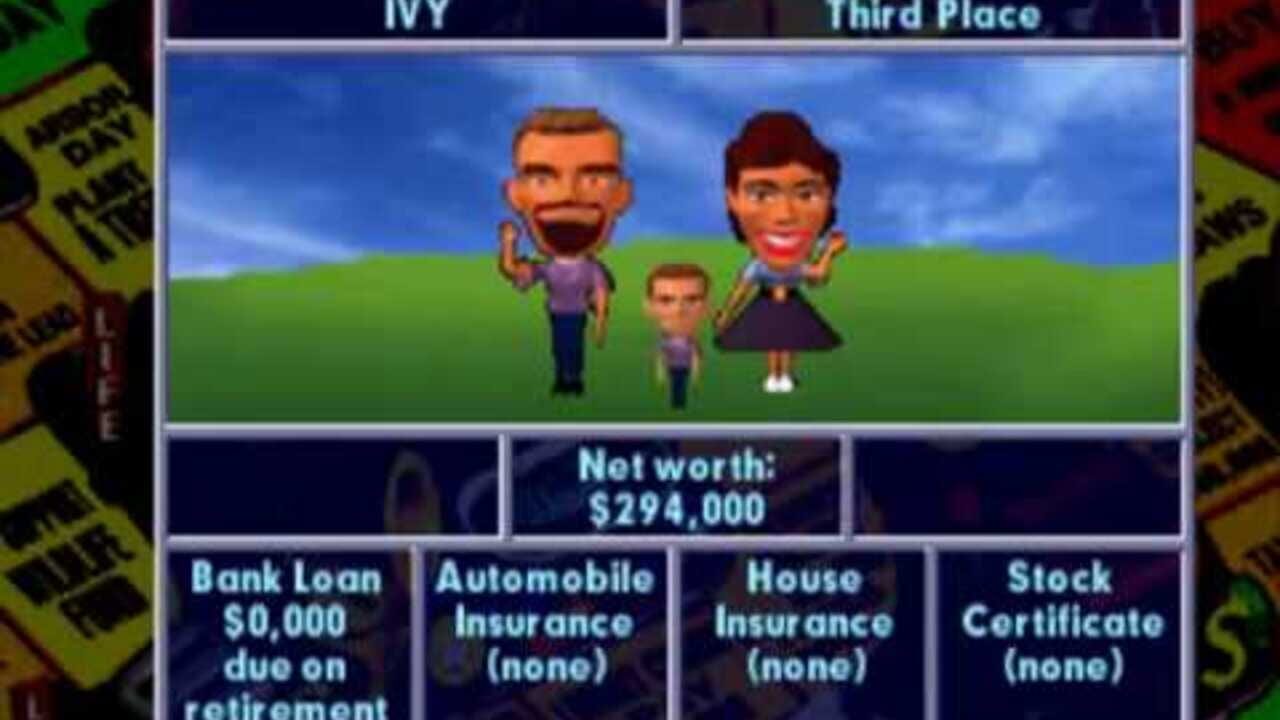
In the end, Julia finally caught up to me in Retirement and the results were tallied. Unfortunately for Julia, you just can’t win against someone with the $100K card, and I ended the game with $1.5 mil more than her. Even though I had won, the path of Julia’s player’s life had given her an interesting story: a superstar who had found fame before retiring to teach about her craft to others. My story, that of a rich person who had always been rich and then retired rich, was more lucrative but admittedly less exciting. As a side note, the game shows your entire family once you win, including your children. Interestingly, instead of attempting some sort of combination of you and your spouse, your children end up being direct clones of the two of you. If you have a son, he will look like you, only smaller.
With this game over relatively quickly, we decided to see what changes Enhanced Mode had for us.
Game 2
Both Julia and I decided to shake things up this time by declaring that school was for chumps and going straight into the job market. This meant we were stuck with whatever we got, including salary. I became an Artist making $50K salary, a surprise given the “starving artist” steroeotype. As if it were fated, Julia became a Superstar again, this time making $90K. It was at this point that we noticed that the cars we drove around the board in had changed from the futuristic curvy cars of the 2000s back to the angular and chromed style of the 50s. As we played, we confirmed that the car changed with the decades along with the music. It was a small detail, but a neat one.

As we played, we noticed several changes between Classic and Enhanced mode. The biggest change was to the Life Tile spaces. Instead of receiving endgame Life Tiles, the Enhanced version has you spin to either play minigames to win money or just give you money immediately. Usually, these games would involve flipping facedown tiles to try and match amounts, or flip up to 6 of 12 tiles and keep the last you flipped whether it was positive or negative. This added a more involved element to the game, especially in this version when you don’t even get to look at the Life Tiles you acquire at the end of the game. Either way, it confirmed that the game’s philosophy remained the same: it’s all about the Benjamins.
The other major change we noticed happened when we landed on the Payday spaces. Usually, you receive your salary simply by passing over the spaces. For whatever reason, we both ended up landing directly on them more often this time, at which point the game’s announcer would yell “Revenge!” Though this happened through the whole game, we could not determine what it meant. Was the game taking revenge on us for playing it? Was it vowing revenge on its creators for being it into being? Was it calling for the lower classes to rise up and take revenge on the 1%? We couldn’t guess. Later, we found out that this exclamation actually meant the game was not giving us our salary from the bank, but from the opposite player. In retrospect, we were both glad the other had not been assigned the $100K salary for this round. At the time, however, we were content to get our salary any way we could and let the game take its “Revenge!” on existence however it thought appropriate.

Luckily for me, a short trip to the stock screen began to pay off for me again, as Julia’s spinner graciously decided to give me money nearly every time she spun. Unfortunately, this was where my luck began to run out. With smaller spins, I began to experience more of the game’s hazards firsthand. I was unable to avoid paying taxes as an artist, and seemed to miss out on the lucrative payouts of the minigames. Also, in the Enhanced version, you had to spin not only to see what house you were randomly assigned but also how much you were forced to pay. I ended up getting stuck with a $100K Victorian mansion, aka the most expensive house in the game, on my $50K salary. Luckily, I was able to upgrade my salary to $80K shortly thereafter and purchase insurance before another tree fell on my house. My only consolation as I continued to do poorly at the money-earning minigames was that I once again managed to win Most Beautiful Baby Contest despite not having a baby of my own. I don’t believe there’s actually a “Steal a Baby – Collect a Life Tile” space on the board, so how I was so lucky remans a mystery.

Julia’s Superstar career didn’t go as well for her the second time around. Despite having a $90K salary and inheriting a Dutch Colonial Home instead of having to pay for it, she ended up getting fired and being forced to start a new career. One can only imagine how bad of a performer she must have been. She picked up the pieces of her broken life and became a Salesperson with a $60K salary, which despite her cut in income came in handy for her by offsetting the Salesperson-themed spaces she kept landing on. This notably including furnishing a baby room (for free) before having a baby, continuing the improbable child theme of our game.
The final changes we noticed dealt with major life events. Instead of simply being stuck with Life Tiles and extra pegs to add to your car when you get married or have a baby, the Enhanced version instead allowed us to spin the wheel to determine how much gift money we received from the other players. Seeing as the gifts were always at least several thousand dollars, it almost seemed advisable to gun for the baby spaces just make a few quick dollars. You also collected gift money when you retired. However, in choosing Millionaire Estates again, instead of waiting for the other players to finish while playing sudoku in your retirement home, the Enhanced version has you spin to see whether you gain or lose money, sometimes over $100K either way. The anxiety of potentially losing that kind of money with no “Payday” spaces to make it up is especially unwelcome in a retirement home.
At the end of this second game, I barely squeaked out a win over Julia with $1.7 mil to her $1.5, respectively. If only her last album had done better and she hadn’t been fired, she might’ve won.

Conclusion
For a game that’s 23 years old, “The Game of Life” turned out to be fun for both me and Julia. For me, it was a nice trip down memory lane, and one that I intend to revisit the next time I see my cousins and my sister. For Julia, it was a video game that didn’t make her want to pull her hair out in frustration and a board game she was sure I couldn’t cheat at. It seems that some classics are able to make the transition from physical to digital gracefully. Although I refuse to play the physical version of Monopoly where you use credit cards and the electronic teller counts for you. If there’s not even the POSSIBILITY that someone COULD cheat, what even is the point?

I hope you enjoyed this different entry on my blog, and be sure to look out for several articles coming sometime soon that are more thought-provoking and academic in nature.
 Culturally Opinionated