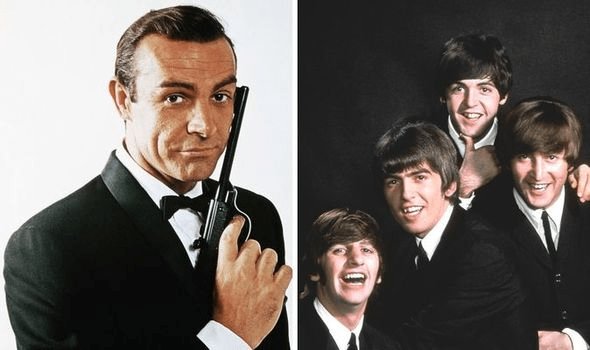
“Bond. James Bond.” One of the most memorable lines in all of cinema.
“I am the Walrus. Coo coo ca choo.” An equally memorable line of modern music.The films of the James Bond franchise and the music of the Beatles have been some of the most influential pieces of pop culture of the past 60 years. The twenty-seven films of the Bond series defined the “spy film” genre and cemented its titular character as a cultural icon, while the music of the Beatles has been beloved by audiences on both sides of the Atlantic for nearly six decades and has inspired music-makers the world over.
Although Bond and the Beatles share a “cultural birthday” (October 5th, 1962 marked both the release of the Beatles’ debut single “Love Me Do” as well as the release of the first Bond film, Dr. No), the two cultural giants have rarely crossed paths either in music or on the silver screen, with two exceptions.
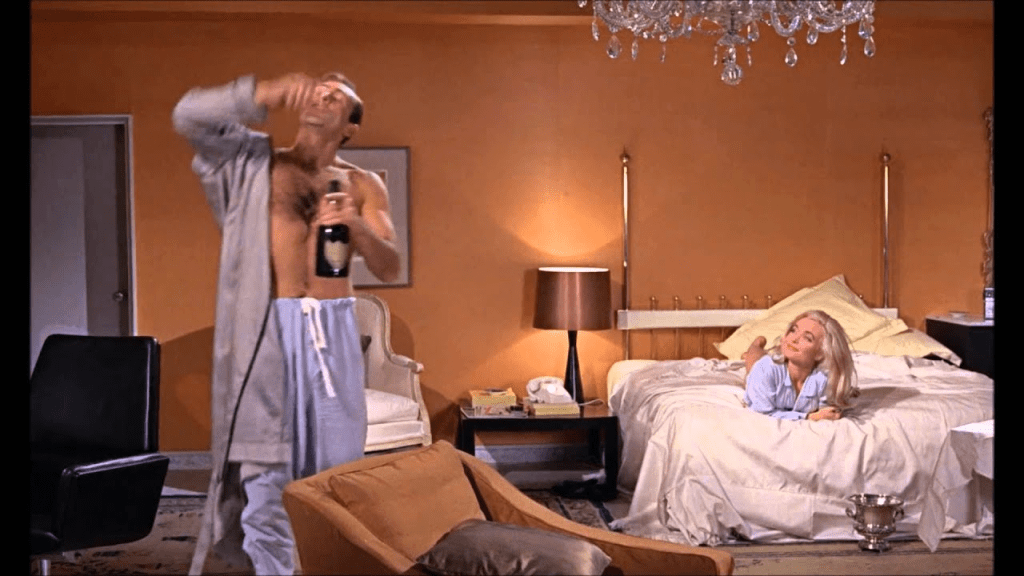
Near the beginning of the iconic 1964 Bond film Goldfinger, during a steamy scene between Bond and a beautiful blonde in the bedroom, James (played by the legendary Sean Connery) realizes their champagne has gotten too warm and makes this remark:
“My dear girl, there are some things that just aren’t done; such as drinking Dom Perignon ’53 above the temperature of 38 degrees Fahrenheit. That’s as bad as listening to the Beatles without earmuffs.”
And yet, nine years later in 1973’s Live and Let Die, the Beatles’ own Paul McCartney sang the titular theme song for the film. In just under a decade, Bond (now played by Roger Moore) had gone from dismissing the Fab Four to saving the world to the soundtrack of a Beatle.
With this cultural rivalry in mind, the question is worth asking: Who of these two icons has had the last laugh? Has the iconic influence of the Bond films on cinema overshadowed that of the Beatles? Or has the music and cultural impact of the Beatles trumped that of James Bond? Today we’ll compare these two cultural giants in the Battle of the British Bests.
Round 1: Film
The Beatles, though obviously a music group first, nevertheless had a short foray into the world of film. In six years, the group made 5 major films: A Hard Day’s Night (1964), Help! (1965), Magical Mystery Tour (1967), Yellow Submarine (1968), and Let It Be (1970).
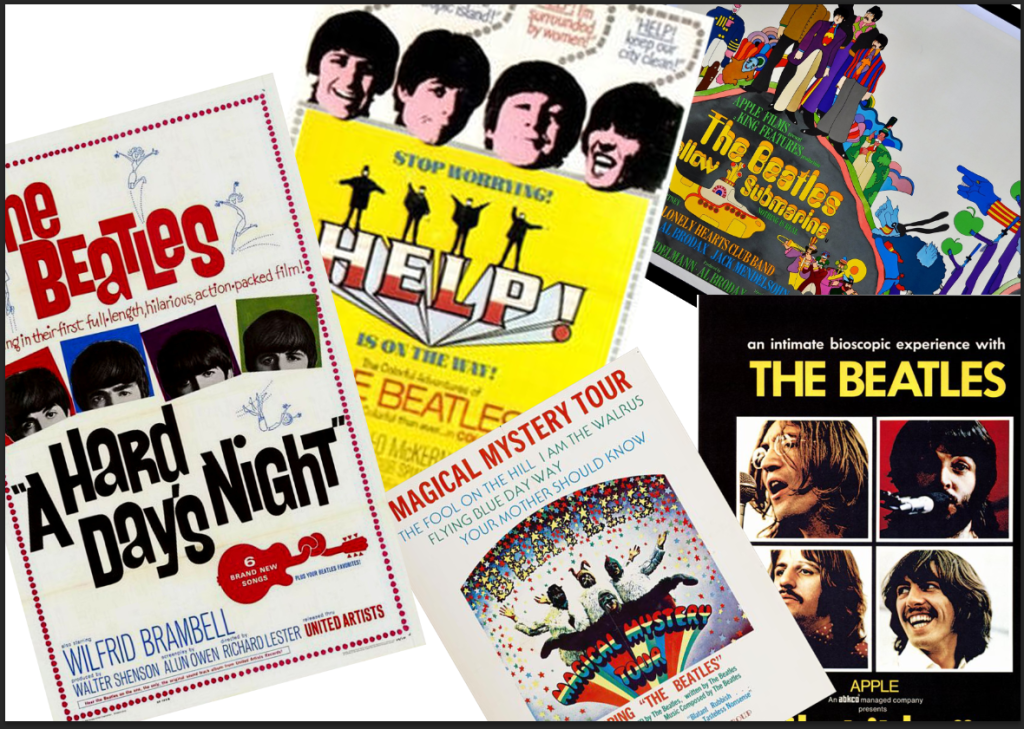
While it should be noted that there have been many films which have parodied, been solo projects of the band’s members, have documented, or been inspired by the band, these five films were made by and starred The Beatles themselves and so will be the criteria for this round. The critical reception of the five films varies somewhat among reviewers: while the first two films were immensely popular upon release (with scores of 98% and 91% on Rotten Tomatoes) and Yellow Submarine is similarly rated extremely well (96%), Magical Mystery Tour and Let It Be are less well-received (62% and 75%, respectively). Only the first two of these had theatrical releases, totaling $23.1 million altogether at the box office. Nevertheless, from the globetrotting adventures of Help!, the psychedelic cartoon visuals of Yellow Submarine, and the wistful melancholy of Let It Be, all five films are considered staples for Beatles’ fan experience.
Against the James Bond film franchise, however, The Beatles don’t stand a chance. From Dr. No (1964) to No Time to Die (2021), James Bond has time and again saved both the world and the returns on the studio’s investments.
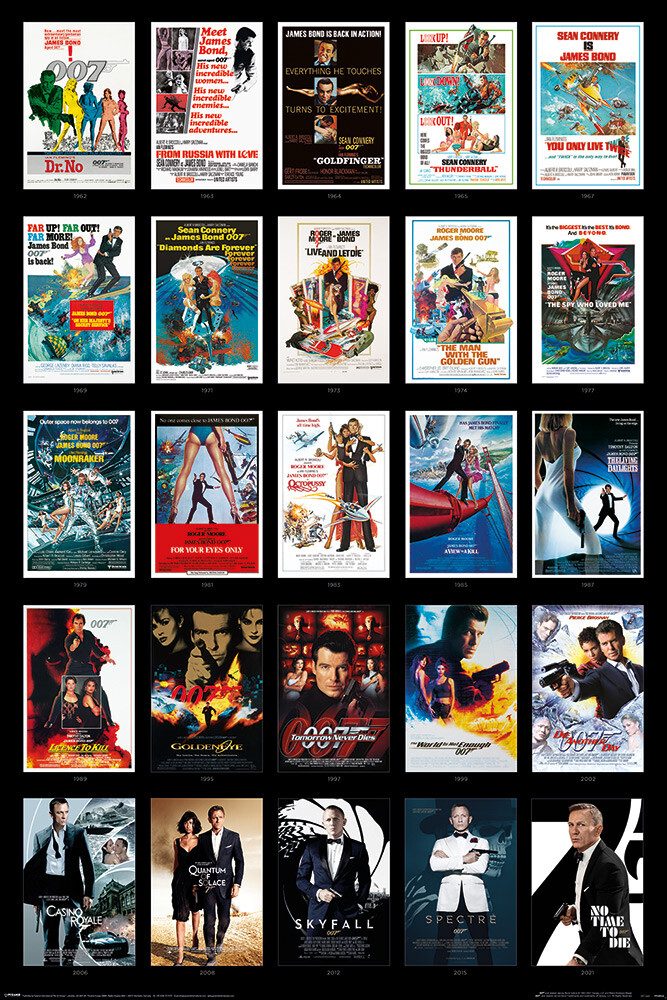
The lowest-grossing Bond film, On Her Majesty’s Secret Service (1969), made $82 million at the box office, leaving the Beatles’ collective earnings far behind. Collectively, the twenty-seven official Bond films have grossed a whopping $7.8 billion worldwide (adjusted for inflation). 2012’s Skyfall brought in $1.1 billion of that alone. Even the “unofficial Bond film, 1983’s Never Say Never Again, grossed $160 million, proving the popularity of Sean Connery’s Bond years after he had retired from the role.
But money isn’t everything, and the Bond films certainly run the gamut in terms of quality. With twenty-seven official titles and six different Bond actors, everyone has their favorite film and and favorite Bond. Even the films considered universally by Bond fans to be the best in the series (Goldfinger, Casino Royale, Goldeneye, Skyfall, and others) average around 86% on Rotten Tomatoes, not quite as high as the most popular Beatles films. And Bond’s lowest-rated outing, Die Another Day (2002), bottoms out at 41%. This is a bit unfair, in my opinion, considering that everyone knows the ACTUAL worst Bond film is the Star Wars inspired cash grab Moonraker (1979).
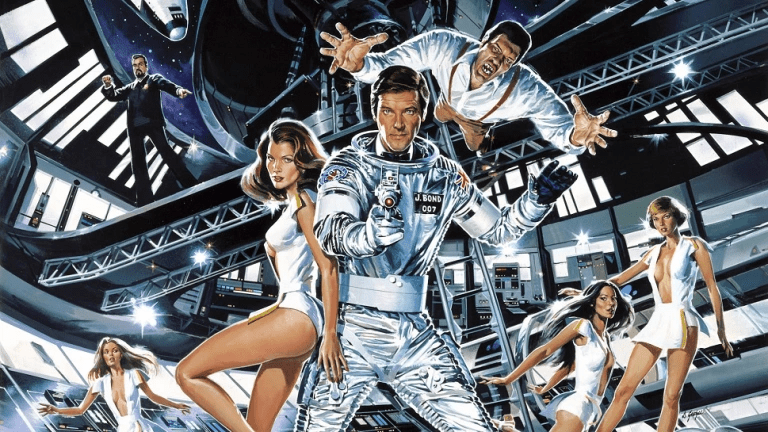
In the end, however, the numbers don’t lie, and Bond jetpacks away with the Film round.
Beatles – 0, Bond – 1
Round 2: Music
When comparing the music of the Bond films and The Beatles’ catalog, it would seem the advantage would naturally go to the band. In this case, however, Bond gives The Beatles a run for their money, as an important aspect of each Bond film is its opening credits song.
Some of these songs have become as iconic as their accompanying films. Shirley Bassey’s “Goldfinger” more often than not takes the top spot in lists of “Top 10 James Bond Themes.” As mentioned before, Paul McCartney performed the 1973 hit “Live and Let Die” with his band Wings, and in recent years superstars Adele, Sam Smith, and Billie Eilish have lent their voices to the themes from Skyfall, Spectre, and No Time to Die, respectfully. A number of themes have even enjoyed multiple weeks in the Top 100 songs of the day. Smith’s “Writing’s on the Wall” (from Spectre) and Eilish’s “No Time to Die” occupied the number 1 chart spot for a collective 29 weeks in 2015 and 2020, while Adele’s “Skyfall” spent a whopping 32 weeks in 2012 at number 2 (followed closely by Duran Duran’s “A View to a Kill,” which was number 2 for 16 weeks in 1985). Other notable artists who have introduced a Bond escapade through the years have included Nancy Sinatra, Tom Jones, Madonna, Louis Armstrong, Carly Simon, Sheryl Crow, Gladys Knight, and A-ha. Perhaps less well-known is the group who sang the very Bond-like theme to “The World is Not Enough,” a band called Garbage.

As a whole, the collection of songs both feature a variety of styles and vocal performances while simultaneously sharing musical cues and thematic orchestrations that identify them immediately as “James Bond-esque.” In my opinion, they make for an enjoyable playlist.
When compared to the musical career of The Beatles, however, Bond stands no chance.
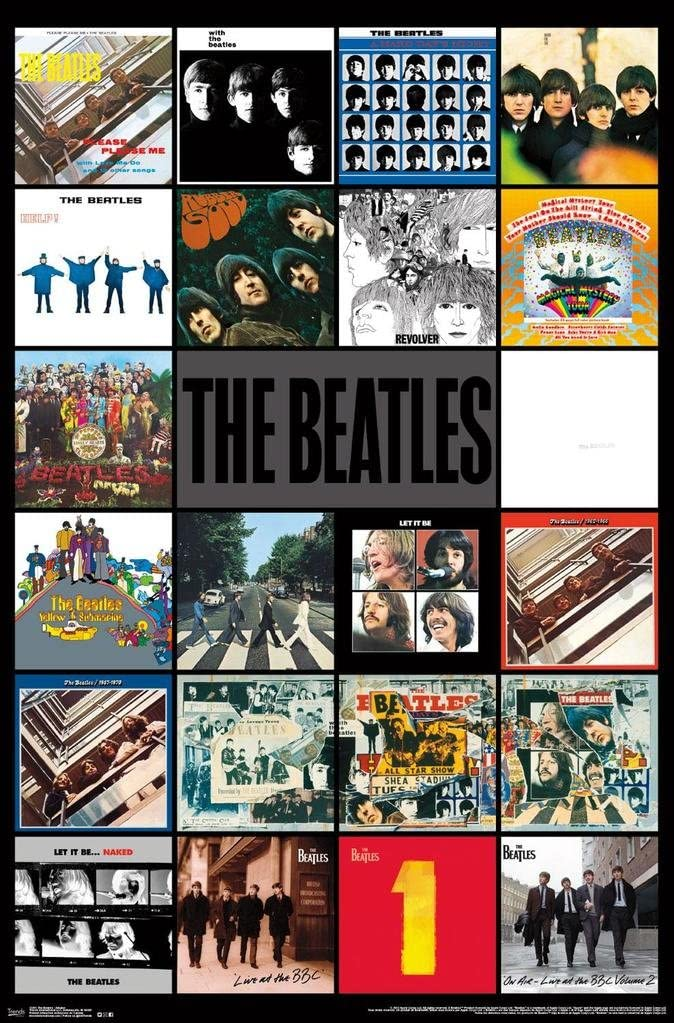
When John Lennon made his infamous observation that the group was “more popular than Jesus” in 1966, part of the reason American Evangelicals became so enraged was surely due to the relative truth of the statement. Upon their arrival in the US, The Beatles became a phenomenon the likes of which the world had never seen, dominating the tops of the musical charts for weeks at a time. While several of the 28 Bond songs have spent some time in the Top 10, the Beatles had 20 songs that all spent at least 10 weeks in the number 1 spot and 34 songs that maintained spots in the Top 10 for multiple weeks. And the popularity of their songs has outlived the band’s breakup in 1970. In 2019, 47% of listeners of the 1.7 billion streams of Beatles song were between the ages of 18-29, proving the staying power of the band’s music.
Even when taken altogether, the various artists of Bond films can’t overcome the versatility of the Fab Four, and the Beatles win the Music round.
Beatles – 1, Bond – 1
Bonus Round: Potpourri
Now that we’ve gotten the obvious categories out of the way, there are other comparisons to be made between The Beatles and Bond.
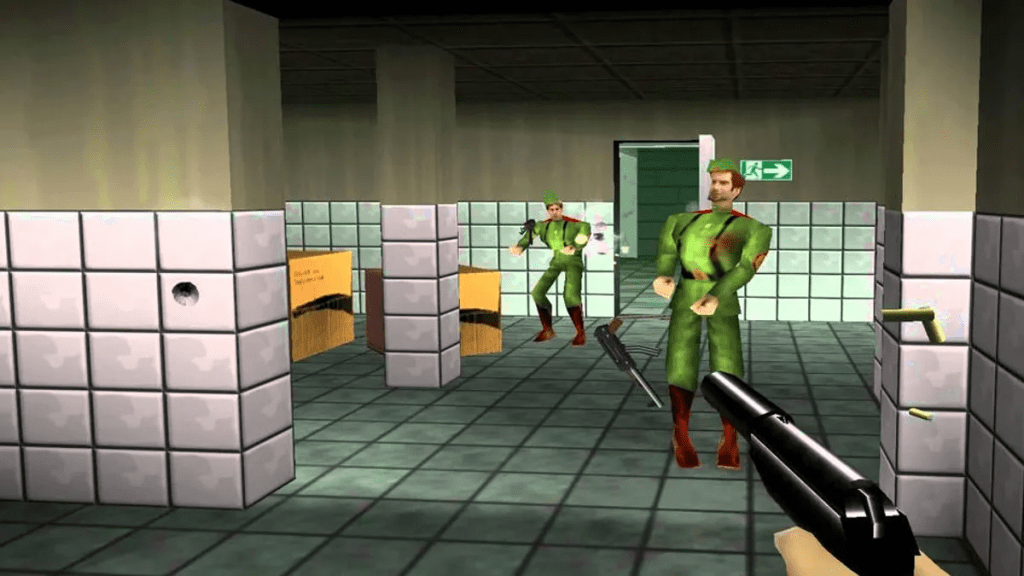
Both have had their own impact on the world of video games. While it may not be terribly surprising that Bond’s action-packed movies were developed into video games, what is surprising is how well most of them have been received by audiences (seeing as movie tie-in games are rarely any good). Arguably the best and definitely the most well-known of these is 1997’s Goldeneye 007 for the N64. With its innovative shooter gameplay, its quality adaptation of its source material, and its iconic multiplayer mode, Goldeneye 007 is widely considered to be one of the best games of the 5th console generation.
The Beatles also were the subject of a popular video game. Growing out of the hit Guitar Hero series which allowed players to simulate performing rock standards on a guitar-shaped controller, the Rock Band series of games expanded the concept to add drums and vocals to its guitar gameplay. The Beatles’ only claim to video game fame, appropriately titled The Beatles: Rock Band, brings the band’s catalog to the console for Beatles fans to sing and play along to together. The game features hits spanning their career as well as locations ranging from the stage of the Ed Sullivan Show to psychedelic dream sequences. While not the best-selling of the rhythm game genre, the game nevertheless delivered The Beatles experience in a very fun way.
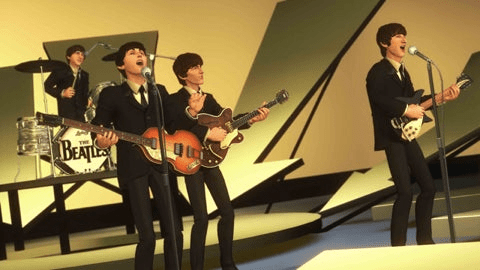
Despite how fun Rock Band may be to play with friends, however, nothing beats dominating your friends in Goldeneye.
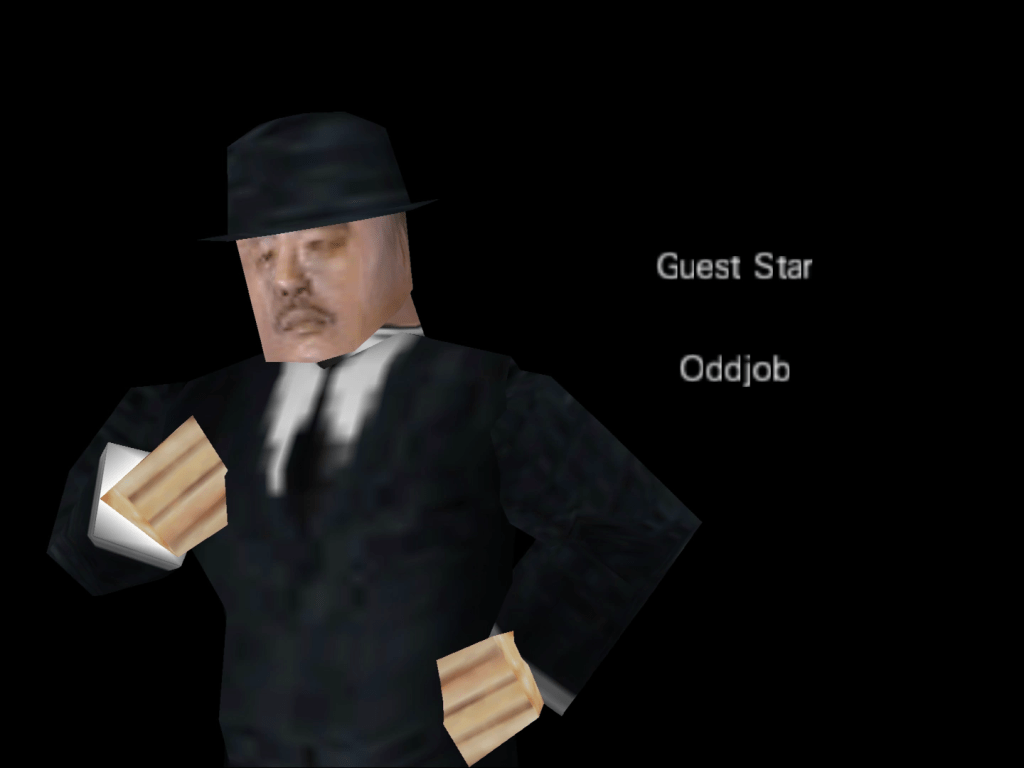
Beatles – 1, Bond – 2
At the same time, however, popularity has its pitfalls. Fame, whether it be a singing group or a film franchise, will inevitably lead to the creation of memorabilia for its fans. And in the quest for the almighty dollar, people will create some pretty weird things for fans to own.
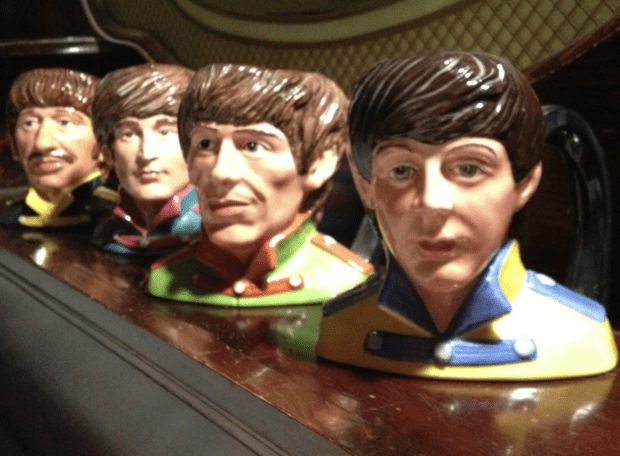
Beatlemania certainly had its share of strange stuff for fans, as evidenced by this article. Some items made more sense than others, like Beatles brand musical instruments (bongos are a unique choice, but fine) or The Beatles’ “Flip Your Wig” board game.
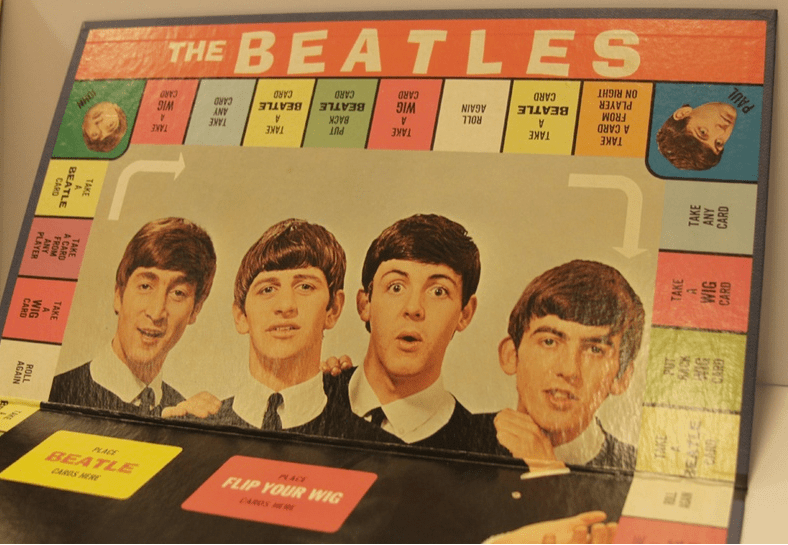
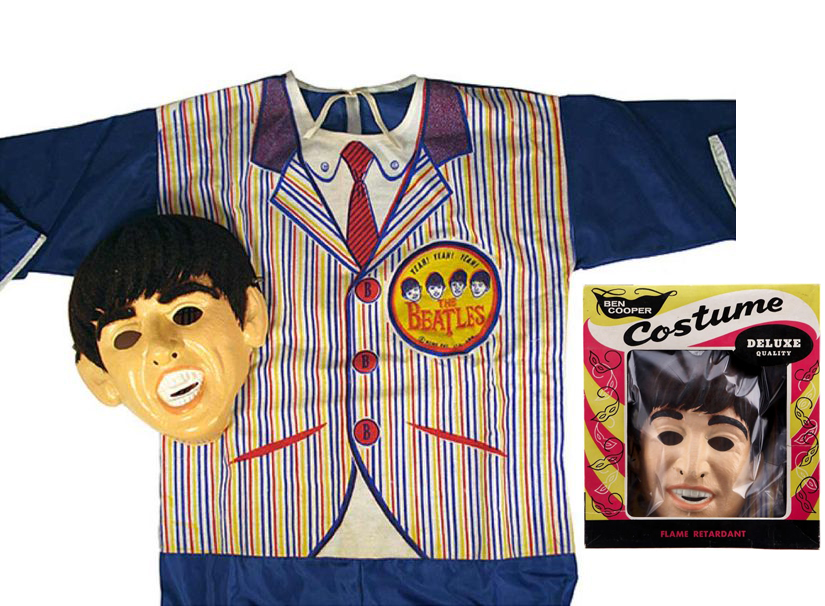
Other items, like a Beatles hair brush or Beatles nylon stockings, definitely came about for more cash-grabby reasons but are pretty innocuous. The weirdness begins, however, with items like the “Beatles costume,” which featured a t-shirt printed with a Beatles-style vest as well as a molded plastic mask depicting (allegedly) one of the Fab Four. I like to imagine how I would feel when being confronted on Halloween night by candy-demanding children in matching mop-headed death masks. Not to worry, though; according to the packaging, the masks are topped with “authentic hair.”
James Bond is no stranger to strange memorabilia either, as this article entails. While one would think Bond fans would be most interested in movie props like toy Walther PPKs, toy Aston Martins, and 007-branded cocktail shakers, manufactures seemingly think differently than the average consumer. As tacky as they may appear now, a set of commemorative James Bond plates might be just the thing to set off your viewing party. And while a Bond-themed cologne seems like the perfect idea for the Bond fan, the existence of 007-scented candles is slightly less obvious. Just as obtuse are the scents of these candles – what aspect of James Bond am I getting ready to smell? But it’s the “Daniel Craig Ice Lolly” that sets us down the path to uncanny, with its meticulously-chiseled physique sculpted out of “a refreshing blend of blueberries, pomegranate and cranberries” no doubt doing its best to satisfy the cravings of fans everywhere.

And because no franchise can ever truly escape their lowest entries, Moonraker rears its unwanted head once again. Not only did this film’s marketing give us the unnecessary Moonraker-themed candy cigarettes, it also continues the tradition of Halloween costumes that are unintentionally terrifying with the Jaws mask. After all, what child wouldn’t want to commemorate the worst Bond film by donning the plastic face of its metal-toothed villain from which to issue demands for candy?
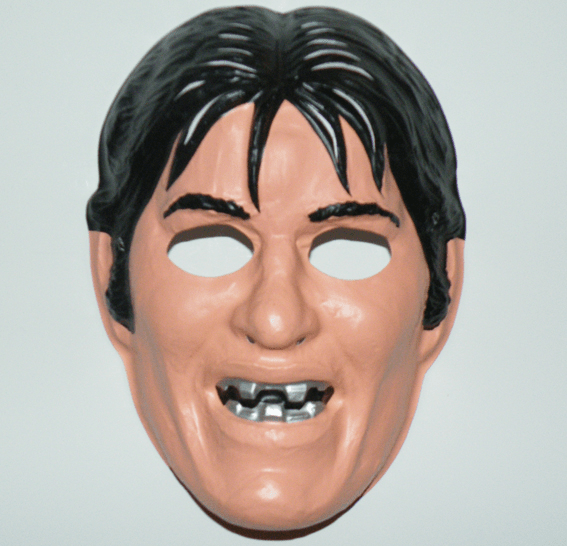
Jaws may make for a scarier Halloween character, but is nowhere near as creepy as the Beatles mask.
Beatles – 2, Bond – 2
Final Round: Cultural Impact
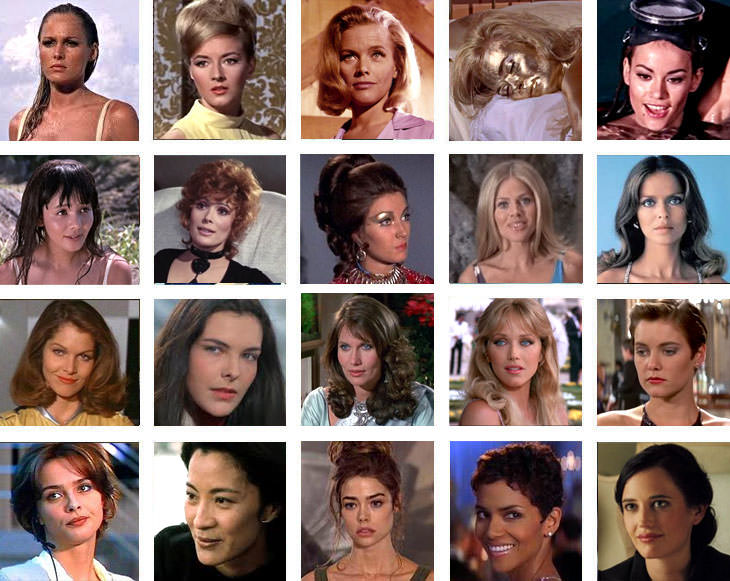
There are no shortage of articles, books, and YouTube videos detailing how the James Bond movies and their titular spy changed cinema for good following the release of Dr. No. Bond pioneered the action spy thriller genre as well as the tropes that became staples of that type of movie. The suave, globetrotting spy has become a caricature primarily of Sean Connery’s original portrayal. The beautiful Bond girls, both the earnest ones who help Bond save the world and the evil ones who betray him, have also become iconic of the genre.
And what Bond film would be complete without an over-the-top theatrical supervillains bent on world domination or destruction while plotting from their themed villainous lairs? Fiends such as the titular Dr. No or Goldfinger, Scaramonga from The Man with the Golden Gun, or the iconic head of Spectre itself, Ernest Blowfeld, have joined the ranks of great movie villains alongside Darth Vader, the Joker, and Hannibal Lecter.
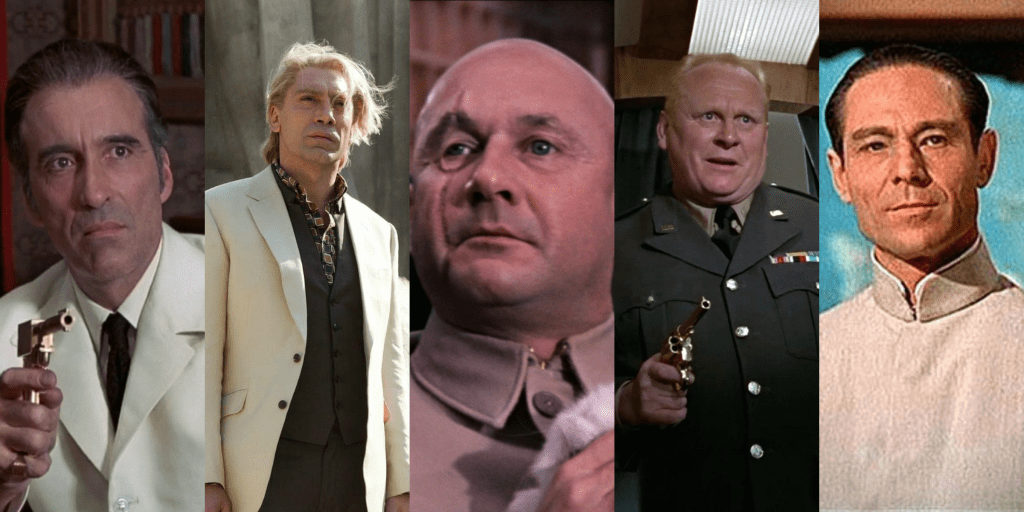
Between arguments about which of Bond’s foes was the most evil, who had the best henchmen, or who had the most over-the-top evil plan, the villains of the series are some of the most influential aspects of the genre.
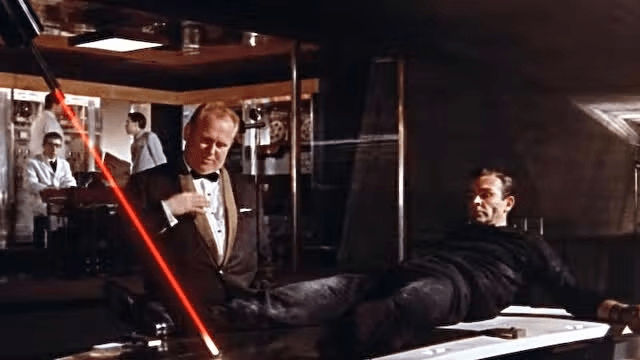
Perhaps one of the most influential aspects of the Bond films are the futuristic gadgets James uses which are hidden in everyday objects. There is no one alive who has watched James Bond escape certain death by cutting his chains with his laser watch or jetpacking away from an explosion without thinking to themselves. “I’ve got to get me one of those.” Between his souped-up cars, his briefcase/guns, and his X-ray sunglasses, the gadgets of Bond has inspired the minds of future Q’s.
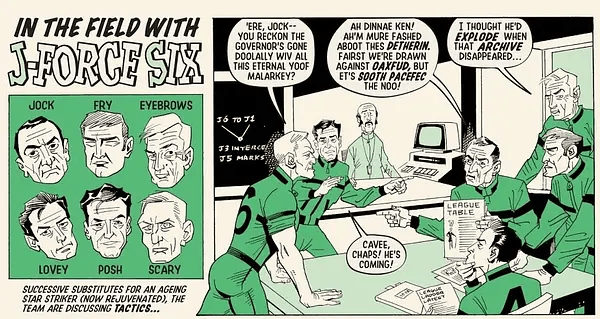
All of these and more have been copied, parodied, and spoofed since the first film’s release. The Austin Powers films are the most well-known and deliberate Bond spoof, as well as arguably the most iconic. But the influence of Bond can be seen almost everywhere, from television shows (The Man From U.N.C.L.E, Get Smart, 24, Archer, Inspector Gadget, Kim Possible) to movies (The Kingsmen, Johnny English, Mission: Impossible, XxX, Taken) to countless episodes and gags in television comedies and cartoons. Everyone from The Simpsons to The Muppets to The League of Extraordinary Gentlemen have paid their own homage to the Bond franchise.
This isn’t to say that the Bond movies are necessarily timeless. Any story written in a particular moment in history will be subject to the technology of that day, and a story that attempts to astound its audience with technology from the future will not be impressive for future audiences. Gadgets like Bond’s ticker-tape watch, reel-to-reel hidden recorders that fit inside entire books, and hidden cameras have been outpaced by ordinary smartphones.
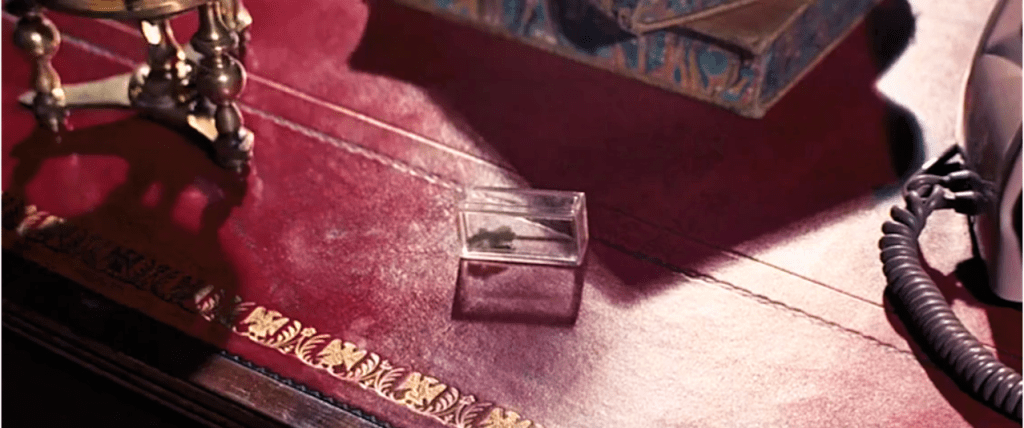
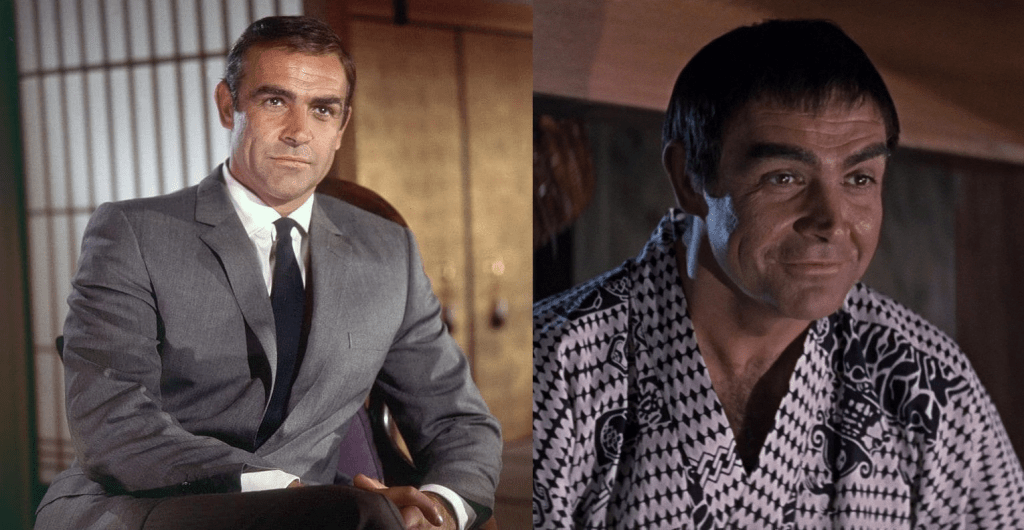
The Bond films must also be recognized as product of their respective times, especially the older films. As such, the Bond of yesteryear isn’t always the moral standard to which modern audiences hold themselves. As loving as he may be to Moneypenny, James frequently treats women in the field as mere damsels or sex objects, and characters with names like Pussy Galore, Octopussy, and Holly Goodhead (dammit, Moonraker) don’t help Bond’s reputation among female fans. Bond also fought beside the Mujahideen in 1987’s The Living Daylights, an at-the-time decision that became ironic during the West’s role in various Middle-Eastern wars of the 21st century. And the less said about his “Japanese disguise” in You Only Live Twice, the better.
Still, fans and critics wouldn’t debate the films so vehemently if they didn’t feel they were worth revisiting, attesting to the films’ continued popularity.
While the future of the official Bond franchise may be uncertain following the end of the most recent film, the public’s love of, criticism about, and need for suave, martini-drinking spies with sexy British accents all but ensures that he will continue to be around for years to come.
While James Bond may have convinced a generation of male moviegoers that martinis and tuxedoes were the epitome of manliness, the legacy of the Beatles and their music continues to be felt the world over. Articles have been written by amateur fans and Beatles experts alike extolling the virtues of The Beatles and their influence from soon after their breakup to almost 50 years afterward.
We talked earlier about the financial and critical success of The Beatles’ music; however, that success stems from how much the public has embraced and held onto the groups songs at release and in the years since. They’ve written successful songs in many genres, from their initial pop hits (“I Want to Hold Your Hand,” “She Loves You,” “Love Me Do”) to rock ballads (“Yesterday,” “Let It Be,” “Hey Jude”) and moving love songs (“Something,” “When I’m Sixty-Four,” “In My Life”) to psychedelic trips (“Lucy in the Sky with Diamonds,” “Sgt. Pepper’s Lonely Hearts Club Band”), experimental music (the Rubber Soul and Revolver albums), and Eastern-inspired music (“She Said, She Said,” “Tomorrow Never Knows”) and many, many styles in between. They’re even credited with creating the first proto-metal song, “Helter Skelter.” They excelled at whatever style they played, inspiring many famous musicians and bands who have cited The Beatles as influences on their music: Billy Joel, Bruce Springsteen, Heart, The Eagles, KISS, Dave Grohl, and The Beach Boys, to name a few. In addition to inspiring new music, the Beatles also have inspired other artists to create some pretty great covers of the band’s songs.
Not only were the Beatles able to create songs from many different genres which captured the public’s attention, they also were pioneers in the music industry. Many articles (here, here and here, for starters) examine the technicality of the Beatles’ songs, from the first intentional use of feedback in pop recording (“I Feel Fine”), to the popularization of music videos, to many Western listeners’ first experiences with Eastern musical themes and instruments.
They also had some great album covers, from the enigmatic Sgt. Pepper’s Lonely Hearts Club Band…
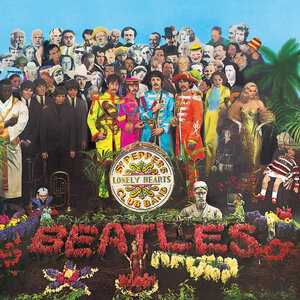
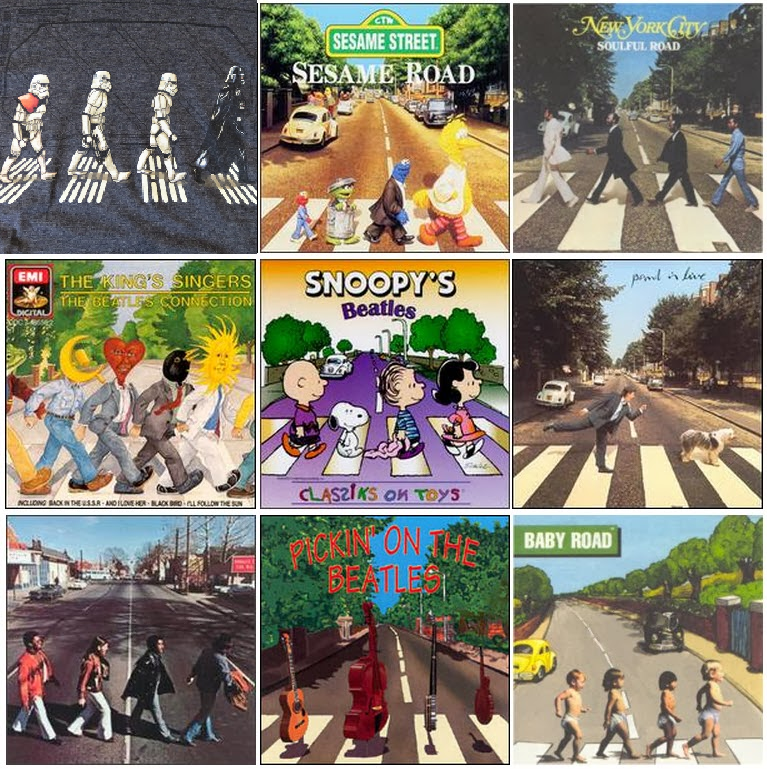
to the iconic cover of Abbey Road, copied and parodied by everyone and everything.
The group also influenced culture with their looks and demeanor. Soon after their arrival on American soil, the group’s signature mop haircuts became a symbol of youthful expression. Ever since, caricatures of The Beatles have adopted the haircuts as shorthand for the group, along with their distinctive Liverpool accents. One famous example of this are the singing vultures who appear in Disney’s 1967 film, The Jungle Book. Originally created to be characters voiced by The Beatles themselves, the music style of their song was changed to a barbershop quartet after John Lennon vetoed the offer from Disney.
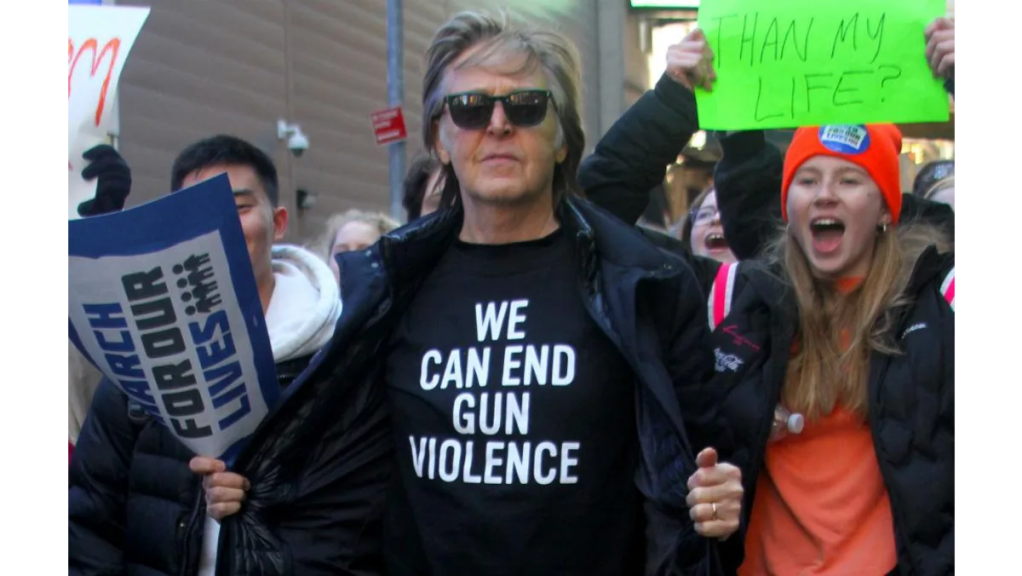
And not enough can be said about how the Beatles helped foster and lead the antiwar movement during the Vietnam War. Beatles’ classics such as “Revolution” and the iconic “All You Need Is Love” grew out of the group’s vehement opposition of the conflict. John Lennon was especially inspired by a meeting with the acclaimed philosopher Bertrand Russell, who similarly opposed the war in Vietnam. After The Beatles’ breakup in 1970, Lennon released several solo hits that remain popular and poignant today: “Give Peace a Chance,” “Merry Xmas (War is Over),” and perhaps his most famous song “Imagine.” Their messages of peace still resonate with protestors and activists today.
The music of the group has inspired several films to add to those mentioned above. Some of my personal favorites are parody movies All You Need is Cash (1978) and its sequel The Rutles 2: Can’t Buy Me Lunch (2005), which follow a fictional version of the Beatles called the Rutles and their rise to stardom. Across the Universe (2007) is a jukebox musical full of The Beatles’ fun, psychedelic, feel-good, and poignant hits. 2019’s comedy Yesterday imagines a world where all but one man forgets who The Beatles were and their music. While it certainly asserts the importance and influence of the group on music culture, it also acknowledges that reintroducing songs from fifty years ago would not be as easy as it may seem, and perhaps the timelessness fans ascribe to their music is not completely true.
It’s also worth noting that, while The Beatles are considered to be a musical institution (and given their success, probably rightly so), there are still discussions about whether or not they can be considered timeless or whether an extensive knowledge of their history is really something every well-rounded person should know. While the cultural consensus seems to be that The Beatles are cultural “required reading,” good articles like this one argue for the opposite to keep the conversation going in a positive way. The “nontroversy” of 2015 that trolled a large portion of the Internet and even national news that Kayne West fans didn’t know who Paul McCartney was after the two collaborated, with its angry responses by Beatles fans toward seemingly ignorant youths (and which was blown way out of proportion for fake Internet points) is an indicator as to how strongly some of the population feels on the subject.
Conclusion
In the end, both James Bond and Simon, Paul, George, and Ringo have irrevocably changed entertainment and culture since their joint October debut in 1964. While fans may argue for one or the other as the definitive British import, I think their individual influences are impossible to quantify. Therefore, our Battle of the British Bests is going to end in a tie.
Beatles – 3, Bond – 3
Now if you’ll excuse me, I’m going to make myself a martini (shaken, not stirred) to drink out of my new Ringo mug.
 Culturally Opinionated