
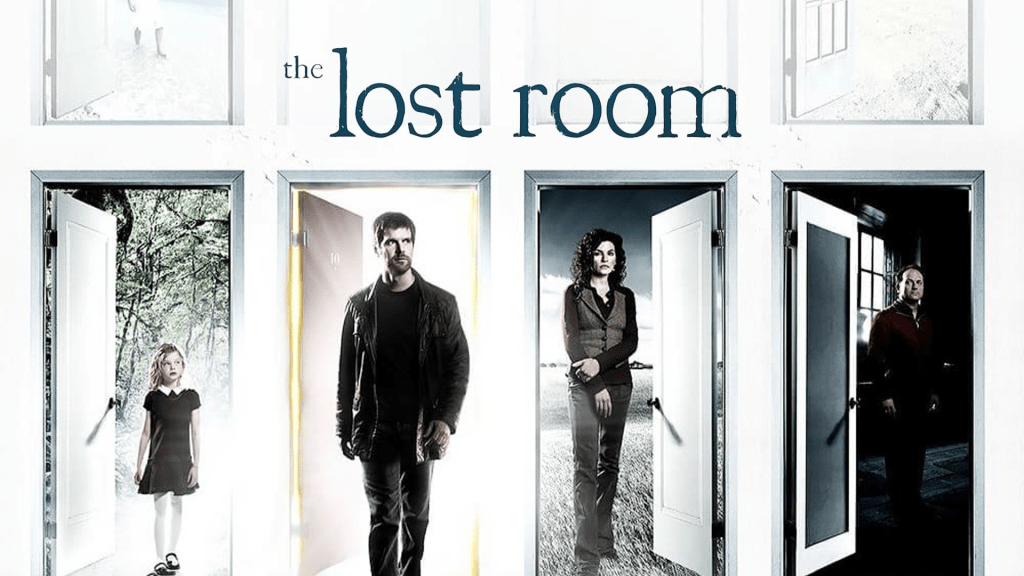
I would argue that everyone at some point has been a fan of something we don’t think got the attention it deserved in its heyday. It could be a book series whose author was ahead of their time, or a TV show whose unfavorable timeslot kept it from cultivating a larger fanbase. It could be a food that your favorite restaurant only offered for a limited time, or a music group who were only really appreciated years after they stopped making music.

I am no exception. Among the various books, movies, and video games I continue to try to push onto my friends, I recently revisited one of my favorites, the Sci-Fi original miniseries The Lost Room.
The Lost Room aired on the Sci-Fi channel in December of 2006 (before the channel rebranded as SyFy and started only airing reruns of Ancient Aliens). Over three nights, audiences followed the story of Joe Miller, a Chicago detective who stumbles into a chaotic war fought behind the scenes of our everyday world. In such a short time, creators Christopher Leone and Lauren Harkcom introduced audiences to a fantastically interesting world full of unsolved mysteries and tantalizing secrets. Aside from this, however, the series and its characters convey several deeper themes which have led me to appreciate the series even more.
Before we begin, I feel it would be irresponsible of me to not open with a caveat. I think The Lost Room is best experienced organically, without anything other than a basic introduction to the setting. So as much as I’m excited to discuss the series in this article and introduce more people to it, I obviously can’t do that without spoiling the plot. If you want my advice, go watch the miniseries first (it’s free on Tubi) then come back if you’re still interested. My opinions will still be here and waiting.
Hubris
The protagonist of The Lost Room, Joe Miller (Peter Krause), stumbles quite by accident into the world of dangerous objects and equally dangerous people seeking to possess them. While conducting an investigation into a strange crime, Joe comes into contact with an old motel key. He soon discovers that, when put into any door, the key will magically open into an empty motel room. Upon exiting, the motel room door will open into any door the user desires. Importantly, if anything is left in the room once the door is closed, reopening the door will cause the items left inside to disappear. While he is initially amazed and intrigued by this powerful item, he quickly realizes the danger of its use when men desiring the key kidnap his daughter Anna (Elle Fanning). In the ensuing struggle, the door closes with Anna inside and she disappears. Joe spends the rest of the series doing everything he can to find a way to rescue his daughter.
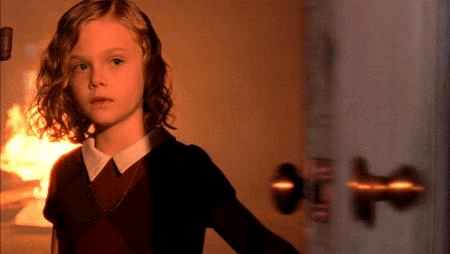
Though Joe doesn’t initially know it, the world he has stumbled into is much larger than his personal loss. The central conflict of The Lost Room concerns various special items called Objects. We learn fairly early on that a strange event took place in a seemingly innocuous motel room (the titular Room) in May of 1961. No one is sure what caused the event, known simply as the Event or the Incident, to happen. Later one character describes it:
“It’s not like something happened; It’s like afterward we figured something must’ve happened.”
Whatever the Event was, the results were the Objects: seemingly ordinary items from the motel room that inexplicably acquired supernatural powers. The application of the Objects’ powers varies widely.
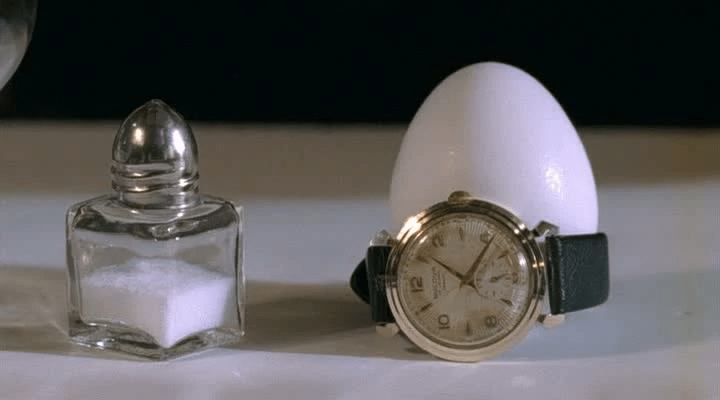
“Sometimes when you start getting Objects together, weird things happen….Totally unpredictable. Take the Watch. Useless, right? Cooks eggs. Nothing else, just eggs. Put an egg in the middle, hard boils it. Anyway, nobody used to care much about the Watch until one day somebody found out that if the put the Watch and the Knife together, you get a kind of telepathy.”
Nevertheless, any Object is worth possessing, and various groups dedicate their lives to the pursuit. The first group that assembled soon after the Event, the Collectors, wanted to replicate the Event to better understand it. They had gathered almost all the items when they attempted their experiment, later referred to as the Conroy Experiment. It ended in tragedy. The combination of several especially powerful Objects in conjunction with the Key caused a ripping of the fabric of our reality, with major damage to our world only narrowly avoided when one of the Collectors sacrificed herself to stop it.
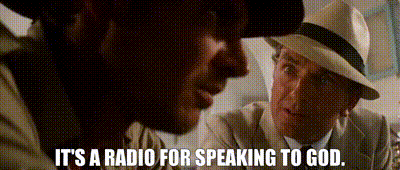
In the aftermath of the experiment, the Collectors splintered into various warring factions. Each side claimed Objects for themselves for different purposes. The remaining Collectors took the most dangerous Objects they could and hid them away from the world to prevent further destruction. The Legion, a group not content with merely hiding the Objects but seeking a way to destroy them, made it their mission to gather as many Objects as possible. Yet another cabal, the Order of the Reunification, believes that the Objects are pieces of God, and wishes to bring all the Objects together in order to speak to directly to God. In their fervor, they have even built a shrine resembling the Room to house their Objects in. Their method for acquiring Objects vary wildly, from simply finding and buying Objects to taking them by any means necessary.
Perhaps the most unpredictable of all the Objects’ owners are the individual people who acquire Objects and use them for their own purposes. The series’ main villain Karl Kreutzfeld uses his vast wealth to accumulate as many Objects as he can in order to further his personal goals. Others who luck into possessing one or two Objects simply try to live their lives, trying not to attract too much attention yet not willing to give up their Objects.
While the motives of the various organizations and individuals may differ, one constant permeates any interaction with the Objects of the Lost Room. The Objects are a force unto themselves – indestructible, immensely powerful, and incredibly enticing. While people may use them to their advantage, no one knows how they work or what their origin is. From the newest novice to the most experienced collector, using Objects is like playing with fire. Joe is told multiple times in the series “Using the Objects always comes with a price.”
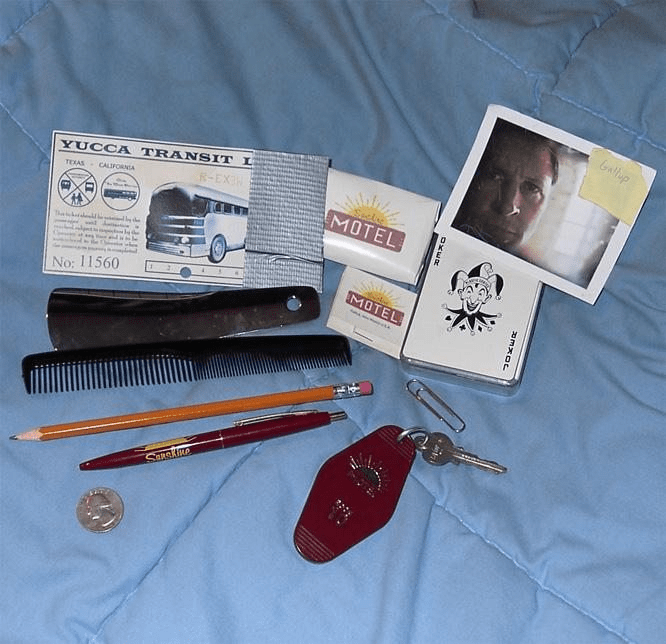
Ultimately, this warning rings true for almost all the Objects touch. The original Collectors naively believed they could replicate the Event by manipulating forces they had no understanding of, and dissolved into infighting once their attempt failed horribly. The Legion believes they can destroy the Objects to spare the world their influence, but cannot find a method of destroying any Object. They end up hoarding Objects like any other hunter, despite their noble purpose, and their confidence that they can accomplish this without resorting to violence ends up getting the majority of them killed. The Order of the Reunification is so sure in their beliefs about using the Objects to communicate with God that they justify extortion, intimidation, and murder in their collection of Objects. The zealous devotion of the members to their divine cause, however, interferes with the unity of the group. They are loyal to their beliefs, not their fellow devotees, which leaves them open for fragmentation. As we see in the miniseries, members will follow one charismatic leader or another for a chance at touching the Divine.
Karl Kreutzfeld (Kevin Pollak) is a prime example of this. While Kreutzfeld is wealthy from his private business, he maintains his grandfather’s pawn shop in order to surreptitiously accumulate Objects. At first, his goal is sympathetic. We learn that Kreutzfeld’s son Isaac died of leukemia nine years earlier, and that Kreutzfeld has been hunting specific Objects to replicate the ill-fated Conroy Experiment. His most sought-after Object, the Glass Eye, has the power to either destroy or heal all flesh. Kreutzfeld plans to use the Eye in conjunction with the other Objects of the experiment in order to bring Isaac back to life.
In pursuit of this noble goal, however, Kreutzfeld loses aspects of himself, both metaphorically and physically. While trying to resurrect his son, Kreutzfeld uses any dirty method to acquire the Objects he needs, including murder. He rips Objects away from those who have become dependent on them with no regard for his victims’ well-being. Kreutzfeld himself becomes tied to contact with a particular Object, the Quarter. When swallowed, it manifests memories of people as physical objects for a short time. Kreutzfeld uses it almost constantly in order to manifest his recollection of Isaac as a physical boy. When he finally obtains the Glass Eye, he is forced to mutilate himself in order to use it as the Eye can only be used while within the user’s skull.
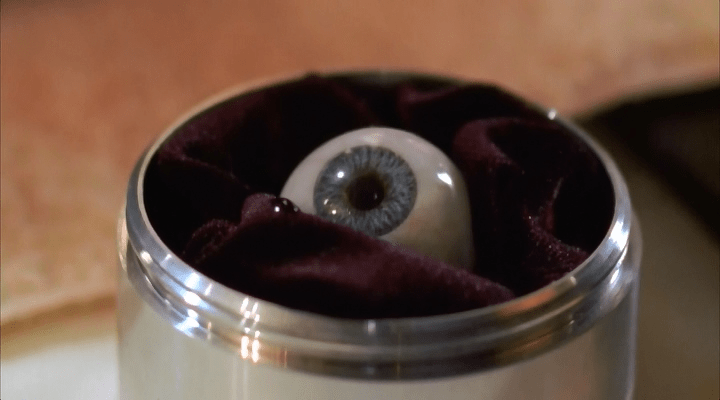
As sure as he is of himself, however, Kreutzfeld becomes a victim of his hubris. Though he is able to see and touch his son again, the Isaac he summons is only a memory. After so much time regularly using the Quarter, Kreutzfeld has become dependent on it. When he removes his own eye to inert the Glass Eye, he is so consumed with his goal he does so almost detachedly. And when he has the use of the Eye, he cannot control it, accidentally killing his own henchmen as well as his enemies. When he finally assembles the required Objects for the experiment and opens a tear in reality, he sees an image of Isaac just out of reach. But even though he is aware of what will happen, Kreutzfeld steps into the tear and is presumably lost forever. Though he seems in control over his Objects and the people around him, ultimately Kreutzfeld is as much at their mercy as anyone else.
The False Veneer of the Past
The mystery of the Lost Room itself centers on the Sunshine Motel, a mid-20th century roadside motel. Alone and abandoned, the motel’s skeleton sits on the side of a lonely desert road. The large neon sign with its distinctive sun motif is cracked and broken. When Joe visits the Motel searching for answers, he finds only traces of sadness and loss. Nearby the motel, he learns about the Conroy Experiment and its tragic victim Arlene Conroy from her husband Gus Jacobs. Arlene herself remains trapped in agony between realities within the abandoned motel. And though the titular Lost Room no longer exists due to the effects of the Event, Joe is able to use an Object, the Polaroid, to view the Room how it existed back in 1961.

In contrast, the interior of the Lost Room itself is almost warm and inviting. Though the Room is nearly bare because of the Event, it is filled with a golden light from outside its windows. The world outside is also literally a window into the past. One can see the Sunshine sign whole and working again. It is impenetrable to anyone without the Key, and it resets to its original state any time the Key is used to open it. Any items left in the Room disappear upon reset, except for its original Objects which return to their placement pre-Event.

In an interview with Den of Geek from 2016, show co-creator Christopher Leone refers to the tone of the project as “dark Americana.” The concept of Americana refers to the cultural concepts that are perceived as uniquely “American,” including ideas, images, and (notably) objects. While the concept became popularized in the mid-20th century and referred to the America of about 1880 to the First World War (think apple pie, baseball, and the flag), the term has also come to refer to the America (specifically the West) of the 1960s. In his book Americana: Dispatches from the New Frontier, American historian Hampton Sides remarks:
“The United States of America is such a glorious mess of contradiction, such a crazy quilt of competing themes, such a fecund mishmash of people and ideas, that defining us is pretty much pointless. There is, of course, a kind of faded notion of “Americana,” one that concerns Route 66, diners, freak rock formations, and the like—but even in its halcyon days this “roadside attraction” version of America was never an accurate or nuanced distillation of our massively complicated culture.”
Sides, Hampton (2007). Americana: Dispatches from the New Frontier. Knopf Doubleday Publishing Group. ISBN 978-1400033553.
Because Americana is inexorably tied to nostalgia, it is therefore primed for romanticization. Rarely is the popular idea of America’s past accurate. Many of our country’s founding myths, such as the stories Washington and other Revolutionary leaders, the First Thanksgiving, or “how the West was won” have been idealized to such an extent that they now only tenuously resemble truth. In relation to the Americana of the 1960s, the popular images of “Route 66, diners, freak rock formations” often obscure the harsher realities of the time, such as tensions around segregation and the fight for universal civil rights.
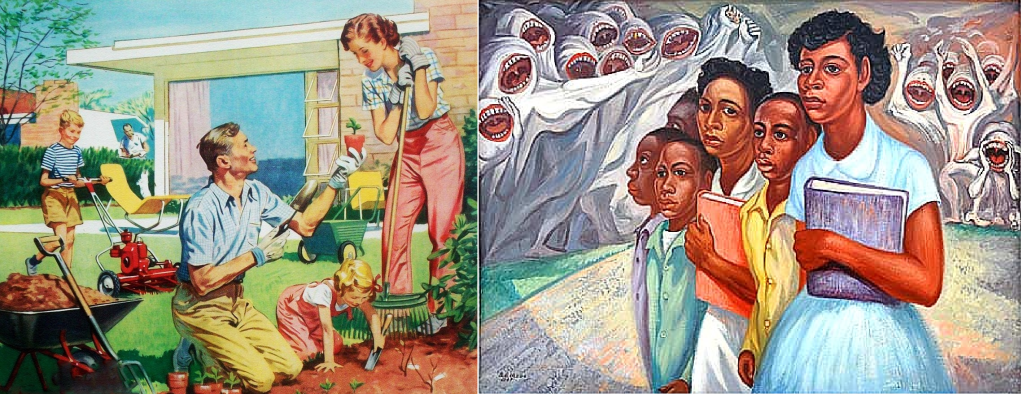
Taking all of this together, the Room and the Sunshine Motel are used together to comment on the way in which we view the past.
Upon entering the Room with the Key, a visitor will be greeting with the scene described above: a safe, somewhat familiar place filled with the warm golden light of the past. The scene in the Room will never change except to regain the Objects which formerly occupied it. Newer items are not permitted to stay and are erased. No one can step into the Room without the proper tool. Even the world outside the Room is whole and shiny, if untouchable. In contrast, the actual Sunshine Motel is in ruins, and the scene of much tragedy. The old-fashioned Objects of the Room are unleashed to cause havoc on the modern world in the hands of people too young to remember a time when they were commonplace. All the Objects are also unbreakable outside the Room, revered despite their commonness.
The Room and its Objects metaphorically represent the relationship people of a later generation tend to have to their past. While the reality of any given period in history can be full of innovation, happiness, and light, it is inevitably also fraught with sorrow, inequality, and pain. The misremembrance of nostalgia has a power to color the past with a veneer of gold that those who lived it can convince them was real and those who only hear about it have no reason to question. But this veneer, like the Room and its Objects, is unnatural. It is only tangentially part of our world, familiar but simultaneously disconcerting. The only way you can believe that the past really was covered in gold is to actively convince yourself to ignore the bad things. And like the Objects, that romanticized view is also able to withstand reality. An idea of how the world was can be much harder to alter or destroy, especially when the alternative is to compare it to the uncertainness of the present and the future.

Interestingly, there is one Object that has a consciousness: the Occupant. Once known as Eddie McCleister, the Occupant (Tim Guinee) was the supremely unlucky human who inhabited the Room during the Event. As the only “Living Object,” Eddie takes on their basic qualities. As with all Objects, he cannot be destroyed outside the Room; as a result, he cannot age or kill himself (which it is implied he has tried numerous times). His very presence causes Object-hunters to commit atrocities around him or in his name, so he spends his days in self-exile away from all other Objects. By the time Joe meets him, the Occupant has been hidden so long most people who know of the Objects consider him a myth. He tells Joe that all the Objects are connected by their creation and constantly call out to each other. The experience is torture for a conscious mind. The Occupant’s suffering finally comes to an end when he and Joe enter the Room together and he convinces Joe to kill him in the one place he is vulnerable.
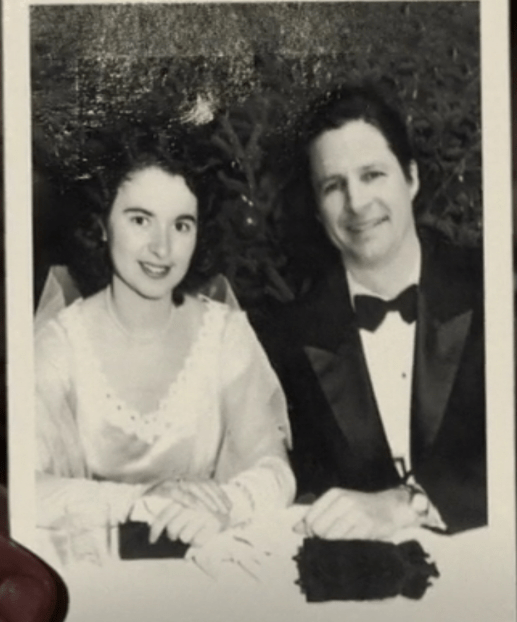
If the Room and its Objects are meant to represent a false yet deeply entrenched view of the past and the dangerous effect such a mistaken view can have, the Occupant must represent the innocent. Unlike those Object-seekers who came after, Eddie McCleister did not greedily seek out powerful totems or take on the glorious burden of saving the world. Eddie was simply in the wrong place at the wrong time. He was cursed with great power and longevity he did not want. In addition, Eddie was erased from history along with Room 10 and its contents. When he returned to his wife in 1961 post-Event, she did not recognize him, not even when he showed her their wedding photo he carried (which also became an Object, never aging). Nor did any remnants of his life, such as birth records or memories of him, survive the Event. As the one who experienced firsthand what happened in Room 10, the Occupant was removed from our reality. In other words, the one best equipped to convey the truth about the events of the past, beautiful and ugly, is unwanted, forcefully removed, and finally forgotten by those enthralled by the myth rather than the truth.
Cultivating Relationships versus Accumulating Things
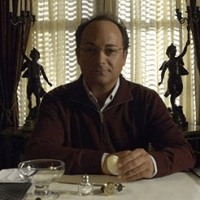
During the series’ third episode “The Comb,” Joe and Karl Kreutzfeld meet in Kreutzfeld’s home to discuss an uneasy alliance. After Joe outlines his vague yet determined plan for rescuing his daughter, an amused Kerutzfeld offers to give him some advice:
“Walk away. You have no idea what you’re getting yourself into. You certainly don’t know just how deep this well goes and that you will never climb out unless you just walk away.”
The Object-users Joe encounters seem to corroborate this warning. Throughout The Lost Room, these characters whose interactions with the Objects have deeply affected their lives vary from inconvenient to deadly.
It is worth noting that a few key characters track and report the locations of Objects for others, and therefore don’t directly deal with the Objects themselves. Two such characters both outright refuse offers of Objects, saying they “never touch the stuff” and that they are “bad for business.” However, despite not interacting directly with Objects, they still charge exorbitant fees for their location services, preying on otherwise sensible individuals. In this way, the mere aura of the Objects themselves is malicious enough to corrupt people around them.
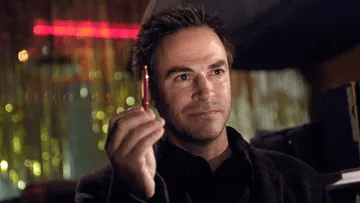
At one end of this spectrum are several characters who use the Objects as tools, giving them an advantage over “regular” people. A small-time criminal called Howard “The Weasel” Montague (Roger Bart) terrorizes his victims with the Ballpoint Pen, which when clicked on a victim’s skin microwaves their insides. Though this gives him the advantage in his shady dealings, the conspicuous nature of the punishment brings more attention to his crimes. When he and Joe temporarily join forces to secure another Object, Joe takes the Pen from him. And while the Weasel is still prone to suspect the worst in people and plan to take advantage of them, he reveals himself to be not an entirely unlikable character. He even seems to feel genuine regret that Anna was lost in the Room because of him. Eventually, he loses the Pen to Joe for good, now defenseless in an underworld of enemies with a grudge.
Another character, Wally (Peter Jacobson), acts as Joe’s reluctant partner and introduction to the world of the Objects. Wally possesses the Bus Ticket, which when touched roughly transports the victim to a point just outside Gallup, New Mexico. While the seemingly random nature of this Object seems not terribly useful, the diminutive Wally uses the Ticket to punish those who he feels have wronged him. This varies from aggressive bikers looking to rob him to an innocent teenager who ridicules his bowling technique. While Wally is not a meanspirited character and becomes friends with Joe, his abuse of the Bus Ticket’s powers sometimes brings out an uncharacteristic vindictiveness. In the end, Wally tells Joe that the road Joe walks is too dangerous, and he and Joe part ways amicably.
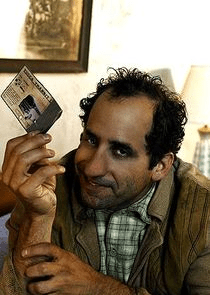
Though Wally and the Weasel use their Objects for different reasons, they are both ultimately turned selfish and furtive by their respective Objects.
Even Lou (Chris Bauer), Joe’s good-natured and likeable police partner, is not above the allure of the Objects. When showing off the Key’s powers early in the series, Joe offhandedly remarks police records indicated someone attempted to buy the Key for $2 million. Lou answers with “I’d pay $3 million.”
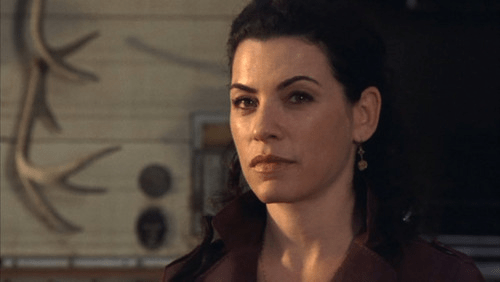
One of the more important side characters, Jennifer Bloom (Julianna Margulies), has a more complicated relationship to the Objects. Jennifer is a member of the Legion, a group dedicated to the collection and eventual destruction of all Objects. As a result, she attempts to toe the line between using the Objects as useful tools while also seeking a way to destroy them. By their code, the Legion does not kill to obtain their Objects. Instead of carrying a gun or a dangerous Object like the Pen, Jennifer carries the Nail File, which briefly and painlessly incapacitates those who look at it. Joe and Jennifer develop a close relationship during his search for Anna. This is partly due to the fate of Jennifer’s brother Drew, who lost his mind during an interaction with several powerful Objects. Jennifer’s resulting hatred of Objects drew her to the Legion and subsequently to Joe, who discards Objects as soon as their use to him is over. Despite her hatred of the Objects, however, she and the Legion nevertheless use them in their war against other factions of Object-hunters. Ironically, when Jennifer is faced with a life-threatening situation and is forced to kill an attacker, she does so with an ordinary gun, not an Object. Still, the Objects are at the center of Jennifer’s life and seem to bring her nothing but misery.
Another character, Harold Stritzke (Ewan Bremner), seems worse off than most. Harold inherits the Comb from his aunt who was a Collector. The Comb is a powerful Object with the power to temporarily stop time, with the side effect of making the user physically ill the more they use it. Because Harold regularly uses its powers, he walks with a noticeable gait from his constant motion sickness and is ridiculed because of it. In addition, the Comb allows Harold to act out his less-savory impulses, like taking pictures of women at the local gym locker room. Because of the powerful nature of the Comb, Object hunters are constantly attempting to kill Harold for it. He transforms from a normal young man into a reclusive, neurotic mess. It’s only after he voluntarily but reluctantly gives up the Comb that he is able to start attempting a normal life.

At the other end of the spectrum is Joe’s police colleague Martin Ruber (Dennis Christopher), who completely succumbs to the allure of the Objects and it destroyed by them. While helping Joe investigate a bizarre murder, Martin comes into contact with the Order of the Reunification and discovers the history behind the Objects. He becomes enthralled with the prospect of joining the Order, who requires him bring them an Object for membership. His suspicions are confirmed when Joe shows him the Key and the Room. But where Joe wants to reveal the Objects to the world in order to help find his daughter, Martin can only think of keeping the knowledge secret and for himself. He begs Joe to lend him the Key so he can join the Order, telling Joe “I’ve been waiting all my life for something – it’s this.” And when Joe refuses to give him the Key, Martin kills his and Joe’s colleague Lou and frames Joe for the murder.
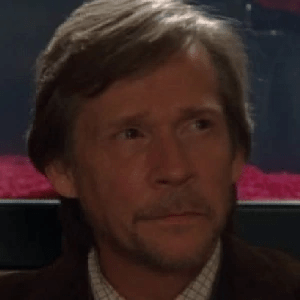
After his act of betrayal, Martin’s descent progresses rapidly. He drains his and his wife’s bank accounts in order to locate an Object which he uses to gain membership into the Order. After this, he never sees his wife again. Martin attempts to use the Order’s Objects to locate Joe and the Key, and while Martin’s intervention does rescue to Joe from police custody, he ultimately attempts to betray Joe again before being thwarted. Martin winds up alone in a remote part of the Midwest, miles from help and alone save for a single Object, the Polaroid. The Polaroid allows one to view the inside of the original Room before the Event, but only when standing where the Room once stood. Anywhere else, and it’s useless, but Martin desperately clings to it nonetheless. In his delirium, Martin sees a vision of the Room, and himself as its occupant. He believes this to be a sign from whatever power created the Objects that he is destined to know the truth about the Room, the Objects, and the mind of God itself. When he is finally rescued at the verge of death, he christens himself the Prophet and sets out to gain more followers to his new purpose. His charisma convinces the assassin sent by the Order to punish him to join him instead, and even implies that the police officer investigating him will soon become one of his flock. In the end, the Objects consume Martin to the point where he dies to himself, being reborn as a madman convinced that God and not his dehydration gave him a great vision. Unlike Harold Stritzke, however, Martin embraces the Objects instead of renouncing them and loses himself as a result.
In comparison to the other forces and characters of The Lost Room, Joe is the clear hero. This is not just because his cause to find his daughter is a righteous one; Kreutzfeld also commits horrible deeds in order to recover his own child. What sets Joe apart is the way in which he does not allow himself to be sucked into the dark world of the Objects. Joe repeats over and over that he does not want to keep the Objects he uses. Once he is done with an Object, he attempts to return it to its rightful owner. Because of this willingness to work honestly with others, Joe is aided in his search for Anna by characters who would normally refuse to help him. He even betters the lives of several characters whose lives are destroyed by Objects by helping them to walk away. Despite the hardships he faces, Joe succeeds where all those who come into contact with Objects fail: He cultivates relationships instead of accumulating things.
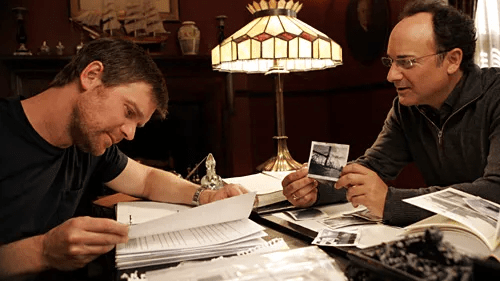
This plays into one of the inspirations for The Lost Room. According to co-creator Christopher Leone, the idea for the Objects and their powers grew out of the thought about a superpower that could be stolen from you. The idea that such a powerful gift could be taken away at any time would naturally make most people extremely protective of that power. Whatever the noble nature of the power or its application might be, the anxiety of losing the power itself eventually will overcome all other impulses. One might reminded of Gandalf’s refusal of the One Ring in The Fellowship of the Ring:
“Don’t tempt me, Frodo! I dare not take it… Understand Frodo, I would use this Ring from a desire to do good. But through me, it would wield a power too great and terrible to imagine.”
The Objects take on a life of their own, corrupting the relationships of those who use them. Only Joe is focused enough to ignore their allure.
And yet, in the end, Joe becomes more tied to the Objects than any other human before him. In order to save his daughter, Joe enters the Room with its original Occupant and kills him at the Occupant’s request. In doing so, due to what the Occupant refers to as the Law of Object Conservation, Joe becomes the Occupant himself. This new status grants him the power he needs to bring Anna back, but at a cost. Though the series ends shortly after Anna’s rescue, the implication is that the tragedy which plagued the pervious Occupant will one day be inherited by Joe. In spite of how successfully Joe resists the call of the Objects as he uses them, he eventually becomes the most consumed by them of all.
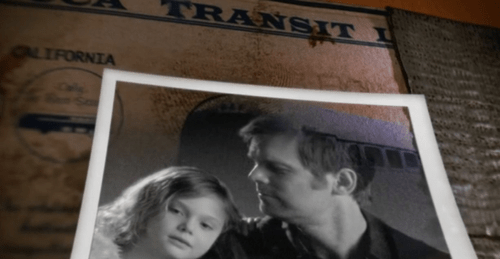
Still, true to his values to the end, Joe decides to toss the Key into the open Room, locking the mot powerful Object away forever. As he, Anna, and Jennifer drive off into the sunset, however, the camera pans back to the dilapidated Sunshine Motel. The door to Room 9 opens on its own to reveal the Lost Room and the Key laying just inside the threshold, waiting for its next user. The open-ended nature of this final shot seems to echo Kreutzfeld’s warning: that those who touch these powerful Objects beyond human understanding can never escape their influence unless they completely walk away. And by the end of the series, it’s clear that the viewer has allowed themselves to be caught as well.
Final Thoughts
The Lost Room, despite its fantastic storytelling, engaging acting and gripping premise, ultimately failed to garner the positive response executives needed to justify picking it up for a TV show. While those who saw the series loved it, the problem was not enough people saw it at all. According to Leone, there were reportedly plans to continue the story in the form of a comic run with Red 5 Comics, but the project was put on hold indefinitely in 2013. Attempting to introduce the series to new viewers, then, can be a bittersweet experience. The show is so good that viewers are always left wanting more that will never come. Still, the themes of the series as well as the mysterious nature of the Objects give the series staying power despite its status as a cult classic.
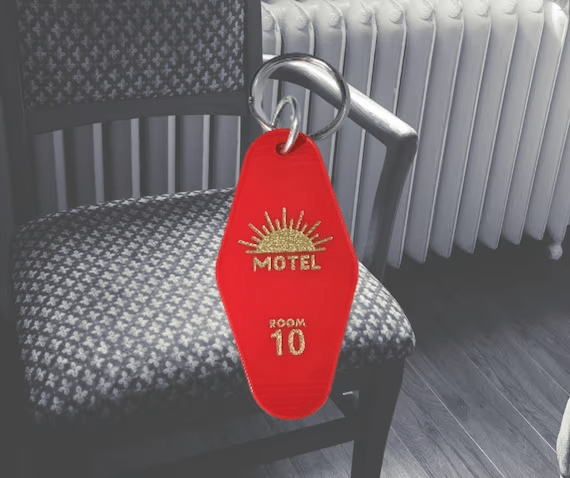
On a personal note, I can attest to how difficult resisting the allure of becoming a Collector can be. After viewing the series, I searched for and found a Sunshine Motel key fob on Etsy, and promptly ordered one. As I was waiting for my order, it occurred to me that there were other, real-life objects that the prop department had surely used as inspiration for the series’ Objects. Some research on the Lost Room Wiki confirmed my suspicions, with an entire page dedicated to identifying the historical object which inspired its television counterpart. One short trip to eBay later, I was already making a list of what memorabilia I would be collecting. Somewhere between used 1950s folding alarm clocks and antique cufflinks, it occurred to me that I was falling victim to the same blunder the show’s Object hunters had. So, as I emptied my online shopping carts and reflected on the dominance of my materialistic lizard brain, I am now content with just my new key fob.
Perhaps the most engaging question to ask oneself after watching The Lost Room is “What would your Object be, and what could it do?” Your answer to the question might say more about yourself than you would think.


Just rewatched the show again, and found it intriguing as I always do. Sad that it never graduated to series and so many questions that the miniseries raised will never be answered. In my memory Joe will live happily ever after (or until the pressures of being immortal while his loved ones die drive that away). The occult americana theme touched on by the show was explored a bit more thouroghly in Niel Gaiman’s book American Gods, as well as the mini series it inspired.
LikeLike
I saw this as a kid, thought it was a fever dream. I could never find it again on TV, did not even know how many episodes it was. All i remembered was the Comb that could stop time and how cool that was. Finally found it and just watch it all again. I cant get over how unique the concept is and how little appreciation it got. In our current age of recycled cash grabs, mass produced slop. It was so refreshing to watch something unique again.
LikeLike
I just wanted to point out that Joe threw the key in the room number 8 but the key reappears in the room number 9. It’s rather intriguing, given that this is where all experiments took place.
LikeLike